
Types of Dance: 25 Styles Explained (+ Which to Try at Home)
From salsa and hip-hop to ballet-inspired movement, discover 25 dance styles and practical ways to choose a home session that fits your space, comfort, and day.
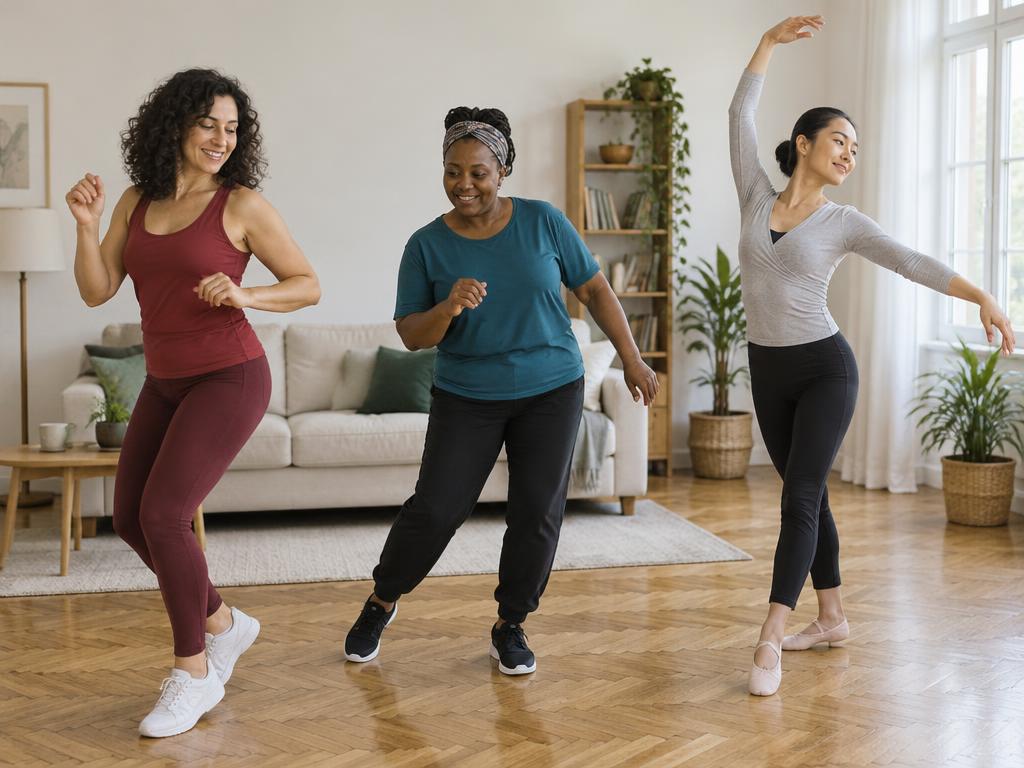
The main types of dance include social forms such as salsa and swing, stage techniques such as ballet and jazz, and groove-based styles such as house and hip-hop. Many can inspire home dance workouts: simplify the steps, keep the movements within a comfortable range, and choose a pace you can follow. The best starting point is not the most demanding style—it is one that fits your body, space, and day.
Perhaps you want a lively routine without jumping. Perhaps standing is difficult, or your time is interrupted by caring for someone else. This guide explains 25 styles and choreography families, what distinguishes them, and how to explore their movement at home. Not every entry is a single formal genre, and a fitness adaptation is not a substitute for learning the original dance tradition.
Which types of dance are easiest to try at home?
Look for three things before choosing: simple footwork, clear instruction, and movements you can adapt without losing the rhythm. Merengue-inspired steps, beginner line dancing, and straightforward hip-hop grooves can be approachable. Ballet and contemporary-inspired sessions can work too, provided the routine—not just its label—matches your experience.
Dance difficulty and exercise intensity are different. Remembering a complicated combination may be demanding without raising your breathing much; repeating a simple pattern can be an aerobic workout. For moderate effort, the CDC's practical check is that you can talk but not sing. A style name alone cannot tell you how hard a particular session will feel.[1]
Before pressing play, check whether the video includes jumps, spins, deep bends, overhead reaches, or getting down to the floor. If those are not appropriate, choose a different session rather than assuming you must copy everything. A chair-based class is a format, not a separate dance genre: it can borrow Latin, soul, or other rhythms while keeping the choreography seated.
What are the main Latin dance styles?
These social dances have different traditions and rhythms. Basic timing can often be explored solo, but learning partner technique requires additional instruction.
1. Salsa. Salsa includes several social dance styles, with rhythmic weight changes, footwork, and turns. For home fitness, begin with a compact forward-and-back basic or side steps, without spins. Everdance's Salsa Dance program combines Latin technique with guided home sessions; preview the steps before choosing your pace.
2. Merengue. This Dominican social dance has a steady pulse and alternating steps that make its basic timing easy to recognize. Practice a small march or side step without traveling across the room. You can enjoy the rhythm without adding large hip movements or partner turns.
3. Bachata. Bachata is a Dominican dance with different social styles, commonly introduced through a side-step pattern and a tap. Keep the steps small and let the tap be optional if weight transfer feels uncertain. Deep body rolls are not necessary for a basic home adaptation.
4. Cumbia. Cumbia has diverse musical and dance traditions across Latin America, rather than one universal step sequence. Some social versions use rocking steps and relaxed weight shifts. Explore the timing with a small rock or side step; a tutorial should explain which version it teaches.
5. Cha-cha. Cha-cha is recognizable for a quick triple step within its rhythm. Learn that timing slowly before linking combinations. For a home workout, make the quick steps compact and replace traveling sequences with steps in place; ballroom styling is not required.
6. Rumba. The name refers to distinct Cuban traditions and a ballroom category, so check which form an instructor means. Ballroom-inspired practice often emphasizes measured weight transfers and controlled steps. Use a comfortable stance rather than forcing hip action, deep bends, or an unfamiliar posture.
For a different rhythmic influence, this external PS Fit video features Khetanya Henderson teaching a West African-inspired workout. It is a 25-minute example of fitness choreography, not a representation of every African dance tradition, an Everdance class, or a prescription for everyone. Watch the movement demands first; you can use it for observation rather than participation.
How do hip-hop, house, and funk-based styles differ?
These labels come from different communities and music scenes. A fitness class may borrow a groove while omitting the original style's more complex technique.
7. Hip-hop. Hip-hop dance is an umbrella for social and performance forms connected to hip-hop culture, not one fixed routine. A basic bounce and step-touch can introduce its groove. Everdance's Hip-Hop Lite uses low-impact choreography; keep your bounce small and check each combination rather than assuming “lite” means suitable for every limitation.
8. House. House dance combines groove with distinctive footwork and techniques such as jacking. At home, begin with the pulse and a small upright step pattern. Fast changes of direction and floorwork can wait; a beginner fitness adaptation should not require either.
9. Popping. Popping uses brief muscle contractions timed to music, alongside other techniques. Start with a small arm or shoulder accent, relaxing between beats. For fitness-oriented practice, controlled movement matters more than reproducing a performer's sharpness; do not force a painful contraction.
10. Locking. Locking contrasts rhythmic movement with held positions and expressive gestures. Try a simple arm pattern followed by a comfortable pause, while keeping your feet stable. Deep squats and acrobatic elements are not necessary to explore the timing.
11. Disco. Disco describes a broad social-dance world associated with disco music, not one standardized choreography. A side step and comfortable arm reach can become an easy repeatable sequence. Keep reaches within your range and replace turns with a step in place.
12. Funk-based social dance. Funk is a broad music-led label that overlaps with, but does not replace, named styles such as popping and locking. In a home workout, it may mean relaxed grooves, shoulder rhythms, and repeated steps. Look for clear cues rather than assuming every “funk” class teaches the same technique.
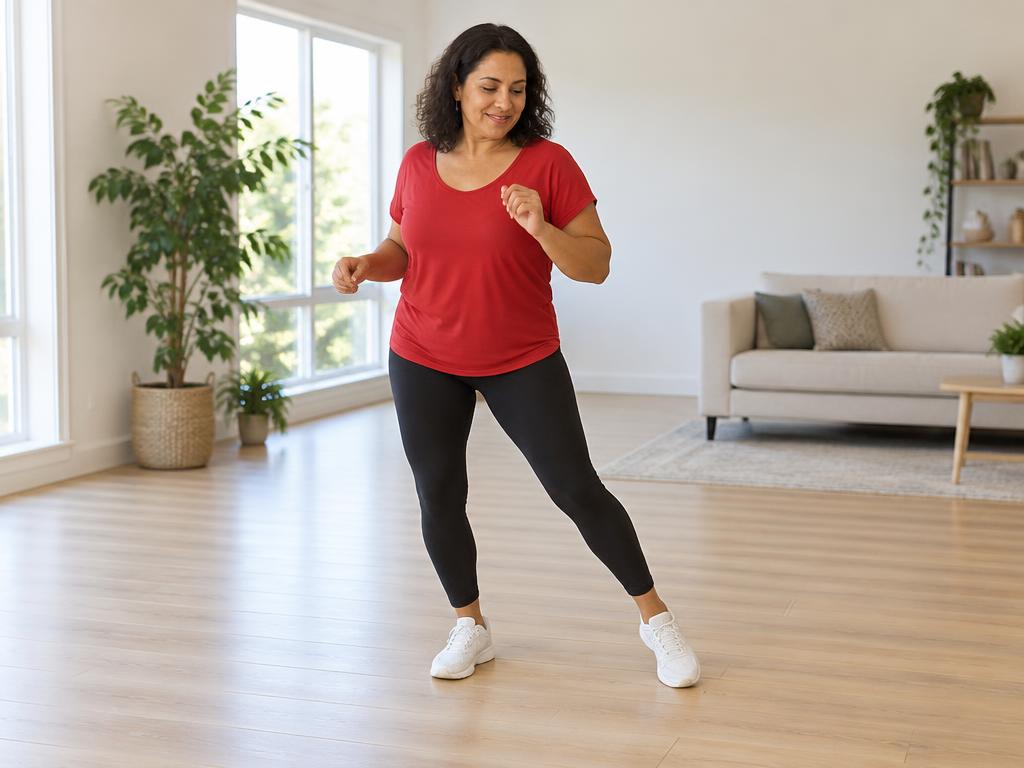
Can ballet, jazz, and contemporary dance become home workouts?
Yes, through appropriately adapted routines. Their artistic techniques remain distinct from fitness classes inspired by them: a sculpt session is not comprehensive ballet training, for example.
13. Jazz. Jazz dance includes social and theatrical forms, with musicality, isolations, and stylized steps. Begin with a step-touch and a simple arm pattern. Leaps, high kicks, and quick turns are optional elements of some routines, not requirements for exploring jazz-inspired movement.
14. Ballet. Ballet is a structured technique, not just stretching or standing on tiptoe. A home adaptation can use comfortable knee bends and arm pathways, with stable support when needed. Ballet Body Sculpt is ballet-inspired sculpt work using a chair-barre; do not force turnout or unsupported balance.
15. Contemporary. Contemporary dance encompasses varied approaches to movement and expression. For an upright home introduction, connect a small weight shift with slow arm pathways. Floorwork and large ranges of motion feature in some choreography, but need not be part of your workout.
16. Modern. Modern dance contains distinct techniques and histories; it is not simply another word for contemporary. Fitness adaptations may use grounded steps, changes in direction, and flowing movement. Choose an upright sequence if floor transitions or deep bends are not appropriate.
17. Lyrical. Lyrical choreography often interprets music and lyrics through flowing movement, drawing on several dance influences. Try a short phrase with a gentle reach and step. Expression does not require large extensions, fast turns, or a performance-level range of motion.
18. Tap. Tap creates rhythmic sounds through specialized shoes and footwork. Without tap shoes, you can mark a rhythm gently with your feet or hands rather than striking the floor. Check both your footing and the surface; quiet rhythm practice is an introduction, not a full tap technique lesson.
What other dance styles and choreography families can you explore?
These entries include social dances, culturally rooted traditions, and music-led choreography. Their origins and techniques should not be flattened into interchangeable workout labels.
19. Swing. Swing is a family of social dances with different rhythms and step patterns. Start with a simple rock step or side step without a partner. Spins and aerials are not part of a basic home fitness introduction; repeat a pattern that keeps you steady.
20. Country line dance. Line dancing uses repeating group sequences, often—but not only—to country music. A beginner routine may use step-touches, taps, and pauses. Replace a turn with stepping in place and choose a sequence that fits your available floor space.
21. Belly dance. This broad label covers diverse traditions and performance styles associated with the Middle East and North Africa. A home introduction might explore small chest, shoulder, or hip isolations. Keep the range comfortable; the style is not a promise to change belly fat.
22. Bollywood dance. Bollywood choreography draws on many influences in Indian cinema rather than representing one traditional form. Learn a short gesture-and-step phrase before increasing speed. You can keep footwork close to your starting position and reduce overhead arm movements.
23. Afrobeats-inspired choreography. Afrobeats is a popular-music umbrella, not one dance style or a synonym for all African dance. Afrobeat and Afrobeats are also different musical labels. Follow a named instructor teaching a specific pattern, and avoid assuming one workout represents every country, community, or tradition.
24. Dancehall. Dancehall is a Jamaican music and dance culture with named steps and evolving practices. Start with a clearly explained upright step at a manageable tempo. Large hip movements, deep bends, and fast transitions are not automatically suitable simply because they appear in a performance.
25. K-pop choreography. Routines created for Korean popular music combine multiple dance influences; K-pop is not one technical genre. Learn a short section, then simplify its footwork and gestures. Performance speed and precision are optional when your aim is home movement rather than reproducing a stage show.
How do you choose a style around your movement limits?
Start with what the session actually asks you to do. “Beginner” describes experience; “low-impact” generally describes avoiding landing forces such as jumps. Neither term confirms suitability for arthritis, balance difficulties, or recovery. CDC arthritis guidance recommends starting slowly, paying attention to symptoms, and seeking individualized recommendations when possible.[2]
| Your priority | A useful format to preview | What to check first |
|---|---|---|
| Movement with joint limitations | Seated dance or small-step choreography | Required standing, turns, bends, and symptom response |
| Strength without an age label | Sculpt or ballet-inspired resistance work | Genuine strengthening exercises and an appropriate challenge |
| Feeling stable | Clearly instructed supported or seated movement | Secure support, transitions, and clinical advice if needed |
| Returning after illness or surgery | Only movement cleared by your care team | Your specific restrictions—not the workout title |
| Staying home to care for someone | Short, easily interrupted sessions | Whether you can stop safely and return without rushing |
| A repeatable daily ritual | A familiar instructor and simple sequence | A schedule you can use; recorded guidance is not live supervision |
Everdance's Low-Impact Gentle Dance offers no-jump movement, while 10-Minute Chair Dance provides a seated format. These are different options, not interchangeable promises: the standing program is not a fully seated class.
If falls concern you, do not test yourself with unsupported single-leg moves. Researchers reviewing dance interventions concluded:
“Overall, certainty of evidence was very low; we are uncertain about the effect of dance interventions in reducing falls.”[3]
— Kimberly Lazo Green and colleagues, systematic review and meta-analysis, Age and Ageing
Dance is therefore not a proven replacement for a prescribed strength-and-balance program. After a stroke, surgery, or significant illness, ask your care team which movements and activity limits apply. A general video cannot assess your recovery.
How can different dance styles fit a sustainable home routine?
For your first visit to a routine, set aside five minutes to preview it, clear the floor, and notice the steps. Participation is optional. If the movements fit, try a small section; if they do not, choose another format. Move loose rugs and obstacles, and use a stable chair rather than something that can slide or tip.
A caregiver's session may end after one song. That interruption does not mean the time was wasted or must be made up. Someone seeking more strength can choose a challenging, appropriate format rather than being assigned gentle exercise by age. Someone seeking company may prefer the same instructor each morning; a recording can anchor a routine, but it cannot check on you.
If weight management is a goal, physical activity can contribute alongside eating patterns and other individual factors. No dance style guarantees a particular weight change.[4] Use the existing dance calorie guide for context rather than ranking styles by promises. For a comparison of workout formats, see What Is Dance Fitness?. For the broader evidence, see Is Dancing Good Exercise?.
Track experiences that matter to your day: following a sequence more confidently, finding a comfortable format, or returning without needing a perfect uninterrupted hour. These are observations, not promised treatment outcomes. Choose one style to become familiar with before building a varied week.
Frequently asked questions
What are the main types of dance?
Major groups include social dances, stage techniques, groove-based styles, and culturally rooted traditions. Fitness classes may adapt any of these, but their exercise demands depend on the choreography, pace, and duration.
Which dance is best for beginners at home?
There is no universal best choice. Simple merengue-inspired steps, line-dance patterns, or step-touch grooves can be approachable when the instruction and movements match your needs.
Do I need a partner to practice salsa or bachata?
No. You can explore timing and basic footwork solo. Partner connection, leading, following, and more complex technique require separate instruction.
Is chair dance a type of dance?
Chair dance is primarily a format. It can use different musical influences while keeping movement seated. Preview the actual session: some chair-based classes include standing transitions.
Which dance style is best for weight loss?
No style can guarantee weight loss. If it is one of your goals, choose appropriate activity you can repeat, rather than the routine with the strongest calorie claim. Joint comfort, stability, and everyday function remain important.
Sources
Bring a style from this guide into your day with Ballet Body Sculpt.
Explore ballet-inspired sculpt and chair-barre work in guided home sessions. Preview the stance, support and range of motion before choosing a session; this is fitness inspired by ballet, not a complete ballet technique course.
- Six-week ballet-inspired program
- Chair-barre exercises
- Guided home sessions
- Choose movements within your comfortable range

“Day 21 I did the whole combo for my husband. He cried. I cried. Worth every minute.”
Sofía has choreographed for music videos and taught heels, reggaeton and hip-hop in Madrid, Mexico City and Berlin for over 15 years. At Everdance she leads the at-home heels and Latin curriculum and writes the tutorials beginners actually finish.

Helena has spent two decades editing health journalism for European magazines. She fact-checks every Everdance article against primary sources.
Keep reading
All articles →
Learn Strip Dance at Home: A Realistic 6-Week Plan (No Pole)
Strip Dance vs Pole Dance: Which Should You Start With at Home?