
Learn Strip Dance at Home: A Realistic 6-Week Plan (No Pole)
A week-by-week strip dance plan for beginners learning at home without a pole — what to practise, how many minutes a day, what to wear, and the small milestones that tell you it is working.
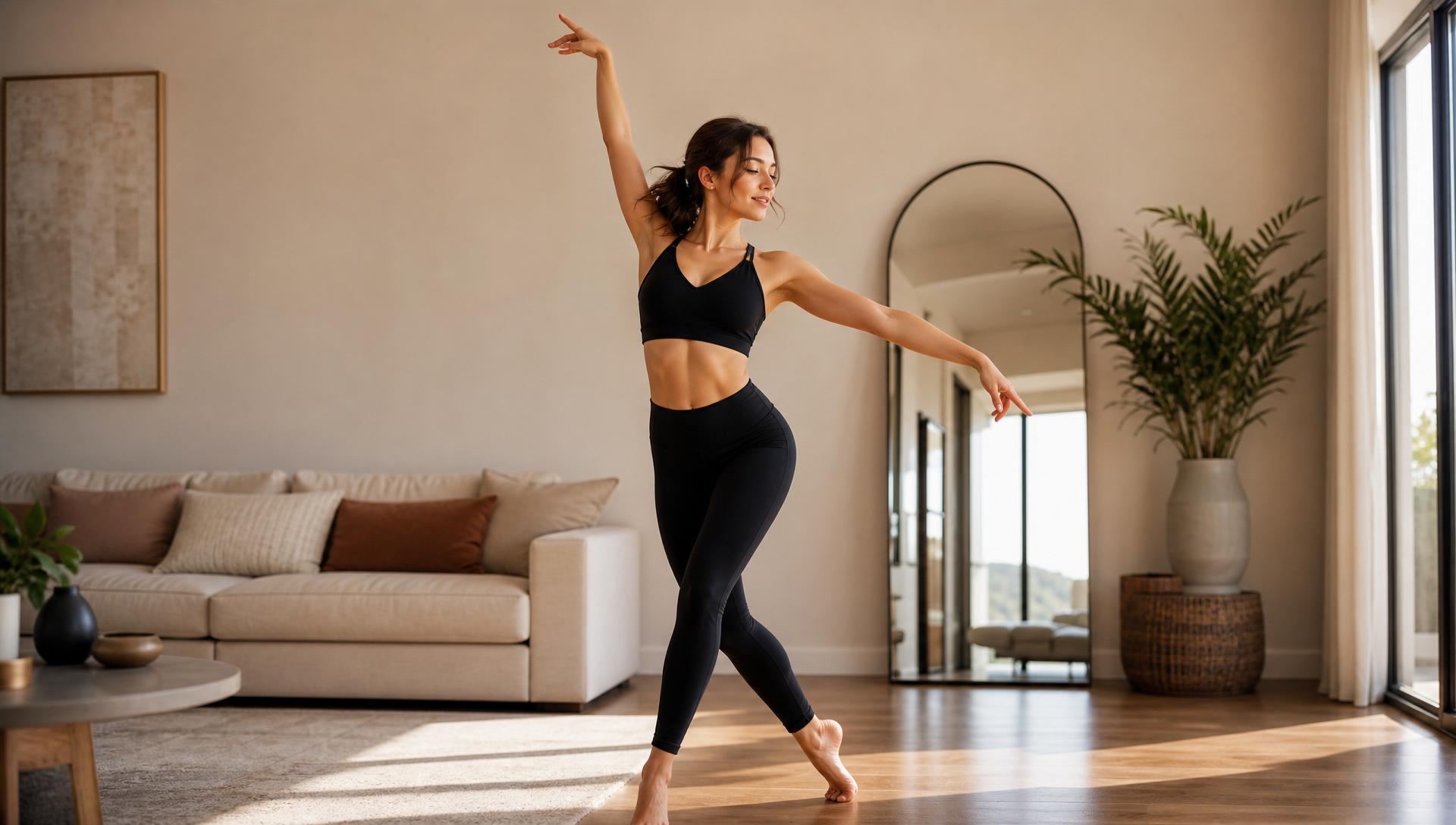
You do not need a pole, a studio, or a year of training to dance a full strip-style song in your own living room. You need six weeks, about fifteen minutes most days, and a plan that does not skip the awkward beginner phase. This is that plan.
Before you start — the three honest decisions
Strip dance at home is mostly defeated by logistics, not by technique. Settle these once, on day zero:
- Floor. A yoga mat for kneeling and floorwork. Bare wooden floor for walks. Carpet is fine for week one but slows you down later.
- Heels. Optional for the first two weeks. When you add them: a 6–8 cm block heel with a strap, not stilettos. Your ankles will thank you.[1]
- Privacy. Door closed. Curtains as you like. Phone face down. The first three weeks are not for an audience — including yourself in the mirror.[2]
Week 1 — Walks, music, and a body that remembers how to move
15 minutes a day, 5 days. No heels, no mirror.
The goal of week one is not choreography. It is to reconnect breath, music and weight transfer. Pick three songs you already love at 90–110 BPM. For each song:
- 30 seconds standing still, eyes closed, breathing on the beat.
- One minute of slow crossing walks across the room.
- One minute of side-to-side weight shifts with the chest leading.
- The rest: free movement. No phone, no judgement.
By Friday of week one your nervous system stops bracing the second the music starts. That is the actual win.
Week 2 — Body waves and the first floorwork drop
15 minutes, 5 days. Still no mirror. Add a yoga mat for the last 5 minutes.
Two new moves this week:
- The chest-to-hip body wave. Stand, push chest forward, then ribs, then hips. Slow. Reverse it. Practise to a single song until it feels like one motion, not three.
- The kneel-down. Step back with one foot, lower the same-side knee softly to the mat, bring the second knee down beside it. Then reverse to standing. Repeat 10 times each side, slowly.
By end of week two you can stand up, walk three steps, body wave, kneel down, and the transition feels like one phrase. That is the spine of every strip choreography you will ever do.
Week 3 — Add the mirror, add the heels (carefully)
20 minutes, 4 days.
This is the week most beginners quit. The mirror confronts you. The heels feel ridiculous. Both are normal. Two rules to get through it:
- Look at the floor in the mirror first, not your face. Watch your feet find the beat. Faces come back in week five.
- Practise heels barefoot first, then with heels, for the same combo. Always end the session barefoot.
Combo for the week: 4 walks → body wave → kneel down → hair flip up → stand. Repeat to one full song, twice through.
Week 4 — Floorwork basics
20 minutes, 4 days. Mat down, heels off for this entire week.
Three floorwork shapes — none of them require flexibility you do not already have:
| Shape | What it is | Cue |
|---|---|---|
| Cat sit | Kneeling, sit back to one hip | Slow, eyes follow the back hand |
| Side body roll | Lying on one side, ripple from shoulder to hip | Breath out on the ripple |
| Sphinx pose to chest pop | Forearms down, slow chest lift to the beat | Imagine a string from the sternum |
String them with the standing combo from week three: walk → wave → kneel → cat sit → roll → sphinx → back to standing. By Sunday it is one continuous minute of choreography. Yours.
Week 5 — Music interpretation, not more moves
15–20 minutes, 5 days.
Here is the secret most online tutorials skip: at this stage you do not need more moves. You need to learn to listen. Two drills:
- Half-tempo drill. Take your week-four phrase. Dance it at half the song's tempo. Then double. Then back to normal. Notice which version feels most yours.
- Pause drill. Find a moment in the song that surprises you — a silence, a drop, a vocal — and freeze on it for one full beat. Then resume. A single freeze is more powerful than ten extra moves.[3]
By end of week five, you are dancing the song, not the steps.
Week 6 — Record one take. Just one.
20 minutes, 3 days.
The final week is performance, not learning. Once during the week — only once — set the phone on a chair, press record, and dance your phrase to a full song. No retakes that day. Watch it the next morning, not the same night.
You will almost certainly notice two things:
- It looks better than it felt.
- The part you obsessed over is not the part that matters.
Save the clip somewhere private. In three months, when you forget how far you came, you will be glad you have it.
What "graduating" actually looks like
You will know the plan worked when, somewhere in week five or six, you press play on a random song in the kitchen — no plan, no mat — and your body just moves. A walk, a body wave, a small kneel. Nobody watching. That moment is the point of the whole six weeks. The choreography was a vehicle.[4]
From there, pick the next song. Pick the next program. Keep going one fifteen-minute session at a time. That is, honestly, the whole secret.
Sources
Put it into practice with Dance Cardio Burn.
High-energy, low-impact cardio in 20-minute sessions choreographed like a party. Fat burns, mood lifts, knees and back stay safe.
- 15 min daily sessions
- Low-impact modifications
- No equipment, 2 m²
- Cancel anytime
“Lost 3 kg without weighing food. I just kept pressing play because the music is that good.”
Sofía has choreographed for music videos and taught heels, reggaeton and hip-hop in Madrid, Mexico City and Berlin for over 15 years. At Everdance she leads the at-home heels and Latin curriculum and writes the tutorials beginners actually finish.

Helena has spent two decades editing health journalism for European magazines. She fact-checks every Everdance article against primary sources.
Keep reading
All articles →
Strip Dance vs Pole Dance: Which Should You Start With at Home?
The Best Music for a Dance Workout at Home: BPM, Playlists & the Science of Why Tempo Matters