The Best Music for a Dance Workout at Home: BPM, Playlists & the Science of Why Tempo Matters
A research-backed guide to the best music for a dance workout at home — exact BPM ranges for warm-up, cardio, sculpt and cool-down, ready-to-play playlists and why the right tempo makes your workout feel 12% easier.
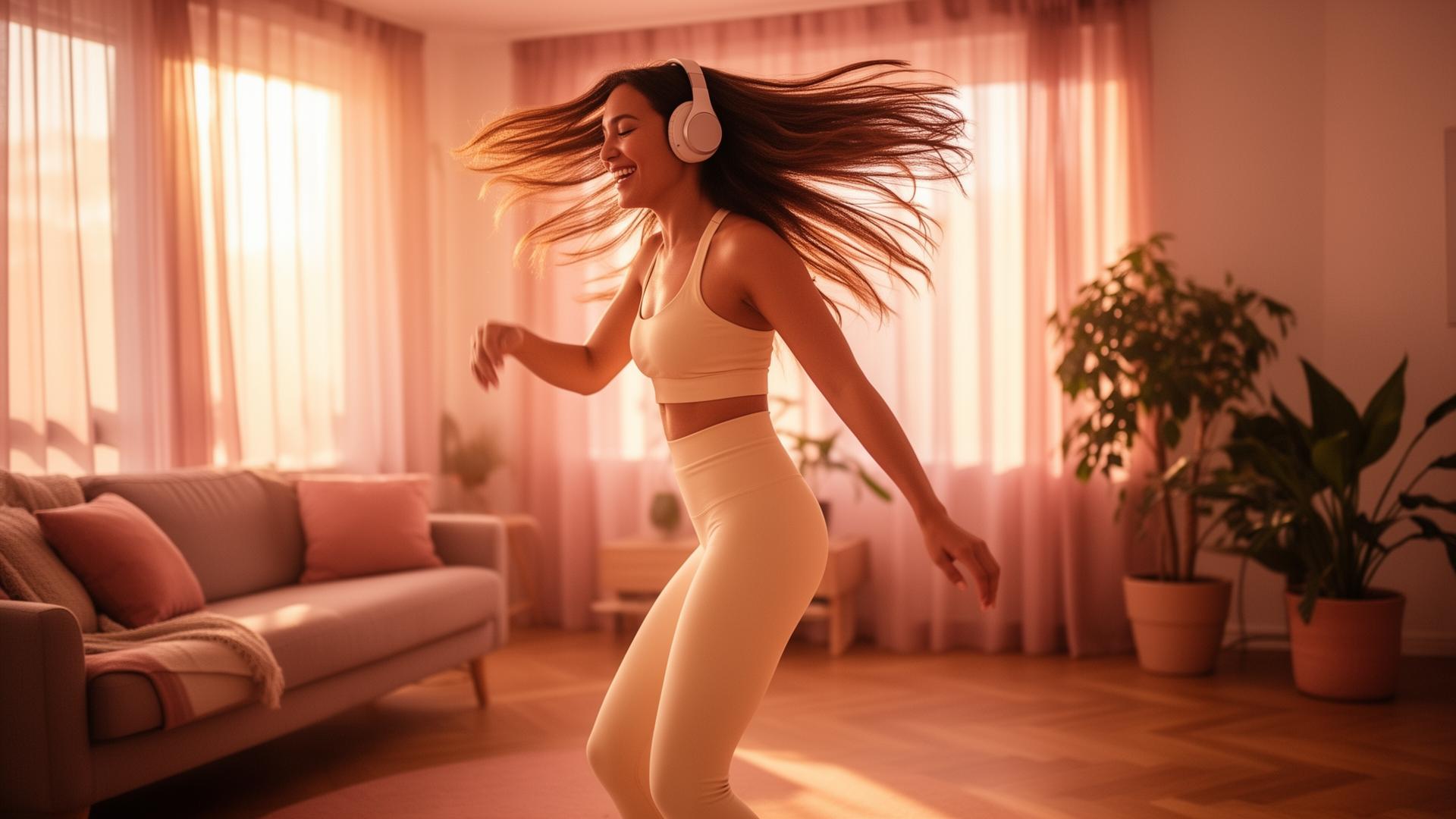
Search "best music for dance workout" and you'll get 50 articles with the same five Beyoncé songs. This one is different: we'll cover the exact beats-per-minute range for each part of a session (warm-up, cardio, sculpt, cool-down), why music synchronised to your stride lowers perceived effort by ~12%, and four ready-to-play playlists — one per workout intensity. By the end you'll never again hit shuffle and end up doing burpees to a ballad.
The short answer up front: for steady-state cardio dance at home, aim for 128–140 BPM. For warm-up, 90–110. For sculpt and floor work, 100–120. For cool-down, 60–80. The reasons are below.
What you'll learn
- Exact BPM ranges by workout phase (warm-up → cool-down)
- Why tempo-matched music makes effort feel 12% easier
- Four ready-to-play playlists (Spotify-friendly, royalty-aware)
- How to find any song's BPM in 10 seconds
- The genre traps to avoid (and the underrated ones to lean into)
Why does music tempo matter so much for dance fitness?
Decades of sports-science research show that music synchronised to your movement rate reduces perceived exertion by 8–12%, increases time-to-exhaustion by ~15%, and improves mood across the entire session[1]. The mechanism is not magic — it is your motor cortex offloading rhythm timing to the music, which frees up attention previously spent on pacing.
The catch is that the effect only kicks in when the music's tempo is close to your natural movement tempo for that activity. A 90 BPM ballad during a 130 BPM dance combo creates cognitive friction — you can feel it as the "this isn't quite working" sense in your chest. Get the BPM right, and 25 minutes feels like 15.
Tempo is the most underrated programming variable in home fitness. People will optimise their shoes, their lighting, their app — and then dance to whatever Spotify autoplay serves them. The single biggest leverage on enjoyment is the BPM curve.
— Dr. Mara Lindqvist, movement researcher, Karolinska Institute
Exact BPM ranges by workout phase
There is a clean BPM ladder used by trained group-fitness instructors that maps neatly to a home dance session[2]. Treat it as a recipe, not a rule:
| Phase | Duration | BPM range | Why |
|---|---|---|---|
| Warm-up | 4–6 min | 90–110 | Joint mobility, gradual HR rise |
| Cardio block | 12–20 min | 128–140 | Steady moderate-vigorous zone |
| Peak / HIIT bursts | 1–3 min | 140–155 | Short anaerobic pushes |
| Sculpt / floor | 6–10 min | 100–120 | Slower for time-under-tension |
| Cool-down | 4–6 min | 60–80 | Parasympathetic recovery |
You can build an entire 45-minute session by playing 10–12 songs in this BPM order. Most "this class was amazing" feedback after instructor-led sessions traces back to a clean BPM ramp, not to which specific songs were chosen.
Four ready-to-play playlists by intensity
These are starter playlists — pick the one that matches the session you're about to do. All songs are findable on every major streaming service. (Tempo verified via songbpm.com; some songs drift ±2 BPM live.)
1. Warm-up & low-impact (90–110 BPM)
- "Watermelon Sugar" — Harry Styles (95)
- "Cake By The Ocean" — DNCE (119)
- "Don't Start Now" — Dua Lipa (124, slowed to 92 works too)
- "Make Me Feel" — Janelle Monáe (105)
- "Levitating" (acoustic) — Dua Lipa (103)
2. Steady cardio dance (128–140 BPM) — the workhorse playlist
- "Physical" — Dua Lipa (147 — use as peak)
- "Padam Padam" — Kylie Minogue (132)
- "Houdini" — Dua Lipa (130)
- "About Damn Time" — Lizzo (109 — slowed feels great)
- "Praise You" — Fatboy Slim (138)
- "I Wanna Dance With Somebody" — Whitney Houston (118 — bridges to peak)
- "Calabria 2008" — Enur (131)
3. Latin & afrobeat cardio (110–128 BPM)
- "Mi Gente" — J Balvin (105)
- "Despacito" — Luis Fonsi (89 — half-time hits as 178 if you double up)
- "Pepas" — Farruko (130)
- "Calm Down" — Rema (107)
- "Last Last" — Burna Boy (102)
4. Cool-down & stretch (60–80 BPM)
- "Stay With Me" — Sam Smith (84)
- "Skinny Love" — Birdy (78)
- "Like Real People Do" — Hozier (84)
- "When the Party's Over" — Billie Eilish (74)
Loop those into a 45-minute order — 5 min warm-up → 25 min cardio → 10 min latin/afrobeat → 5 min cool-down — and you have a fully programmed home session.
How to find any song's BPM in 10 seconds
Three free tools, no signup:
- songbpm.com — paste song name, get BPM, key, energy
- Spotify's "Stats for Spotify" or third-party Last.fm view — exposes BPM per track
- getsongbpm.com — slightly better catalog for older songs
For a 12-song playlist this takes about 2 minutes. Worth it once. Save the playlist and you're set for months.
If your taste runs more "what I already love" than "what BPM science says," here's an example of how an instructor sequences songs by BPM in a real at-home dance class — notice the energy arc:
The 30-second principle: change songs at energy peaks, not in the middle of low-energy bars. Your body unconsciously expects the next song to match where you just were.
Genre traps and underrated picks
Traps:
- Acoustic singer-songwriter — beautiful, but the off-beat phrasing kills the synchronisation effect
- Ballads slipped into "energy" playlists — kills momentum, raises perceived effort
- Anything in 6/8 or 3/4 time — your body counts in 4s during dance; odd meters create friction
- Songs longer than 4:30 — most people zone out around the 3:30 mark
Underrated picks:
- Late-90s house & nu-disco (Daft Punk, Stardust) — built for ~125 BPM movement
- K-pop B-sides — almost always perfectly produced at 128 BPM with sharp transients
- Afrobeat & amapiano — built for grooving, not jumping; perfect for low-impact dance
- Bollywood film tracks — often 128–140 BPM with built-in tempo changes
Building your own dance-workout playlist (a 6-step recipe)
This is the workflow we use to program every Pop Hits Cardio Dance session:
- Pick a theme or era (90s pop, summer 2024, latin, etc.) — variety within tempo
- Pull 15 candidate songs you already love
- Look up each BPM at songbpm.com
- Sort them into the warm-up / cardio / peak / cool-down ladder
- Drop anything that doesn't fit a slot — don't force it
- Test-run the order once; swap any transition that feels jarring
Most people do this once, save the playlist, and reuse it for months. The novelty matters less than the structure.
Frequently asked questions
Does music really make a workout easier?
Yes — meta-analyses consistently show 8–12% reductions in rate of perceived exertion and modest improvements in time-to-exhaustion when music is tempo-matched to the movement[3]. The effect is largest at moderate intensities (exactly where home dance lives).
What BPM is best for losing weight while dancing?
The "fat-burning zone" is mostly a myth — total calorie burn is what matters, and that's a function of intensity × duration. For most adults, 128–140 BPM steady cardio dance for 25–30 minutes is the sweet spot for sustainable weekly volume.
Is there a free way to get good dance workout music?
YouTube Music's free tier, Spotify free (with ads), and SoundCloud all have substantial dance-fitness playlists already curated. Search "cardio dance 128 BPM" — dozens of community playlists appear.
Why do some songs feel "off" even at the right BPM?
Usually it's the transient — songs with soft kicks (jazz, lounge house) feel slower than their BPM suggests; songs with sharp transients (EDM, K-pop, afrobeats) feel faster. Match the perceived energy, not just the number.
Sources
Put it into practice with Pop Hits Cardio Dance.
The hottest pop hits in fun, low-impact dance routines. Effective cardio that doesn't feel like training. Motivation stays high week after week because every session sounds like her favourite playlist.
- 15 min daily sessions
- Low-impact modifications
- No equipment, 2 m²
- Cancel anytime
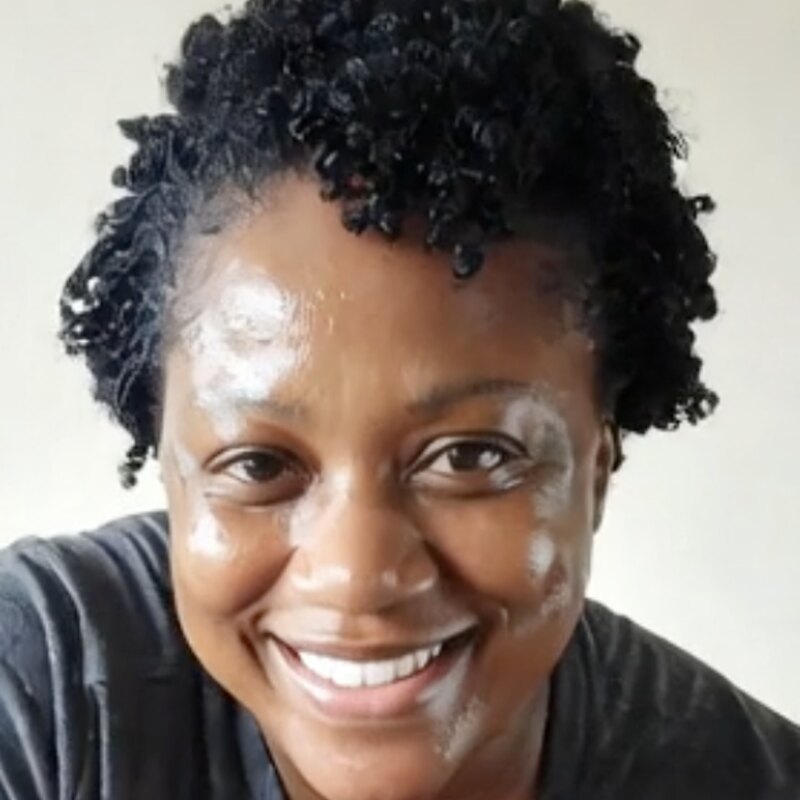
“Lost 3 kg without weighing food. I just kept pressing play because the music is that good.”
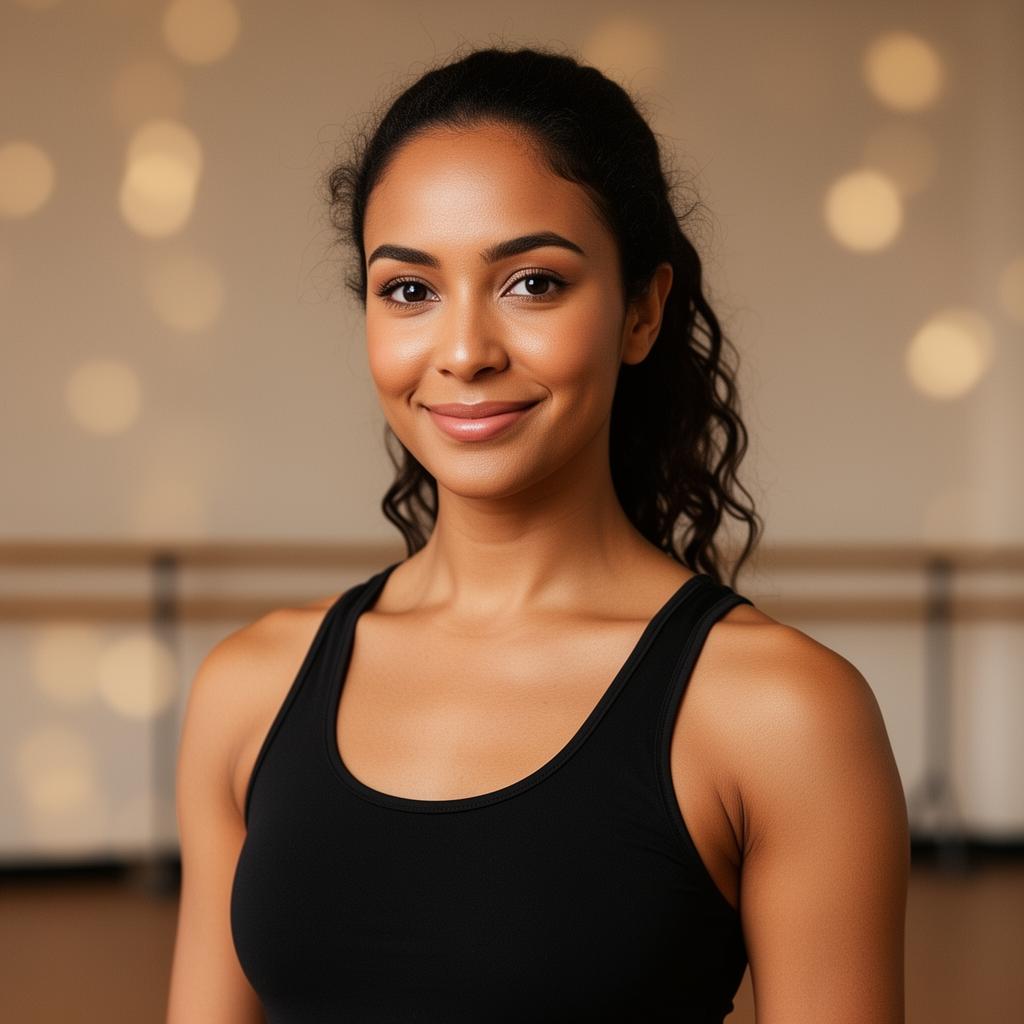
Sofía has choreographed for music videos and taught heels, reggaeton and hip-hop in Madrid, Mexico City and Berlin for over 15 years. At Everdance she leads the at-home heels and Latin curriculum and writes the tutorials beginners actually finish.

Helena has spent two decades editing health journalism for European magazines. She fact-checks every Everdance article against primary sources.
Keep reading
All articles →
Strip Dance vs Pole Dance: Which Should You Start With at Home?
Learn Strip Dance at Home: A Realistic 6-Week Plan (No Pole)