
Is Dancing Good Exercise? What the Research Says
Dancing can support aerobic fitness and challenge your balance. Learn what the evidence says, where its limits are, and how to begin with a routine that fits your body.
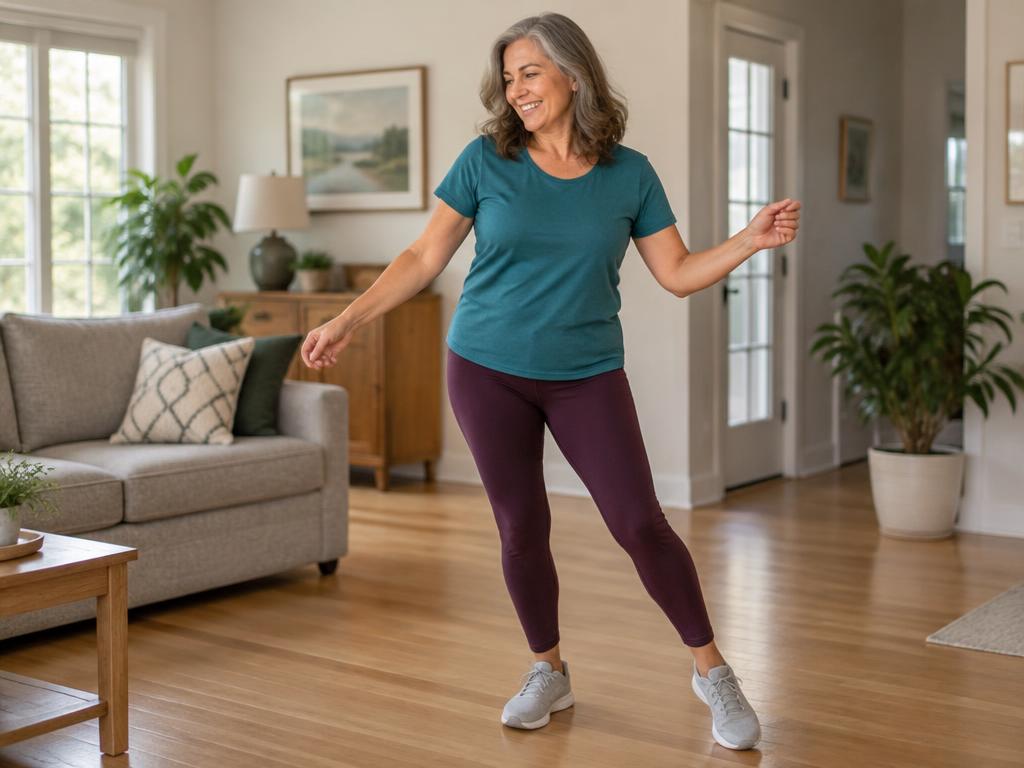
Is dancing good exercise? Yes — when it gets you breathing harder, dancing can count toward your weekly aerobic activity. Thirty minutes of moderate-intensity dancing on five days adds up to the CDC's recommended 150 minutes. That is the aerobic part of the recommendation, not the whole prescription: adults also need muscle-strengthening activity on at least two days.[1]
Dance may offer something useful beyond getting your heart rate up. Following a rhythm, changing direction and remembering a short sequence can challenge coordination and balance. Reviews of dance programs report promising physical and cognitive results, although the studies differ in quality and do not prove that every routine gives the same benefits.[2][3]
You do not need to look like a dancer to start. The useful question is whether the session suits your body and feels manageable enough to repeat. Here is how to judge that — without turning exercise into another thing to get right.
What counts as good exercise, and does dancing qualify?
Good exercise has a purpose you can recognise. You might want more stamina on the stairs, confidence stepping around furniture, or simply a regular break from sitting. Those goals call for different kinds of movement; one routine does not have to do everything.
For aerobic exercise, pay attention to effort rather than the video's label. At a moderate pace, you should generally be able to talk but not sing. If you can sing comfortably, the movement may be light. If you can only say a few words before pausing for breath, it may be vigorous.[4] Your own fitness and health affect what a given pace feels like.
That means a gentle dance session is not automatically moderate exercise, and a fast-looking routine is not automatically right for you. Seated movement can still be purposeful; whether it meets an aerobic target depends on your effort. Start with a format you can control rather than trying to match somebody else's speed.
Dance can also involve repeated bends, stepping and weight transfers. Reviews suggest potential improvements in functional fitness, but a dance session should not automatically be counted as a complete strength workout.[2][3] Keep deliberate strengthening in your week. For the everyday goal of staying independent, variety matters more than finding a single perfect activity.
How does dance fitness compare with gym workouts and dance classes?
Dance fitness usually uses repeated movements set to music, with the emphasis on staying active rather than performing a polished routine. A technique class generally spends more time on how a step looks and feels. Gym training can focus more precisely on strength or endurance. None is inherently better; the right choice depends on your goal and preferences.
| Question | Gym-based workout | Dance technique class | Dance fitness at home |
|---|---|---|---|
| Main focus | Strength, endurance or a chosen training goal | Learning a style and improving technique | Repeated movement to music |
| How progress is tracked | Load, repetitions, time or effort | Control, timing and skill | Consistency, comfort and manageable effort |
| What a beginner needs | Instruction on equipment or movements | A beginner-level class | A routine with clear, repeatable steps |
| How easy it is to adjust | Often very adjustable | Depends on the class and teacher | Depends on the routine and available alternatives |
| Main practical advantage | Targeted training and equipment | Feedback and structured skill learning | No travel; a session can fit around home life |
There is room for all three. You could dance for aerobic movement, use simple strengthening exercises on other days, and take a dance class because you enjoy learning. Choosing dance does not mean rejecting the gym, and choosing a chair routine does not mean giving up on progress.
If avoiding impact is the priority, our guide to low-impact cardio explains why “no jumping” and “easy” are not the same thing. Look for a format that lets you regulate effort without movements you cannot comfortably manage.
What does research actually say about the benefits of dancing?
Balance and mobility: Fernández-Argüelles and colleagues reviewed seven studies involving adults over 60 without disabling disease. The studies showed encouraging changes in balance, gait and related measures. However, small samples and inconsistent methods prevented the authors from confirming significant benefits across those factors.[2] That is a reason to be hopeful, not a reason to promise that dancing prevents falls.
Strength and functional fitness: Hwang and Braun reviewed 18 studies using several dance styles. Many measures of muscular strength, endurance and balance improved. Participants and interventions varied, so the findings describe a range of supervised programs rather than a guarantee about an individual at-home video.[3]
Cognition: The same review reported positive changes in several measures of cognitive ability. Remembering steps may be a useful challenge, but the review did not establish that dance prevents dementia or treats a mental-health condition.[3]
The findings suggest that dance, regardless of its style, can significantly improve muscular strength and endurance, balance, and other aspects of functional fitness in older adults.[3]
— P. W. Hwang and K. L. Braun, systematic literature review, Alternative Therapies in Health and Medicine
The quoted conclusion is encouraging. Read it alongside the limitations: study sizes, styles, supervision and outcome measures differed. Neither review tested Everdance specifically. General physical-activity benefits come from being active regularly, not from a particular app or brand.[1]
For a broader discussion of the evidence, see our research guide to dance and adult health. Meanwhile, here is an accessible example from Everdance's own channel. Preview the movements first and choose only those that feel comfortable; a seated routine is not a substitute for individual rehabilitation advice.
Why choose dancing if music helps you keep moving?
You may already know which music makes you tap your foot while cooking. That is a practical starting point: choose a routine whose pace and soundtrack make beginning feel less like a chore. Enjoyment is personal, so there is no need to like the same playlist as an instructor.
A useful home session does not require learning the whole sequence. Repeat a step-touch while a complicated turn goes by. Keep your arms lower if an overhead movement feels uncomfortable. You can stay with the simplest version and still take part; matching the choreography is not the test.
For somebody caring for a partner or family member, the advantage may be staying close to home. For somebody living alone, following a familiar instructor may make the session feel less solitary. Those are reasons to choose a format, not medical outcomes. You do not have to justify exercise with a calorie number.
If music selection is the barrier, our at-home dance workout music guide offers a starting point. Choose the pace you can follow today, not the one you think you should be able to manage.
Can you dance with joint pain or limited mobility?
Joint pain, a previous injury and uncertainty about balance deserve more than a generic “just keep moving.” Choose a routine that fits your current abilities. If you are returning after surgery, a stroke or an illness, ask your clinician or physical therapist what movements and intensity are appropriate before starting.
For a first session, clear the floor and use stable footwear. If using a chair, choose a sturdy one without wheels and make sure it cannot slide. Avoid fast pivots, jumps or deep bends if they provoke pain. Seated options reduce standing demands, but they still need to suit your individual restrictions.
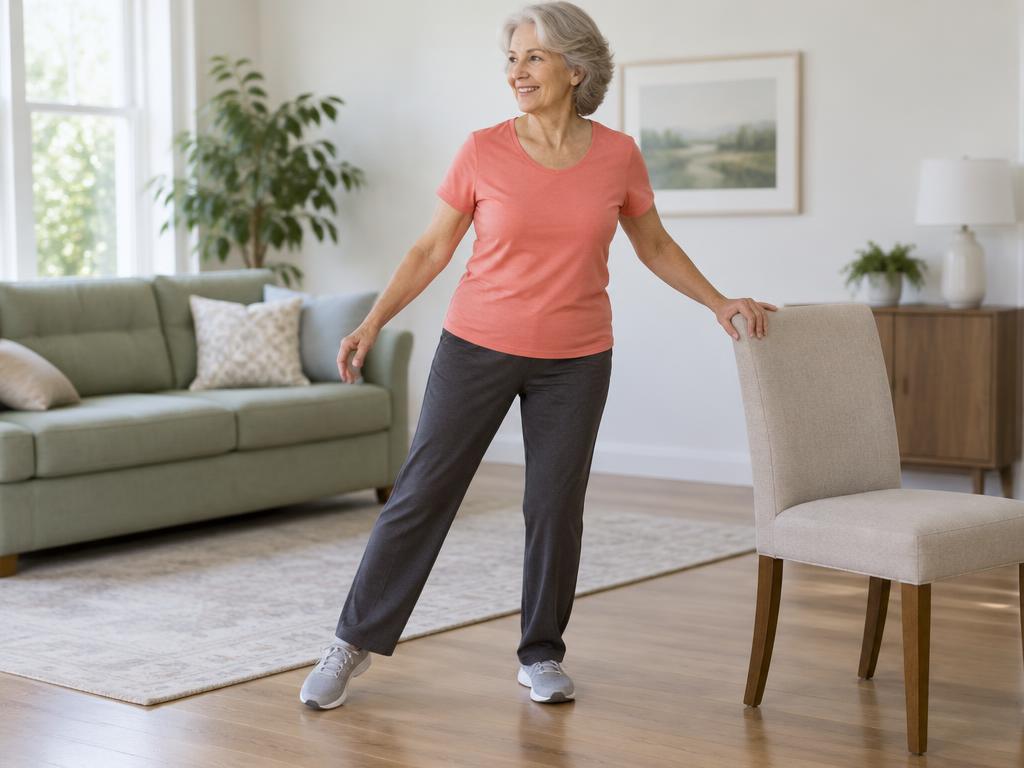
Stop if you feel dizzy, have chest pain, or develop unusual breathlessness; seek appropriate medical help. Do not push through sharp pain to finish a song. Making a movement smaller, taking a break or choosing another format is not failing the workout.
For a gentler introduction, read how to start chair dance at home. A program description can help you choose, but do not assume an app automatically removes every unsuitable move. Preview the session and follow your own medical advice.
How much dancing should you do each week?
The CDC recommends at least 150 minutes of moderate aerobic activity weekly, plus muscle-strengthening on two days. You can divide activity into smaller chunks, and doing some activity is better than doing none.[1] Walking and other aerobic activities can contribute alongside dance; the target does not have to come from one format.
The table below is an example of scheduling, not a promised results timeline. Increase duration only when the current amount feels manageable. Some people will need a smaller starting point, and recovery matters as much as adding minutes.
| Example schedule | Weekly dance time | How to use it |
|---|---|---|
| 10 minutes on 3 days | 30 minutes | Establish a manageable starting routine |
| 15 minutes on 4 days | 60 minutes | Build consistency without long sessions |
| 20 minutes on 5 days | 100 minutes | Combine with other suitable aerobic activity |
| 30 minutes on 5 days | 150 minutes | Meets the aerobic minimum if effort is moderate; keep separate strength sessions |
Instead of expecting a particular change by week two, note what you actually experience. Was the routine easier to follow? Did you recover comfortably? Could you complete the same session without needing an extra pause? Everyday tasks, such as getting up from a chair, can be useful observations, but there is no guaranteed timetable for improvement.
Calories are another estimate, not a score. If you want context, our guide to calories burned while dancing explains how style, duration and body size affect the numbers. For this article, the main aim is a repeatable movement habit.
How can you start a dance workout at home?
Choose one short session and a time you can realistically protect. Ten minutes is a practical suggestion, not a minimum you must achieve. If five minutes is your comfortable starting point, start there. Leave enough room to move without stepping over cables, rugs or toys.
Preview the first few movements before joining in. Begin with small steps and relaxed arms. During the session, use the talk test to check effort, pause when needed, and finish with slower movement rather than stopping abruptly.[4] Your first attempt should tell you whether the format suits you, not whether you can keep up at any cost.
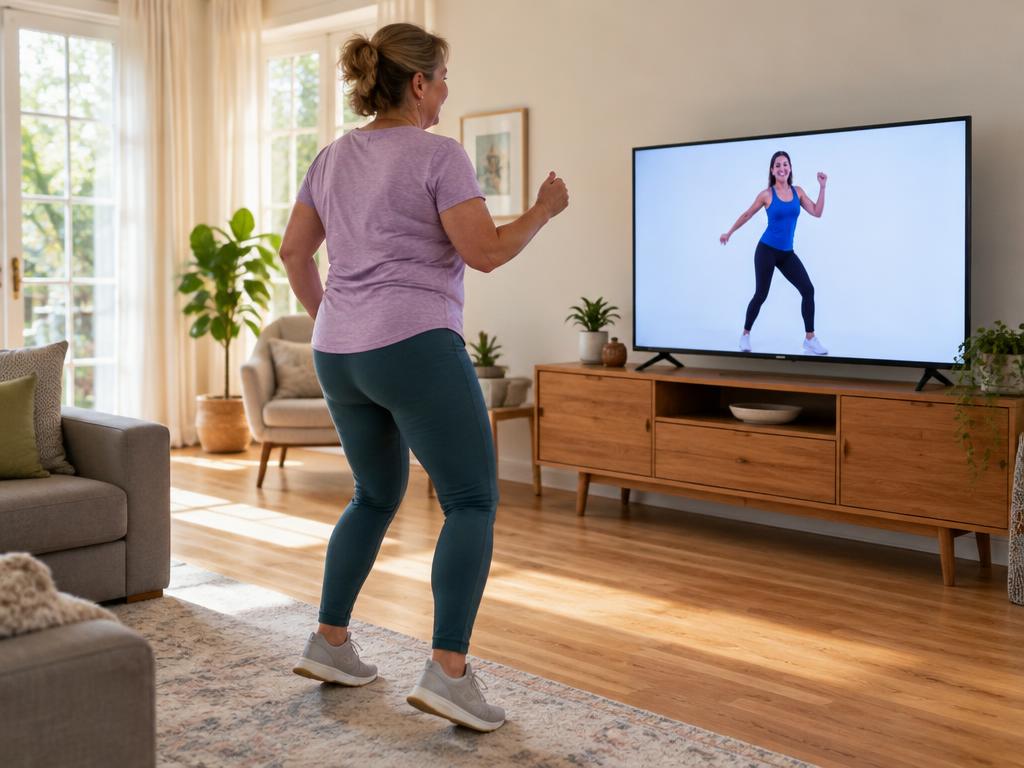
Cardio Dance for Beginners is one option to explore for repeated standing steps. If support is your priority, look at Chair Balance Dance Flow and preview its movements before deciding. Pick by present comfort rather than an age label.
Before paying for any app, check the current price, renewal terms, cancellation method and refund conditions. Free videos can also be a valid starting point. A subscription makes sense when its structure and selection help you keep returning — not because free movement is somehow less worthwhile.
FAQ: Is dancing good exercise?
Is dancing better exercise than walking?
Both can contribute to aerobic activity when performed at a suitable intensity. Dance can add changes of direction and coordination challenges, while walking may be simpler to organise. Research does not establish that every dance routine is better than walking.[1][2]
Is dancing a good workout for weight loss?
Dancing uses energy and can form part of a weight-management plan. Results depend on overall activity, food intake and individual circumstances. Stamina, comfort and consistency are useful goals even when weight does not change.
Can I dance if I have bad knees?
It depends on the cause of your symptoms and the movements involved. Choose smaller, low-impact or seated movements that do not provoke pain, and get individual advice for new pain, significant restrictions or recovery after an injury. Do not assume any routine is suitable just because it says “gentle.”
How long should a beginner dance workout be?
Try a short, manageable session — perhaps five to ten minutes — and adjust to your comfort. Short chunks of activity count. Build duration gradually rather than trying to meet a whole weekly target immediately.[1]
Is dance fitness the same as Zumba?
Zumba is a branded form of dance fitness. Dance fitness is the broader category and can use different music, styles and levels of intensity, including seated formats. The best choice is the one whose movements and pace suit you.
Sources
Put the music into your week with Pop Hits Cardio Dance.
If music makes starting easier, try repeated low-impact movements set to pop tracks. Preview the routine, choose comfortable steps, and build a habit at your own pace.
- Pop music and repeated steps
- Low-impact dance routines
- At-home movement
- A pace you can adjust
“Lost 3 kg without weighing food. I just kept pressing play because the music is that good.”

Lena is a doctor of physical therapy (DPT) who has spent 12 years working with adults 60+ on balance, arthritis recovery, and a confident return to movement after injury. She designs Everdance's chair and low-impact programs and writes everything we publish about ageing well.

Helena has spent two decades editing health journalism for European magazines. She fact-checks every Everdance article against primary sources.
Keep reading
All articles →
How Many Calories Does Dancing Burn? (by Style, 30 and 60 Minutes)
Low-Impact Cardio for Women Over 40: A Joint-Friendly Guide That Actually Raises Your Heart Rate