
What Is Dance Fitness? How It Differs from Cardio Dance
Dance fitness is more than cardio. Compare aerobic, sculpt, and seated sessions, understand their movement demands, and find a practical starting point at home.
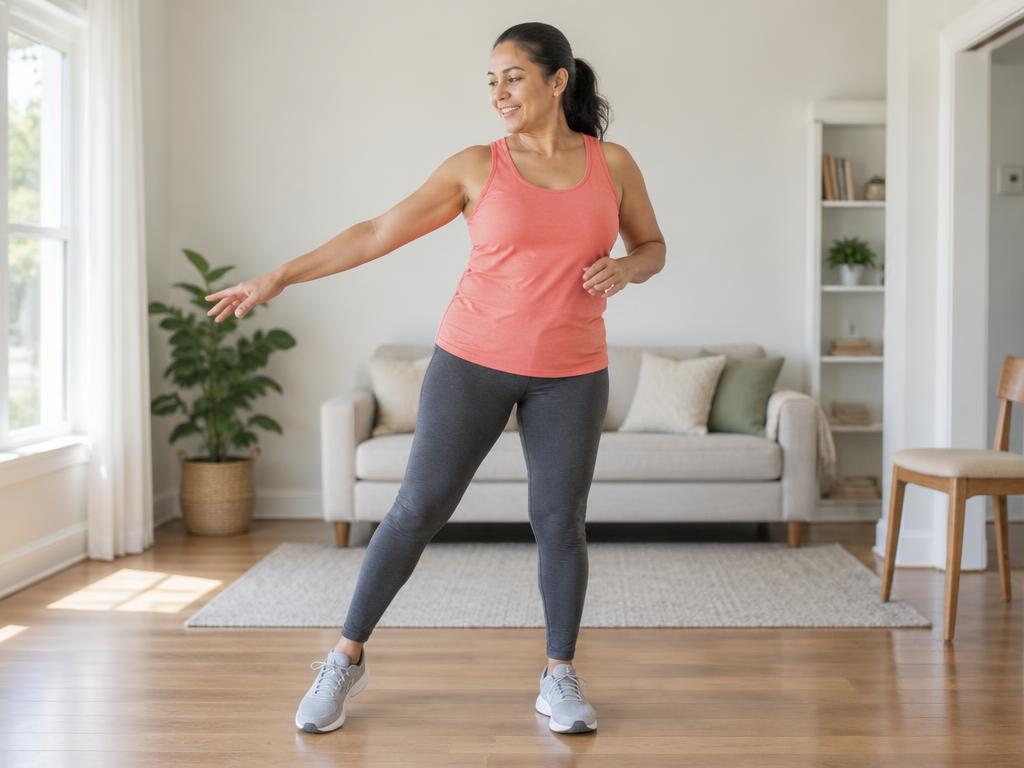
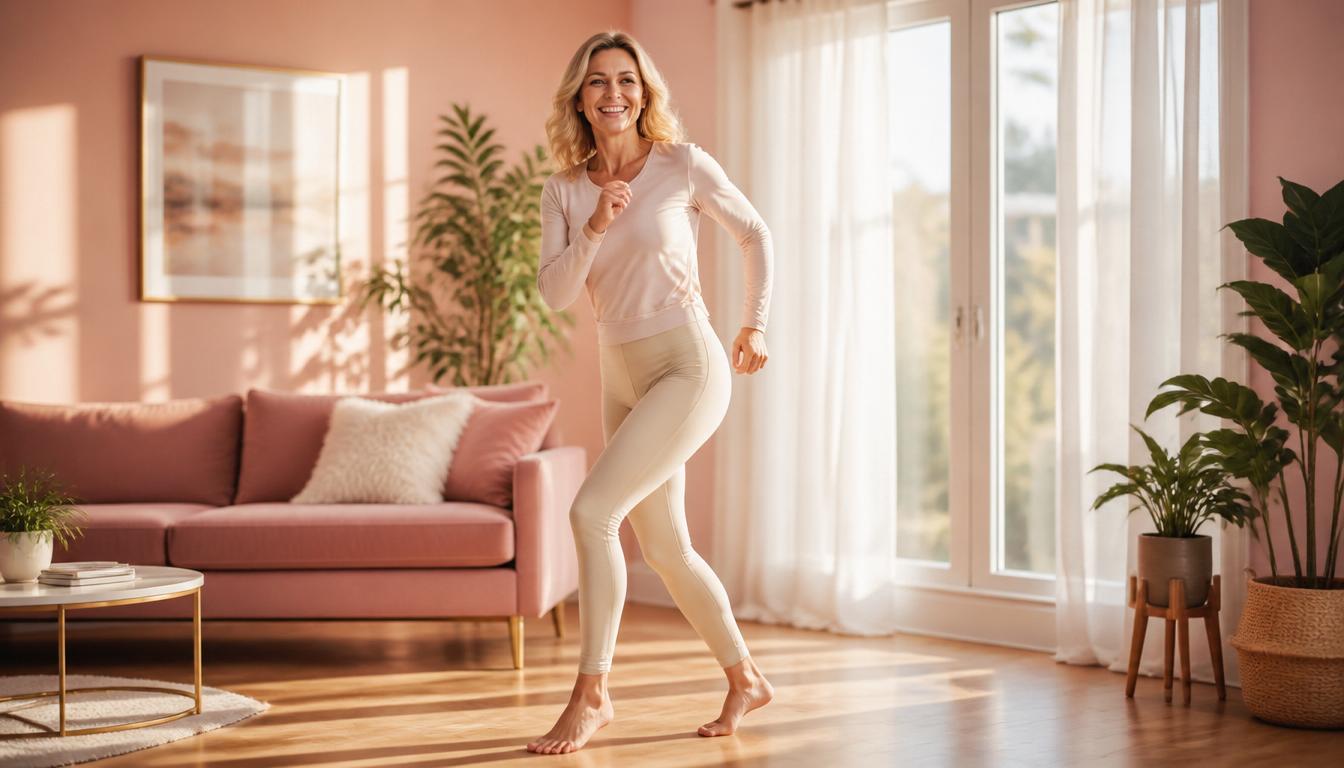
What is dance fitness? It is exercise organized around dance movements, music, and choreography. Cardio dance is a format within that broad category, usually emphasizing sustained movement that raises breathing and heart rate. Other dance-fitness sessions may focus on resistance work, controlled movement, or a seated routine. These labels overlap; they are not universal medical classifications.
The distinction matters when you choose something to do at home. You may want aerobic activity without jumping, more strength without being assigned an age category, or a short session that fits between caregiving tasks. Understanding the format helps you choose what the session actually offers—not what its title seems to promise.
What does a dance fitness class actually involve?
A dance-fitness class turns movement into an exercise session. Rather than learning a complete performance piece, you might repeat a few steps, connect them to an arm pattern, and follow an instructor through a warm-up, main section, and gradual finish. Some classes teach combinations slowly; others expect you to follow a repeated sequence while it continues.
Dance fitness is broader than one particular style. Latin-inspired steps, hip-hop grooves, ballet-inspired exercises, and contemporary movement can all influence a workout. They are not interchangeable traditions, and using their movements for exercise is not the same as learning their full technique or history.
For a beginner, the important questions are practical: Can you see the instructor's feet? Are the transitions explained? Does the class require standing throughout, getting on the floor, or remembering long sequences? Does it include the kind of challenge you want?
You do not need to dance accurately to participate in an appropriate fitness session. But “follow along” should not mean ignoring a movement restriction. If a session depends on a step you cannot comfortably do, another routine may be a better choice than constantly improvising substitutions.
How is cardio dance different from dance fitness?
Cardio dance puts aerobic effort at the center of the session. It often links simple steps into repeated sequences so you spend more time moving and less time learning choreography. That is a programming emphasis, not a guarantee of nonstop exercise or high intensity.
The CDC explains aerobic activity in straightforward terms:
Aerobic physical activity or "cardio" gets you breathing harder and your heart beating faster.[1]
— U.S. Centers for Disease Control and Prevention, physical activity guidance
A cardio-dance class may use side steps, marching patterns, or repeated arm-and-leg combinations without jumping. Conversely, a choreography lesson can contain energetic movements but long pauses that make it a different experience. Dance complexity, impact, and aerobic effort are three separate things.
This external PS Fit video shows Charlize Glass leading a 10-minute dance-cardio workout. Watch first to see its pace and movement demands. It illustrates one format; it is not an Everdance session or a recommendation that everybody copy every move.
Dance fitness vs. cardio dance: what should you compare?
Use the distinction to ask better questions about a class, not to divide every routine into rigid categories. One session can combine aerobic movement with resistance exercises; another can alternate learning and dancing.
| Feature | Dance fitness: the broad category | Cardio dance: an aerobic emphasis |
|---|---|---|
| Main purpose | Dance-based exercise with different possible priorities | Sustained rhythmic movement that increases aerobic effort |
| Typical pacing | May alternate instruction, dance, and targeted exercises | Often repeats combinations with fewer long teaching pauses |
| Dance influences | Can draw on Latin, hip-hop, ballet, jazz, and other forms | Can draw on the same influences |
| Strength work | May include resistance exercises; check the description | Not guaranteed simply because arms and legs are moving |
| Impact | Can be seated, low-impact, or include jumps | Can also be low-impact; “cardio” does not mean jumping |
| Coordination demands | Depend on sequence length and transitions | Simple repeated steps can still feel demanding |
| What to preview | Actual exercises, supports, equipment, and progression | Pace, rests, turns, and how much movement is continuous |
For example, a slow ballet-inspired sequence may ask for substantial control without being primarily aerobic. A simple Latin step pattern may raise breathing through repetition. Neither is inherently better: they serve different priorities, and the same person may want both in a week.
Which dance fitness formats does Everdance offer?
Everdance's catalog includes both dance-style programs and workout formats. The most useful starting point is the structure described on each program page, followed by a preview of the movements. Here are five relevant options with different emphases.
Beginner cardio. Cardio Dance for Beginners is a four-week starter plan that develops basic step patterns into cardio sessions. Its description includes slow step breakdowns and low-impact options. It is relevant if you want to become familiar with repeated steps before more complicated choreography—not a promise that every move suits every condition.
Dance with resistance. Dance Sculpt Fusion combines choreography with light resistance, using dumbbells or fitness bands. Unlike a no-equipment cardio session, this format includes equipment and targeted exercises. Check the load and movements against your experience; a “sculpt” title alone does not establish how much strengthening work you will do.
Ballet-inspired control. Ballet Body Sculpt uses ballet-inspired exercises, including chair-barre work. It is a fitness adaptation, not a complete ballet technique course. Support, stance, and range of motion matter more than achieving a particular visual shape or forcing turnout.
No-jump movement. Low-Impact Gentle Dance is described as a 30-day series with no jumps, combining gentle cardio, posture work, and mobility. This is not the same as a fully seated routine. Preview standing requirements and transitions if those affect your choices.
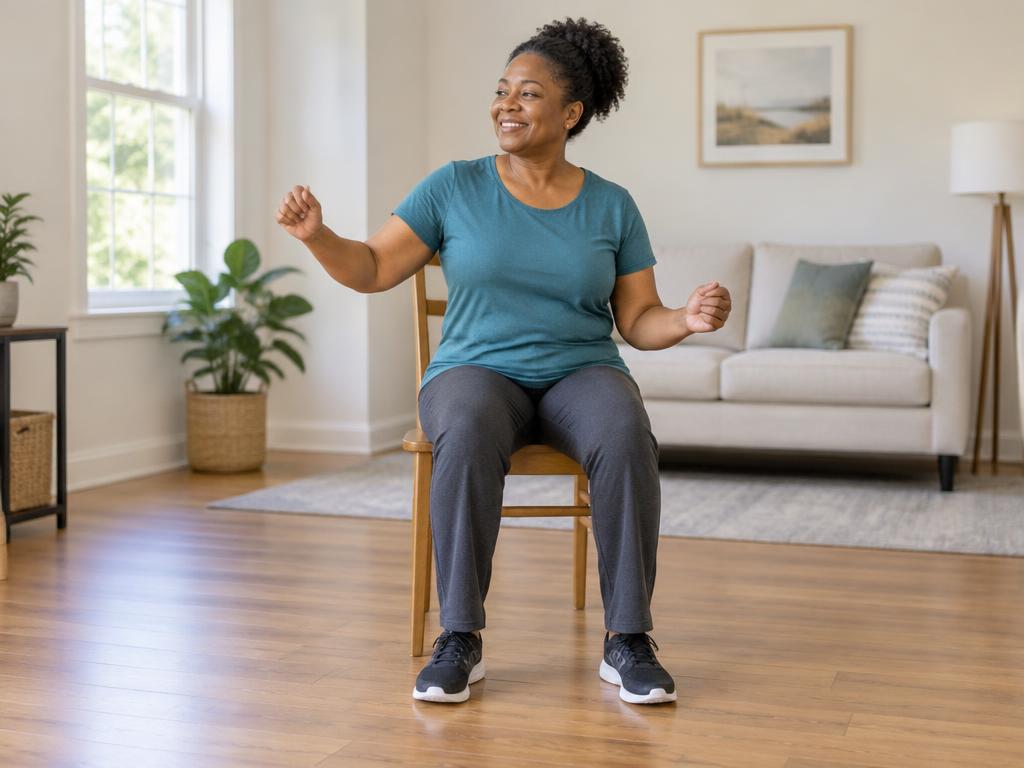
A seated short format. 10-Minute Chair Dance provides a single short seated session format. It may fit a day in which standing, floor work, or an uninterrupted longer class is not practical. Seated movement still needs to match your abilities and restrictions.
Elsewhere in the catalog, Latin, salsa, jazz, modern, contemporary, hip-hop, and music-led programs offer different movement influences. Labels such as Afrobeat Rhythm Dance describe the offered program; they should not be taken to represent one universal African dance tradition. Our guide to 25 types of dance explains the differences. Pick the actual routine before making assumptions about its demands.
Does cardio dance have to be high-impact or difficult?
No. Impact describes forces such as landing from a jump; intensity describes how hard the activity is for you. A repeated low-impact pattern can raise breathing, while a complex combination can require concentration without sustaining aerobic effort. The exercise effect depends on what you do, for how long, and at what effort—not simply the style label.[1]
At moderate intensity, the CDC's conversational guide is that you can talk but not sing. At vigorous intensity, you may manage only a few words before pausing for breath.[1] This does not tell you whether a particular twist, bend, or reach is appropriate. Movement suitability and cardiovascular effort need separate attention.
If your goal is strength, do not assume any gentle routine is enough—or that cardio replaces resistance work. The CDC's general adult guidance includes at least 150 minutes of moderate aerobic activity, or 75 minutes of vigorous activity, each week, plus muscle-strengthening activity on at least two days.[1] These are broad weekly targets, not a required starting workload or an instruction to complete a demanding session today.
An appropriate challenge can involve resistance, controlled repetitions, or a more sustained pace. It need not be chosen by age. Equally, using a chair or reducing your range is a practical adjustment, not a judgment about your motivation or identity.
How do you choose a workout with arthritis, balance concerns, or recovery restrictions?
Begin with your limitations, not a program's marketing label. If knee discomfort makes pivots difficult, check for turns. If standing is not an option, confirm the class is entirely seated. If reaching overhead is restricted, an energetic arm routine may be unsuitable even without jumping.
CDC arthritis guidance recommends starting slowly, noticing how your body responds, and seeking personalized recommendations when possible. It also encourages a mix of aerobic and strengthening activity, with balance work relevant when needed.[2] A seated class cannot automatically be declared appropriate for every joint problem, and discomfort is not something you must push through to complete a video.
If falls are a concern, prioritize secure surroundings and guidance suited to your needs. Do not remove support to prove that you can keep up. Dance research does not establish that a general home routine prevents falls or replaces a prescribed strength-and-balance program.[3]
“Overall, certainty of evidence was very low; we are uncertain about the effect of dance interventions in reducing falls.”[3]
— Kimberly Lazo Green and colleagues, systematic review and meta-analysis, Age and Ageing
After a stroke, surgery, or significant illness, obtain advice about permitted movements, effort, and progression from your care team. A short or gentle-looking workout is not rehabilitation. Continuing your prescribed plan—or waiting until an activity is cleared—is a practical decision, not a failure to be motivated.
The same standard applies to personalization. If you disclose a restriction, check that the recommended session actually respects it. A program recommendation is not medical clearance. Everdance's workout planner does not watch your performance or assess your technique; a recorded instructor cannot spot an unsafe movement or monitor your recovery.
How can you start with five minutes rather than a full class?
Use a short first visit to become familiar with the session. This is an optional orientation, not a prescribed exercise dose:
- Preview the movements. Notice standing, floor work, jumps, turns, and equipment before joining in.
- Prepare a clear space. Remove obstacles and loose rugs. If you need a chair, choose one that is stable and cannot roll.
- Learn one pattern. If appropriate, mark a few comfortable steps or arm movements without trying to match the instructor's range.
- Check the experience. Notice whether the cues, tempo, and transitions are manageable. Stop if something feels wrong.
- Choose the next step. Continue, return another day, or pick a different format. You do not owe the video a completed session.
For a caregiver, even this window may be interrupted. Choose a point where you can stop safely, attend to the person who needs you, and return without rushing. A missed day does not create a debt to repay with a harder workout.
If a familiar face helps you anchor the morning, use the same instructor or sequence regularly. A recorded class can provide a repeatable ritual, but it is not a live appointment or a safety check-in. Combine it with real contact if that is what you need.
What should you check before paying for a dance fitness app?
A free YouTube routine or an available insurance fitness benefit may already meet your needs. Paying makes sense only if the particular structure, instruction, or selection is useful to you. An independent subscription is separate from an insurance benefit, but it is not lifetime ownership or a guarantee that a service never changes.
Check screen requirements before subscribing. If you need to watch on a television, verify compatibility with your device and the service rather than assuming casting is available. Clear visibility of the instructor's feet and transitions may matter more than a large library.
For Everdance, the published subscription terms distinguish purchase channels: Apple and Google purchases are managed through the relevant store; web subscribers can contact support to cancel renewal. Deleting the app does not cancel a subscription. The money-back option is conditional, including whether it was presented at checkout and whether its requirements are met; store purchases follow store refund policies. Read the current terms before purchasing rather than assuming an unconditional refund.
What can research tell you about dance fitness?
Research can inform expectations, but a study of a specific program does not validate every class with “dance” in its name. Harvard's Nutrition Source describes evidence about Zumba as a particular dance-fitness format.[4] Its findings cannot simply be transferred to a brief seated routine, a ballet-inspired class, or another app's program.
The useful question is therefore not whether dance fitness is universally better than other exercise. It is whether a particular session provides the kind of movement you want, at an appropriate effort, in a format you can use. The broader research is discussed in Is Dancing Good Exercise?; for no-jump aerobic options, see the low-impact cardio guide.
Look for practical observations rather than guaranteed outcomes: clearer understanding of the steps, a suitable level of challenge, and a routine you can fit into your day. Everyday independence can be a meaningful priority without promising that a class will cure pain or restore a lost ability.
Frequently asked questions
Is dance fitness the same as cardio dance?
Not exactly. Dance fitness is the broad category; cardio dance usually emphasizes sustained aerobic movement. In everyday use the labels overlap, so compare the actual routine rather than the name alone.
Does cardio dance require jumping?
No. Cardio describes aerobic effort, not a mandatory movement. Some routines use jumps; others build a session around repeated low-impact steps.
Can dance fitness include strength training?
Yes, if a session includes appropriate strengthening exercises or resistance. Moving your arms during a cardio routine does not automatically replace separate strength work.
Is chair dance automatically suitable for mobility limitations?
No. Check the actual movements and whether the class stays seated. The format cannot assess your individual restrictions; seek clinical guidance when needed.
Do I need to finish the whole video for a session to count?
No. A short, appropriate bout can be part of your activity. Choose a manageable starting point, and stop or take a break when your circumstances require it.[1]
Sources
Try music-led home movement with Pop Hits Cardio Dance.
Explore low-impact dance routines set to pop music. Preview the pace and choreography before choosing a session, and compare it with seated or sculpt formats when your needs differ. The customer experience shown is individual, not a promise of weight change.
- Music-led dance routines
- Low-impact choreography
- Guided home sessions
- Preview steps and pace first
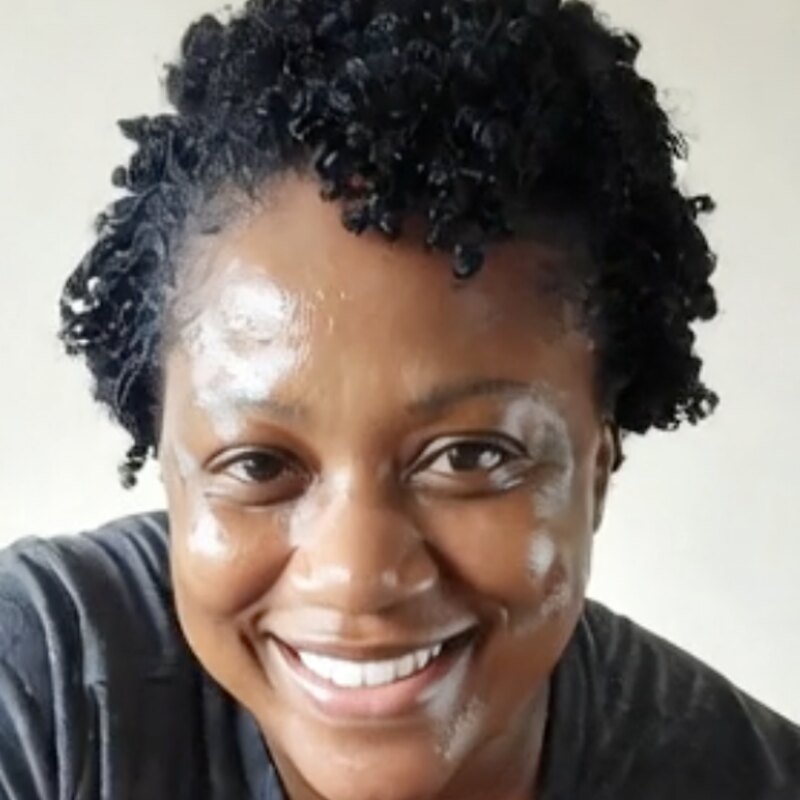
“Lost 3 kg without weighing food. I just kept pressing play because the music is that good.”

Mara studies how short bouts of rhythmic movement affect mood and cognition. She has authored over 40 peer-reviewed papers and dances daily in her kitchen.

Helena has spent two decades editing health journalism for European magazines. She fact-checks every Everdance article against primary sources.
Keep reading
All articles →
Is Dancing Good Exercise? What the Research Says
How Many Calories Does Dancing Burn? (by Style, 30 and 60 Minutes)