
Dance Therapy: What 10 Studies Show It Does for Your Brain, Mood and Heart
A plain-English tour of 10 peer-reviewed studies on dance — for your brain, your mood, Parkinson's, eating disorders, and your heart. With the one finding that beats walking.
Dance therapy — and its clinical sibling, dance/movement therapy (DMT) — has moved from yoga-studio talk to the pages of peer-reviewed neurology and cardiology journals. Over the last fifteen years, neurologists, cardiologists, and psychotherapists have run the trials to prove what dancers always knew: movement plus music plus other humans does things to your body and brain that a treadmill cannot.
In short: dance therapy is the use of dance as a structured intervention to improve mental, cognitive, and physical health. The clinical form (DMT) is led by a credentialed therapist; the at-home form is a follow-along dance video you do in your living room. The evidence below shows that both forms work — for different things, at different doses.
Here is what ten of the most important studies actually found, translated out of journal-speak, and what it means for the 15 minutes you spend dancing at home tomorrow.
Your brain on dance
The strongest evidence for dance as a cognitive intervention comes from older adults — but the mechanism applies to every adult brain.
A systematic review by Predovan and colleagues looked at dance programs lasting from 10 weeks to 18 months in healthy older adults (mean age 73). Across studies, participants improved on cognitive flexibility, verbal short- and long-term memory, and attention [4]. Kattenstroth's six-month trial — just one hour of dance per week — produced significant gains in cognition, reaction time, tactile and motor performance, and postural control in adults aged 60 to 94 [5].
The kicker: those cognitive gains showed up without a measurable change in cardio-respiratory fitness [5]. The brain was responding to the sensorimotor, cognitive, and social load of dancing — not to extra cardio capacity. MRI work cited by Cox and Youmans-Jones goes further, finding that aerobic dance actually increases hippocampal volume in older adults with mild cognitive impairment, the condition that precedes dementia [1].
The hippocampus shrinks with age. Dance is one of the only interventions we have that appears to grow it back.
— Dr. Mara Lindqvist, movement physician
Dance for Parkinson's: how dance/movement therapy helps
Parkinson's has become one of the most-studied applications of dance, because the rhythmic, externally-cued nature of dance bypasses the broken internal timing of the Parkinsonian motor system. (For a full at-home protocol, see our companion guide on dance for Parkinson's.)
In a 16-week dance program with patients rehearsing for a real performance, Bouquiaux and colleagues measured a drop in 10-metre walking time from 8 seconds to 6 seconds, and a jump in self-reported happiness from 6 to 7.75 on a visual analogue scale [2]. A 2019 meta-analysis by Zhang et al. confirmed that dance therapy significantly improves executive function in Parkinson's (mean difference 1.17; 95% CI 0.39–1.95) [7].
Improvisational dance/movement therapy (DMT) shows similar promise: Fisher's ten-week program with people who had moderate-to-severe Parkinson's lifted BESTest balance scores from 79.1% to 92.1% and SCOPA-Cog cognitive scores from 56.7% to 62.2% [8].
Dance therapy for depression: the meta-analysis evidence
Depression is now the world's leading cause of disability. Dance/movement therapy turns out to be one of the most effective non-pharmacological interventions we have for it — and the deep dive lives in our dance therapy for depression post.
Karkou's meta-analysis pooled 8 randomised studies and 351 participants. In low-risk-of-bias trials, DMT added to standard treatment outperformed standard treatment alone with a large effect size (SMD = –0.82) [10]. Pylvänäinen's outpatient trial found between-group effect sizes of d = 0.60–0.79 at three-month follow-up — and the effect held regardless of whether patients were also on antidepressants [9].
This matters in plain English: dance therapy doesn't fight your medication. It stacks with it.
Dance for eating disorders
The eating-disorder evidence is smaller but qualitatively rich. A phenomenological study by Syper et al. interviewed women with eating disorders who had been through DMT. Participants described what verbal therapy alone could not give them: a way to get out of their head and into their body — repairing mind-body connection, emotional awareness, and self-esteem [3].
The honest finding from that study: the first sessions were hard. Reclaiming a body you've been at war with is uncomfortable. Participants who stayed past that wall reported the deepest gains.
Dance for heart health
This is the headline finding that nobody in fitness media has quite caught up with yet.
Merom and colleagues pooled 11 UK population cohorts — 48,390 adults over 40, followed for 444,045 person-years — and asked which physical activities actually reduced cardiovascular mortality. Moderate-intensity dancing (enough to leave you breathless or sweating) was associated with a 46% reduction in cardiovascular death (HR = 0.54; 95% CI 0.34–0.87) [6].
For context, walking in the same dataset got HR = 0.75. Dance beat walking by a meaningful margin for heart-disease deaths.
| Activity | Hazard ratio for CVD mortality |
|---|---|
| No moderate activity (reference) | 1.00 |
| Walking (moderate intensity) | 0.75 [6] |
| Dancing (moderate intensity) | 0.54 [6] |
The authors think three things explain dance's edge: the social piece (lower psychosocial stress), the natural interval structure (a chorus is basically a HIIT round), and stickier adherence than conventional fitness programs [6].
How does dance therapy actually work?
If you only remember one paragraph from this article, remember this one.
Cox and Youmans-Jones describe dance as a multimodal intervention — it acts on psychological, musculoskeletal, and neurological systems simultaneously [1]. Unlike a stationary bike, dancing forces you to learn movement sequences, synchronise to music, navigate space, interact socially, and express emotion. All of that lights up brain regions a single-purpose workout never touches, and the resulting neuroplasticity is the actual product.
The physiological mechanisms Cox lists: increased neurotrophic factors, angiogenesis, more cerebral blood flow, and broadly anti-inflammatory / pro-neuroregenerative effects [1]. Karkou's review of DMT identifies four "active ingredients" specific to therapeutic dance: (1) participation in dance as art and movement, (2) therapeutic relationship through mirroring, (3) access to unconscious material via imagery and metaphor, and (4) integration through reflection and creative narrative [10].
Kattenstroth's elegant 2013 result reframes the whole conversation: cognitive and sensorimotor gains can occur without any measurable rise in cardio fitness [5]. Whatever dance is doing to your brain, the cardio is incidental. The novelty, coordination, and joy are the drug.
What this means for your next 15 minutes
The studies above used 1-hour weekly classes lasting 10 weeks or longer. None of them used a 90-minute "perfect" daily routine, and none required a studio. What they required was consistency with movement that involves your whole nervous system at once — and they got results.
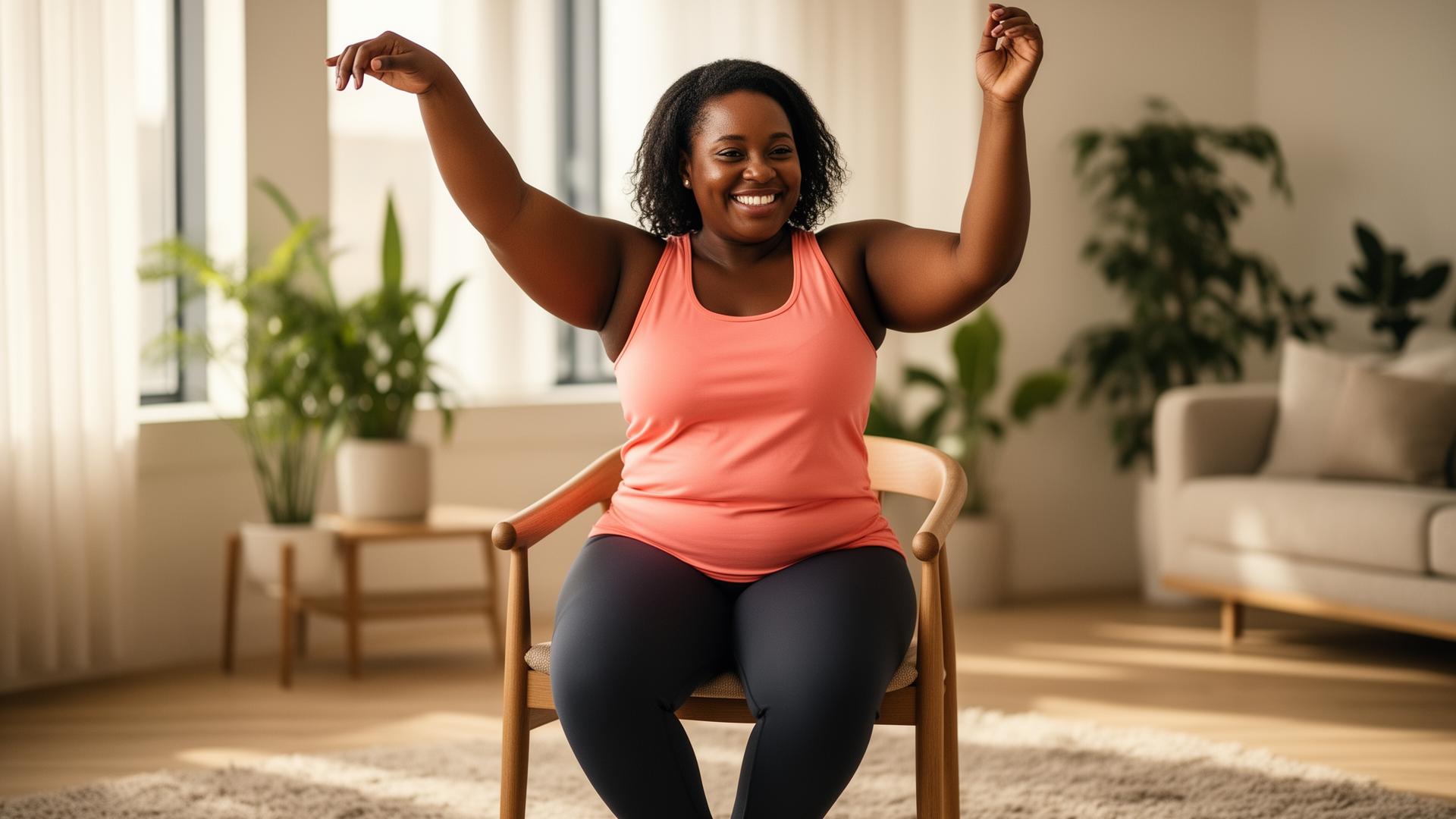
A short, follow-along chair or standing routine at home counts. Here is what that looks like in practice — one of Everdance's gentle moderate-intensity dance flows you can do in a living room:
Fifteen minutes a day for eight weeks puts you well inside the dose range that produced cognitive, mood, and cardiovascular effects in the studies above. You don't need to be a dancer. You need to press play.
Read next: What is dance/movement therapy? · Dance therapy for depression · Dance for Parkinson's at home.
Frequently asked questions
What is dance therapy?
Dance therapy is the structured use of dance and movement to improve mental, cognitive, and physical health. It exists on a spectrum: at one end, dance/movement therapy (DMT) is a regulated clinical practice in which a credentialed therapist uses improvisational movement to help with depression, eating disorders, trauma, and Parkinson's [3][10]. At the other end, therapeutic at-home dance — a follow-along video done consistently — delivers the cardiovascular and most of the cognitive benefits shown in trials [5][6].
What is dance/movement therapy (DMT)?
DMT is a psychotherapeutic discipline credentialed in the US by the American Dance Therapy Association. A DMT session usually involves improvisational movement to music led by a trained therapist, mirroring, and verbal reflection afterwards. Karkou's meta-analysis identifies four active ingredients: dance as art, the therapeutic relationship through mirroring, access to unconscious material via imagery, and integration through reflection [10].
Is dancing good for Parkinson's?
Yes — and the evidence is robust. Dance bypasses the broken internal timing of the Parkinsonian motor system by giving the brain an external rhythmic cue. Trials report faster walking, better balance, improved executive function, and higher self-reported happiness [2][7][8]. Most studied formats: tango, ballet, and adapted DMT, run for 10–16 weeks at one hour per week.
Is dance therapy covered by insurance?
In the US, DMT is sometimes billable under behavioural health, depending on the therapist's primary credential (LPC, LCSW, LMFT) and your plan. Pure dance classes and at-home dance subscriptions are not covered. Ask your therapist whether they bill under a covered modality.
How long until dance starts affecting my brain or mood?
Trials in this article ran from 10 weeks to 18 months. Most reported measurable effects by week 12 with one hour per week of structured dance [4][5]. At a more realistic at-home cadence — 15 minutes most days — expect mood lift within 1–2 weeks and the cognitive / cardiovascular effects to build over 2–3 months.
Do I need to be able to stand?
No. Several of the studies in older and Parkinson's populations adapted movements for seated or supported dancing, and the cardiovascular findings apply at any intensity that leaves you breathing harder [6]. Chair dance is dance.
Is "dance/movement therapy" the same as following a video at home?
Not exactly. DMT is a clinical practice with a trained therapist (the depression and eating-disorder studies above used certified DMT) [3][10]. Following a dance video at home delivers the physical activity component — which alone explains the cardiovascular and most of the cognitive gains [5][6]. For clinical depression or an eating disorder, dance at home is a complement to professional care, not a replacement.
What intensity should I aim for?
The cardiovascular finding hinges on moderate intensity — dance that leaves you breathless or sweating [6]. If you can sing the lyrics easily, push a little harder. If you can't speak a full sentence, ease back.
Further reading: Dance Therapy Benefits for Adults — 11 studies, effect sizes, what they mean
Sources
- [1]Cox L., Youmans-Jones J. Dance Is a Healing Art. Current Treatment Options in Allergy, 2023, 10(2): 184–195.
- [2]Bouquiaux O. et al. Dance training and performance in patients with Parkinson disease. Science & Sports, 2022, 37(1): 45–50.
- [3]Syper A. et al. Dance/Movement Therapy for Individuals with Eating Disorders. American Journal of Dance Therapy, 2023, 45(2): 211–237.
- [4]Predovan D. et al. Effects of Dancing on Cognition in Healthy Older Adults: a Systematic Review. Journal of Cognitive Enhancement, 2018, 3(2): 161–167.
- [5]Kattenstroth J.-C. et al. Six months of dance intervention enhances postural, sensorimotor, and cognitive performance in elderly. Frontiers in Aging Neuroscience, 2013, 5.
- [6]Merom D., Ding D., Stamatakis E. Dancing Participation and Cardiovascular Disease Mortality. American Journal of Preventive Medicine, 2016, 50(6): 756–760.
- [7]Zhang Q. et al. Effects of dance therapy on cognitive and mood symptoms in Parkinson's disease: A meta-analysis. Complementary Therapies in Clinical Practice, 2019, 36: 12–17.
- [8]Fisher M. et al. Effects of Improvisational Dance Movement Therapy on Balance and Cognition in Parkinson's Disease. Physical & Occupational Therapy in Geriatrics, 2020, 38(4): 385–399.
- [9]Pylvänäinen P. M., Muotka J. S., Lappalainen R. A dance movement therapy group for depressed adult patients. Frontiers in Psychology, 2015, 6.
- [10]Karkou V. et al. Effectiveness of Dance Movement Therapy in the Treatment of Adults With Depression: A Systematic Review With Meta-Analyses. Frontiers in Psychology, 2019, 10.
Put it into practice with Dance Cardio Burn.
High-energy, low-impact cardio in 20-minute sessions choreographed like a party. Fat burns, mood lifts, knees and back stay safe.
- 15 min daily sessions
- Low-impact modifications
- No equipment, 2 m²
- Cancel anytime
“Lost 3 kg without weighing food. I just kept pressing play because the music is that good.”

Mara studies how short bouts of rhythmic movement affect mood and cognition. She has authored over 40 peer-reviewed papers and dances daily in her kitchen.

Helena has spent two decades editing health journalism for European magazines. She fact-checks every Everdance article against primary sources.
Keep reading
All articles →
Is Dancing Good Exercise? What the Research Says
How Many Calories Does Dancing Burn? (by Style, 30 and 60 Minutes)