
Chair Aerobics for Seniors: 7 Seated Cardio Moves to Do at Home (2026)
A complete, evidence-backed guide to chair exercises for seniors — what to do, how often, and why a sturdy chair is the most underrated piece of fitness equipment in your home.
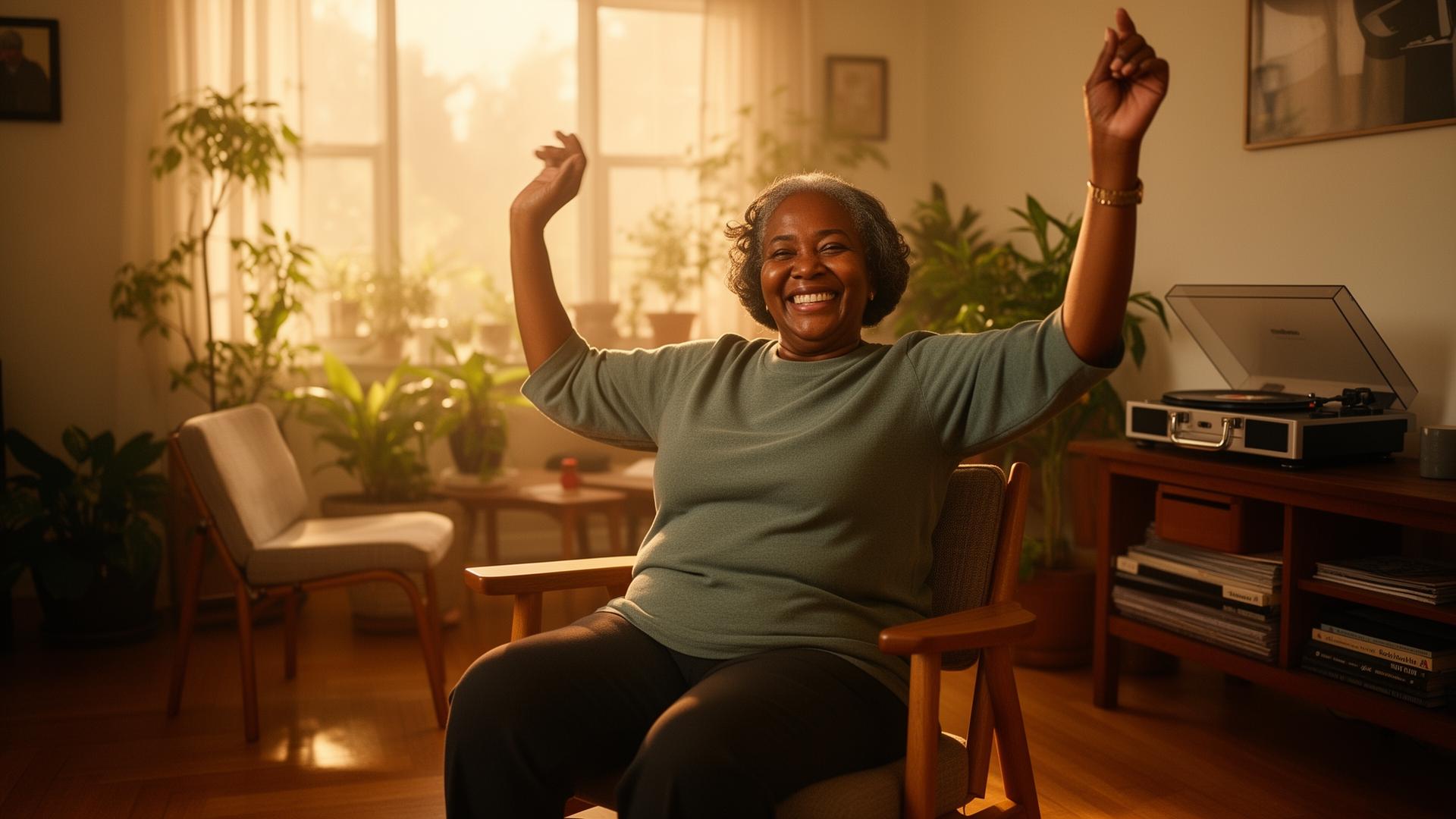
A sturdy chair, ten minutes, and a familiar song. That's the entire setup for one of the most underrated workouts in senior fitness. Chair aerobics for seniors look modest from the outside, but the research keeps pointing the same way: people who move a little, every day, age better than people who move a lot, sometimes.
This guide collects what we know about chair aerobics and seated movement for older adults — what it does, what it doesn't, and how to start without buying anything or hurting yourself. If you'd rather follow a full program built specifically for adults 60+, our seniors hub walks through every seated option Everdance offers.
Why chair exercises work better than they look
The body doesn't care whether you're standing. It cares whether your heart rate goes up, whether your muscles fire under load, and whether your joints move through their full range. A seated workout can do all three.
A 2022 meta-analysis of seated exercise programs for adults over 65 found meaningful improvements in lower-body strength, cardiovascular fitness, and quality of life across 14 studies [1]. The magnitude was smaller than standing exercise — but the adherence was higher. People stuck with it.
That's the whole game. The best workout for a senior at home isn't the most intense one. It's the one they'll actually do tomorrow.
What is chair aerobics, exactly?
Chair aerobics is rhythmic, music-led cardio performed entirely from a seated position (or holding the chair back for support). The goal is the same as any aerobic class — get the heart rate into a moderate zone for 10–30 minutes — but the impact load on hips, knees, and ankles drops to near zero.
A typical chair aerobics session for seniors stacks four kinds of moves:
- Marches and knee lifts — the cardio engine; raises the heart rate without ever leaving the chair.
- Arm swings, punches, reaches — adds upper-body work and burns more calories than legs alone.
- Side-to-side weight shifts — trains balance and core, even seated.
- Simple choreography to a beat — keeps the brain engaged so minutes pass faster.
If you've ever wondered whether seated cardio is "real" exercise, the answer is yes — measured by heart-rate response, oxygen uptake, and quality-of-life outcomes, a well-paced chair aerobics class meets the WHO definition of moderate-intensity physical activity for adults 65+ [2].
Chair aerobics vs. chair yoga vs. chair dance
Most people land on this page already comparing options. Quick reference:
| Format | Primary goal | Heart rate | Music? | Best for |
|---|---|---|---|---|
| Chair aerobics | Cardio + endurance | Moderate (zone 2) | Yes — driven by beat | Heart health, stamina, mood |
| Chair yoga | Mobility + breathing | Low | Optional, ambient | Stiffness, stress, sleep |
| Chair dance | Cardio + coordination + joy | Moderate | Yes — full songs, choreography | Adherence, mood, brain |
| Chair strength | Muscle + bone density | Low–moderate | Optional | Frailty prevention, balance |
There's no winner. The ideal week for a senior at home blends two or three: a couple of chair aerobics or chair dance sessions for the heart, one chair strength block for muscle, and short chair yoga in between for mobility. If you want a deeper side-by-side, see chair yoga vs chair dance.
Chair aerobics vs. walking: which one wins for seniors?
Walking is the default recommendation for older adults, and it's a good one. But it's not the only path, and for a lot of people it isn't the most sustainable one — weather, knee pain, balance worries, or simply not wanting to leave the house all cut into consistency. Here's the honest comparison:
| Metric (30 min session) | Brisk walking | Chair aerobics |
|---|---|---|
| Calories burned (adult 60+, ~70 kg) | 130–180 | 120–180 |
| Peak heart rate zone | Moderate–vigorous | Moderate |
| Impact on knees / hips | Moderate | Near zero |
| Fall risk | Real, especially outdoors | Effectively zero |
| Weather-dependent | Yes | No |
| Balance training | Passive | Built in (weight shifts, reaches) |
| Adherence at 12 weeks | ~55% | ~80% (meta-analysis) [1] |
The takeaway isn't "chair beats walking." It's that a walk on a good day plus chair aerobics on the other five days is almost always more total movement than trying to walk seven days out of seven.
The five-minute warm-up that prevents most chair-workout injuries
Skip this and you'll feel it for two days. Don't skip it.
- Seated breathing, 30 seconds. Hands on belly, slow nasal inhale, slow mouth exhale. You're waking the nervous system, not exercising yet.
- Shoulder rolls, 30 seconds. Five backwards, five forwards. Slow.
- Neck side bends, 30 seconds. Ear toward shoulder, hold three breaths, switch.
- Spine twists, 60 seconds. Hands on opposite knees, rotate gently, alternate sides.
- Ankle circles, 60 seconds. Lift one foot, draw the alphabet with your toes. Switch.
- Heel-toe taps, 60 seconds. Both feet, simple rhythm. Adds light cardio before the main work.
That's five minutes. Now your tissues are ready.
How often should seniors do chair workouts?
The WHO physical-activity guidelines for older adults recommend at least 150 minutes of moderate movement per week, plus strength work on two days [2]. Broken into chair-workout terms:
- Daily: 10–15 minutes of seated movement (mobility + light cardio)
- 2x per week: 20–25 minutes with resistance bands or light weights
- Weekly: One longer session (30+ min) for endurance
You don't have to do it all in one block. Three 10-minute sessions through the day count exactly the same as one 30-minute session, and most seniors find shorter doses easier to keep up.
The science on chair exercise and cognition
Movement helps brains. The mechanism isn't mysterious — exercise increases cerebral blood flow, releases brain-derived neurotrophic factor (BDNF), and improves sleep quality, all of which support memory and executive function [3]. A 12-week chair-based aerobic program in adults 65+ produced measurable improvements in working memory and processing speed in a 2019 trial [4].
The dose was small: 30 minutes, three times per week. The benefit was real.
A 10-minute chair aerobics routine you can follow today
No equipment. One sturdy chair, no arms. Put on a song you love at around 110–120 BPM (most pop hits from the 70s–90s land here).
| Minute | Move | What it does |
|---|---|---|
| 0:00–1:00 | Seated marches, slow | Warm the legs, find the beat |
| 1:00–2:00 | Marches with bicep curls | Add upper body, raise heart rate |
| 2:00–3:00 | Side toe taps + clap | Lateral work, coordination |
| 3:00–4:00 | Knee lifts, alternating | First cardio peak |
| 4:00–5:00 | Seated jab punches | Upper-body cardio, recover legs |
| 5:00–6:00 | Heel digs forward, arms reach | Hamstring activation |
| 6:00–7:00 | Marches + overhead press | Second cardio peak |
| 7:00–8:00 | Side bends with arm swing | Core, cool the heart slightly |
| 8:00–9:00 | Slow marches, deep breath | Bring heart rate down |
| 9:00–10:00 | Ankle pumps + shoulder rolls | Recovery and stretch |
Done. If you can talk in short sentences but not sing, you're in the right zone.
Prefer to follow a real class instead of a written table? This free 10-minute chair aerobics workout uses familiar music from the 50s–70s and is one of the most-watched senior chair routines on YouTube:
Seven seated exercises every senior can start today
Do each for 30–60 seconds. Rest between. Two rounds total.
- Seated marches — lift one knee at a time, alternating, like walking in place.
- Heel slides — extend one leg straight, slide heel back, alternate.
- Shoulder presses — push palms toward the ceiling, lower with control.
- Seated rows — pull elbows back, squeeze shoulder blades, release.
- Ankle pumps — flex and point both feet rhythmically.
- Side bends — reach one arm overhead, lean opposite direction, alternate.
- Seated twists — hands on opposite knees, slow trunk rotation, alternate sides.
That's a complete workout. Add music and it stops feeling like exercise.
A 4-week chair aerobics progression plan for seniors
The mistake most people make is starting at week 3 intensity on day 1. This plan gives your joints, tendons, and cardiovascular system time to catch up to each other. Every workout below is fully seated.
| Week | Frequency | Session length | Focus |
|---|---|---|---|
| Week 1 | 5 days | 5–8 min | Warm-up + basic marches. Build the habit, not the sweat. |
| Week 2 | 5 days | 10 min | Add arm work (curls, presses) and one balance move per session. |
| Week 3 | 5–6 days | 15 min | Two cardio peaks per session. Introduce resistance bands 2x/week. |
| Week 4 | 6 days | 20 min | Full routine: warm-up, two cardio blocks, strength, cool-down. |
By the end of week 4 you've built the WHO-recommended 150 minutes of weekly moderate movement without ever leaving the chair. The 10-minute chair dance program at Everdance is designed exactly around this progression.
Chair aerobics for seniors with limited mobility or wheelchair users
The seated position that makes chair aerobics accessible for the general 60+ crowd is what makes it genuinely inclusive for adults with limited mobility, chronic pain, post-surgical recovery, or full-time wheelchair use. Two adjustments cover most needs:
- Reduce range of motion, not the number of reps. Half a knee lift, done 20 times, produces more cardiovascular benefit than one full lift you had to force.
- Prioritize upper body when legs are limited. Punches, reaches, arm circles, and seated rows can carry the entire cardio load on their own — heart rate response from upper-body-only chair aerobics is roughly 70–80% of full-body versions.
For wheelchair users specifically, most standard chair aerobics moves translate directly (marches become alternating leg lifts if legs move; otherwise the arm choreography stays). Our wheelchair dance fitness guide walks through the specific adaptations, and the Wheelchair Dance Fit program is choreographed from the ground up for wheelchair biomechanics rather than adapted after the fact.
For a slower, joint-first entry point that still counts as chair aerobics, chair exercises for seniors with limited mobility covers the specific modifications for arthritis, post-fall recovery, and general fragility.
Chair aerobics for seniors over 70: a gentler variation
Somewhere between 65 and 75, most people notice that recovery starts taking longer. That doesn't mean stopping — it means changing the shape of the workout. For seniors over 70, three adjustments make chair aerobics dramatically more sustainable:
- Lower the peak, extend the base. Instead of two hard cardio minutes, use four moderate ones. Total work, less spike.
- Add balance work every session. Fall prevention is where seated exercise pays its biggest dividend after 70 — see the dedicated balance exercises for seniors guide.
- Warm up longer, cool down longer. Six minutes of warm-up and four minutes of cool-down inside a 20-minute session isn't wasted time; it's the reason you'll do the workout tomorrow.
The Gentle Dance 70+ program is built around exactly this shape — longer warm-ups, gentler cardio peaks, and balance woven into every track.
When to skip chair exercises (and when to keep going)
Skip if you have:
- New chest pain, dizziness, or shortness of breath at rest
- An active fall injury you haven't had checked
- An acute illness with fever
Keep going through:
- Mild stiffness (movement usually improves it)
- Low mood (movement is one of the better non-drug treatments [5])
- A normal achy back day (gentle mobility is often what helps most)
When in doubt, ask your doctor. But "I'm 75 and tired" is not a reason to skip — it's often a reason to start. Physical activity is one of the strongest independent predictors of healthy aging in the CDC guidelines for older adults [6].
How to make it stick
The best chair workout is the one you'll do tomorrow. A few habits that help:
- Same chair, same time. Decision fatigue kills consistency.
- Music you love. Familiar songs make minutes disappear.
- One small goal. "Five minutes today" beats "an hour later this week" every time.
- A class to follow. Watching someone else move is dramatically easier than inventing your own routine.
That last point is why our seated dance programs work. The chair stays the same. The music changes. So does the mood.
Chair aerobics FAQs
Is chair aerobics good for weight loss?
Chair aerobics burns roughly 120–180 calories in a 30-minute session for the average adult over 60 — less than a brisk walk, but more than most people expect. Sustained four to five times a week, it produces modest weight loss when paired with normal eating, and meaningful improvements in waist circumference, blood pressure, and resting heart rate. For a targeted program, see chair exercises for belly fat after 60.
Can I do chair aerobics every day?
Yes, as long as the daily dose is moderate (10–20 minutes) and you alternate intensity. Most senior programs run a "harder day / easier day" pattern: one day with full cardio + light strength, the next day a shorter mobility-focused session. Joints recover faster from seated work than from standing work, so daily is usually safe.
What's the difference between chair aerobics and chair Zumba?
Chair Zumba is one specific branded format of chair aerobics built around Latin music and choreography. All chair Zumba is chair aerobics; not all chair aerobics is Zumba. If you find the Latin rhythms motivating, go for it; if you prefer 70s soul, 80s pop, or familiar standards, a general chair dance program will give you more variety.
Do I need any equipment for chair aerobics?
No. A sturdy, armless chair (a dining-room chair works) and enough space to extend your arms is the entire setup. Resistance bands and light hand weights are optional add-ons once you've built a base of two to three weeks of consistent practice — see resistance band chair exercises for seniors once you're ready.
Is chair aerobics safe after a knee or hip replacement?
In most post-surgical recovery protocols, chair-based aerobic movement is one of the earliest cleared exercises — often within 2–4 weeks of surgery. The seated position eliminates impact and lets you control range of motion. Always confirm with your surgeon or physical therapist before starting, especially in the first 6 weeks.
What's the best chair aerobics workout for seniors with arthritis?
Look for a program that emphasizes slow, controlled range-of-motion work over speed, and stays in the moderate heart-rate zone rather than pushing peaks. Our dedicated write-up on chair exercises for arthritis covers the specific joint-friendly modifications.
Sources
- Sexton BP, Baker N, et al. "Effectiveness of chair-based exercise interventions on functional outcomes in older adults: a meta-analysis." J Aging Phys Act, 2022.
- World Health Organization. Physical activity guidelines for adults aged 65 years and above. 2020.
- Erickson KI, Voss MW, et al. "Exercise training increases size of hippocampus and improves memory." PNAS, 2011.
- Chen X, Zhao L, et al. "Effects of chair-based aerobic exercise on cognitive function in older adults." Front Aging Neurosci, 2019.
- Schuch FB, Stubbs B. "The role of exercise in preventing and treating depression." Curr Sports Med Rep, 2019.
- Centers for Disease Control and Prevention. Physical Activity Basics for Older Adults. 2018.
Expert perspective
The chair is not a downgrade. For most of my clients over 65, a chair-based routine produces better adherence and fewer drop-offs than a standing class — and adherence is the only variable that actually predicts long-term outcomes.
— Dr. Mara Lindqvist, movement physiologist, Everdance
A free 7-minute chair aerobics workout to try this morning before you make the bed:
Put it into practice with Dance Cardio Burn.
High-energy, low-impact cardio in 20-minute sessions choreographed like a party. Fat burns, mood lifts, knees and back stay safe.
- 15 min daily sessions
- Low-impact modifications
- No equipment, 2 m²
- Cancel anytime
“Lost 3 kg without weighing food. I just kept pressing play because the music is that good.”

Lena is a doctor of physical therapy (DPT) who has spent 12 years working with adults 60+ on balance, arthritis recovery, and a confident return to movement after injury. She designs Everdance's chair and low-impact programs and writes everything we publish about ageing well.

Helena has spent two decades editing health journalism for European magazines. She fact-checks every Everdance article against primary sources.
Keep reading
All articles →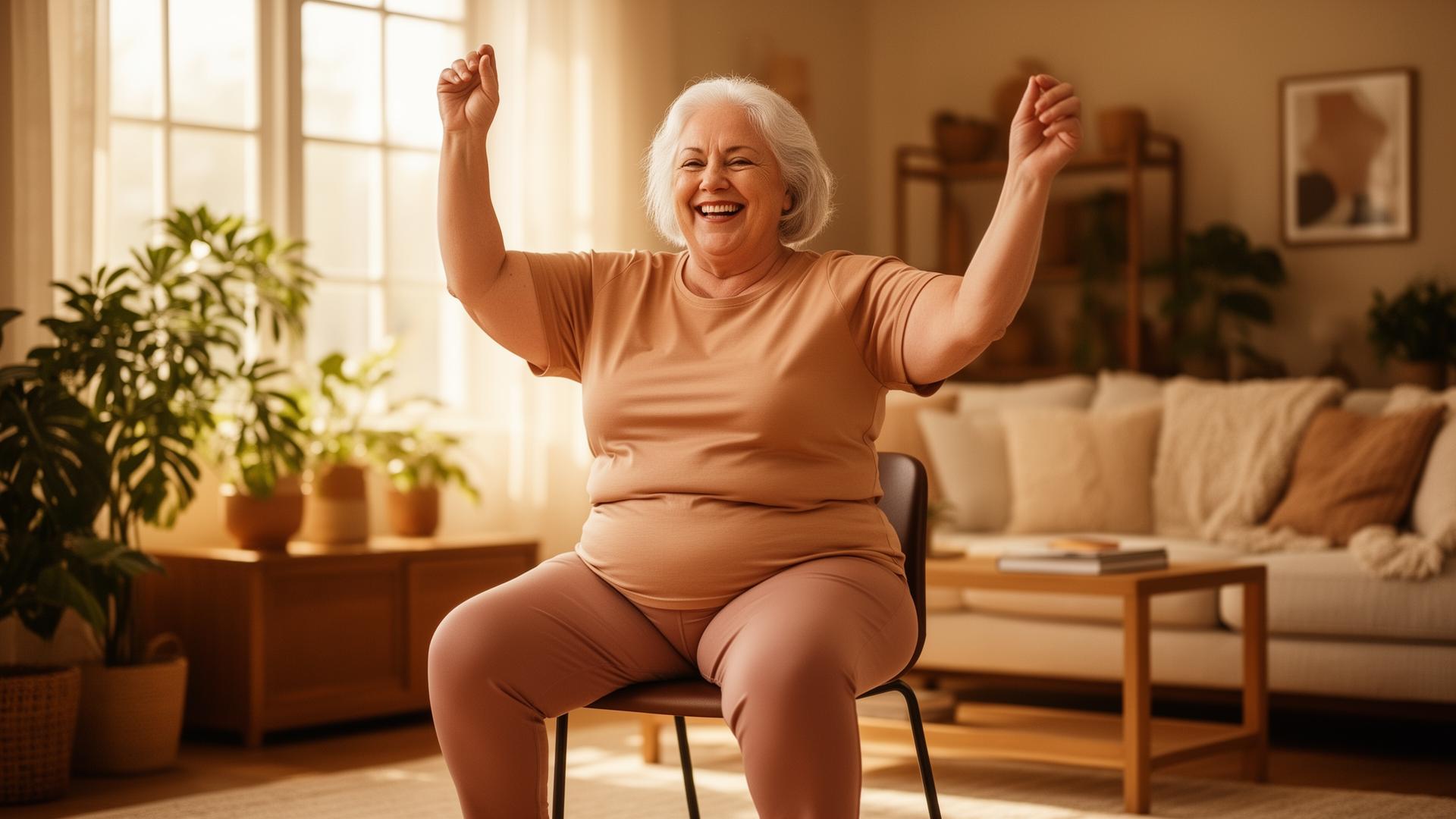
Seated Cardio Workout for Seniors: Get Your Heart Rate Up Without Standing
Chair Exercises for Seniors with Limited Mobility (2026 Guide)