
What Is Dance/Movement Therapy? A Plain-English Explainer
A growing body of research shows that short, joyful movement sessions can rewire your mood, sharpen memory and improve sleep — without a single gym visit.
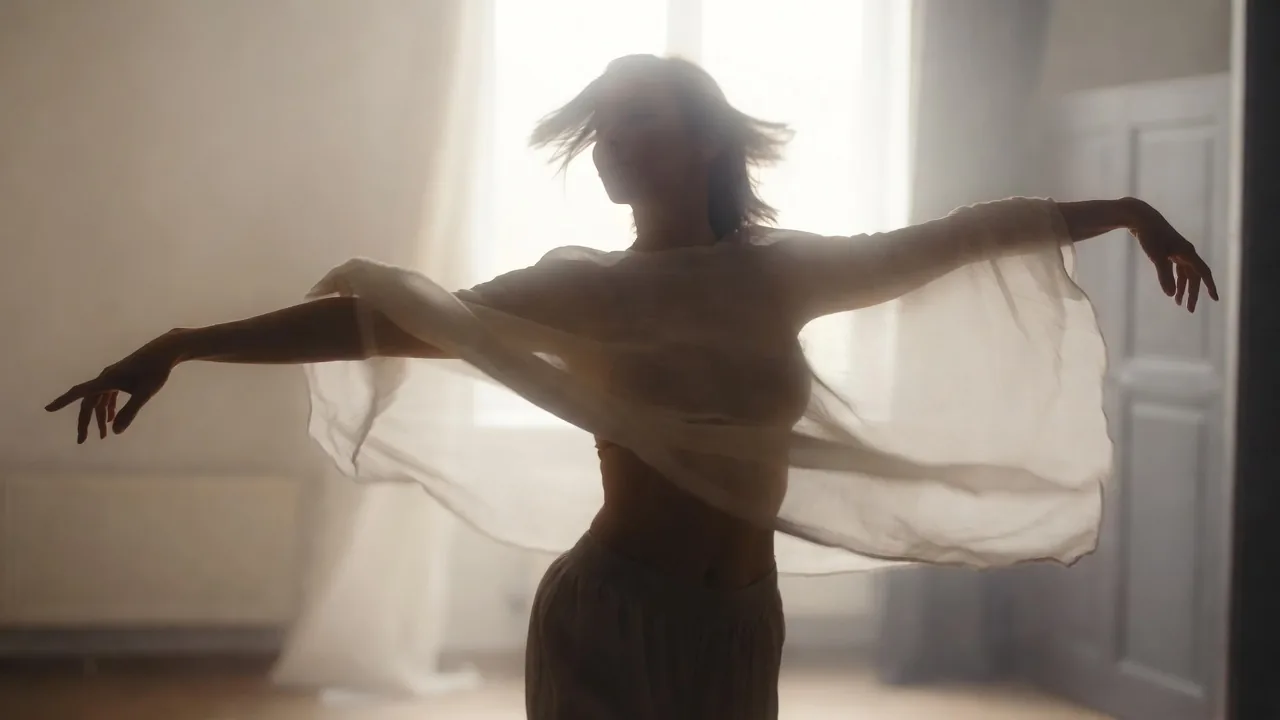
Dance/movement therapy (DMT) is a regulated psychotherapy that uses improvisational movement, music, and the therapeutic relationship to support mental and physical health. If you have ever felt better after a long, unscripted dance to your favourite song, you have brushed against the mechanism. DMT formalises that mechanism into a clinical practice with a credentialed therapist.
This guide unpacks what dance therapy actually is, who it helps, what a session looks like, and where ordinary at-home dance fits in.
What is dance therapy, in plain English?
Dance therapy — also called dance/movement therapy or DMT — is the use of dance and movement as a primary tool to improve emotional, cognitive, physical, and social wellbeing. It is recognised in the US by the American Dance Therapy Association (ADTA) and in the UK by the Association for Dance Movement Psychotherapy (ADMP UK).
It is not a dance class. It is not a fitness workout. It is a therapy in which the body — not the spoken word — is the primary site of insight and change [1].
The body remembers what the mind has filed away. Dance therapy gives those memories somewhere to go.
— Dr. Mara Lindqvist, movement physician
Who invented dance/movement therapy?
DMT in the United States traces back to Marian Chace, a dancer who began working with psychiatric patients at St. Elizabeths Hospital in Washington D.C. in the 1940s. She noticed that her dance classes were doing something psychiatric medication and verbal therapy alone could not: re-connecting patients to their own bodies and to each other.
In 1966 she co-founded the American Dance Therapy Association, which is still the field's credentialing body. Parallel pioneers — Mary Whitehouse, Trudi Schoop, Liljan Espenak — built the European and Jungian-influenced wings of the field.
What does a dance therapy session look like?
A typical 60–90 minute DMT session moves through four phases:
| Phase | What happens | What it does |
|---|---|---|
| 1. Warm-up | Gentle attention to breath, posture, micro-movements | Drops the body into the room |
| 2. Theme | The therapist offers a movement prompt — often a word, image, or emotion | Surfaces what is alive that day |
| 3. Exploration | Improvised movement, often with mirroring and music | The "therapy" itself |
| 4. Closing | Stillness, brief verbal reflection or journaling | Integrates the experience |
You do not need any dance training to participate. Many sessions are done seated, standing in place, or in a wheelchair.
Who is dance therapy for?
The evidence base — summarised in our pillar post on the science of dance for adult health — supports DMT or dance-based interventions for:
- Adults with depression: large effect size (SMD = –0.82) in meta-analysis when DMT is added to standard treatment [2]. See our deep dive on dance therapy for depression.
- Parkinson's disease: improved balance, walking speed, executive function, and happiness [3]. See dance for Parkinson's at home.
- Eating disorders: phenomenological gains in body awareness and self-esteem [4].
- Older adults: cognitive and sensorimotor gains, with hippocampal-volume changes in MRI work cited by Cox and Youmans-Jones [5].
DMT vs dance class vs at-home dance video
The three are easy to confuse. They sit on a continuum.
| Format | Who leads | Goal | Insurance | Evidence base |
|---|---|---|---|---|
| DMT | Credentialed therapist (BC-DMT or R-DMT) | Mental & emotional health | Sometimes (under behavioural health) | Strong for depression, eating disorders, Parkinson's |
| Dance class | Dance teacher | Skill, fitness, fun | No | Indirect (fitness, social) |
| At-home dance video | Choreographer / instructor on screen | Fitness, mood, daily movement | No | Strong for cardiovascular and cognitive endpoints [5][6] |
The honest read: if you are processing trauma, an eating disorder, or moderate-to-severe depression, look for a credentialed DMT therapist. If you are looking for the physical-activity benefits — mood, sleep, weight, heart, cognition — a daily at-home dance practice delivers a large share of those benefits at a fraction of the cost.
How does dance therapy work? (the four active ingredients)
Karkou's systematic review identifies four mechanisms that distinguish DMT from generic exercise [2]:
- Dance as art and movement — the act of moving expressively engages reward, motor, and emotional circuits at once.
- The therapeutic relationship through mirroring — when the therapist mirrors your movement, it activates the same empathy circuits as eye contact and physical touch.
- Access to unconscious material — improvised movement bypasses verbal defences and surfaces feelings the talking brain can't reach.
- Integration through reflection — the closing phase turns body experience into verbal insight.
On top of these, the physical activity itself adds cerebral blood flow, neurotrophic factors, and broadly anti-inflammatory effects [5].
How to start — without a therapist
If a DMT therapist isn't accessible (cost, location, waitlist), the at-home pathway is real:
Aim for 15 minutes of dance most days. Track mood at the same time of day before and after. After two weeks, you will have your own data.
Read next: The science of dance for adult health · Dance therapy for depression · Dance for Parkinson's at home.
Frequently asked questions
What is dance/movement therapy?
Dance/movement therapy (DMT) is a regulated psychotherapy that uses improvisational movement, mirroring, and verbal reflection — led by a credentialed therapist — to treat depression, anxiety, eating disorders, trauma, and Parkinson's-related symptoms [2].
Is dance therapy a real therapy?
Yes. In the US, DMT is credentialed by the American Dance Therapy Association (ADTA) with two designations: R-DMT (registered) and BC-DMT (board certified). The UK equivalent is ADMP UK. Therapists hold a master's-level qualification and are bound by professional ethics codes.
How is dance therapy different from a dance class?
A dance class teaches choreography or technique; a DMT session uses improvised movement as a way to explore and process emotional material. There is no "wrong" step in DMT. The therapist is not grading the dance — they are reading the body.
Can dance therapy be done at home?
Pure DMT cannot — the therapist relationship is core. However, the physical activity component of dance (which alone drives the cardiovascular, cognitive, and mood benefits in trials) absolutely can be done at home with a follow-along video [5][6].
How much does dance therapy cost?
In the US, sessions typically run $80–$200 per hour, comparable to other licensed psychotherapy. Some therapists bill insurance under their primary credential (LPC, LCSW); pure DMT-only billing is rarer.
Further reading: Dance Therapy Benefits for Adults — 11 studies, effect sizes, what they mean
Sources
- [1]American Dance Therapy Association (ADTA). What Is Dance/Movement Therapy?
- [2]Karkou V. et al. Effectiveness of Dance Movement Therapy in the Treatment of Adults With Depression: A Systematic Review With Meta-Analyses. Frontiers in Psychology, 2019, 10.
- [3]Zhang Q. et al. Effects of dance therapy on cognitive and mood symptoms in Parkinson's disease: A meta-analysis. Complementary Therapies in Clinical Practice, 2019, 36: 12–17.
- [4]Syper A. et al. Dance/Movement Therapy for Individuals with Eating Disorders. American Journal of Dance Therapy, 2023, 45(2): 211–237.
- [5]Cox L., Youmans-Jones J. Dance Is a Healing Art. Current Treatment Options in Allergy, 2023, 10(2): 184–195.
- [6]Merom D., Ding D., Stamatakis E. Dancing Participation and Cardiovascular Disease Mortality. American Journal of Preventive Medicine, 2016, 50(6): 756–760.
Put it into practice with Dance Cardio Burn.
High-energy, low-impact cardio in 20-minute sessions choreographed like a party. Fat burns, mood lifts, knees and back stay safe.
- 15 min daily sessions
- Low-impact modifications
- No equipment, 2 m²
- Cancel anytime
“Lost 3 kg without weighing food. I just kept pressing play because the music is that good.”

Mara studies how short bouts of rhythmic movement affect mood and cognition. She has authored over 40 peer-reviewed papers and dances daily in her kitchen.

Helena has spent two decades editing health journalism for European magazines. She fact-checks every Everdance article against primary sources.
Keep reading
All articles →
Is Dancing Good Exercise? What the Research Says
How Many Calories Does Dancing Burn? (by Style, 30 and 60 Minutes)