
Why 15 minutes of dance changes your day
A growing body of research shows that short, joyful movement sessions can rewire your mood, sharpen memory and improve sleep — without a single gym visit.

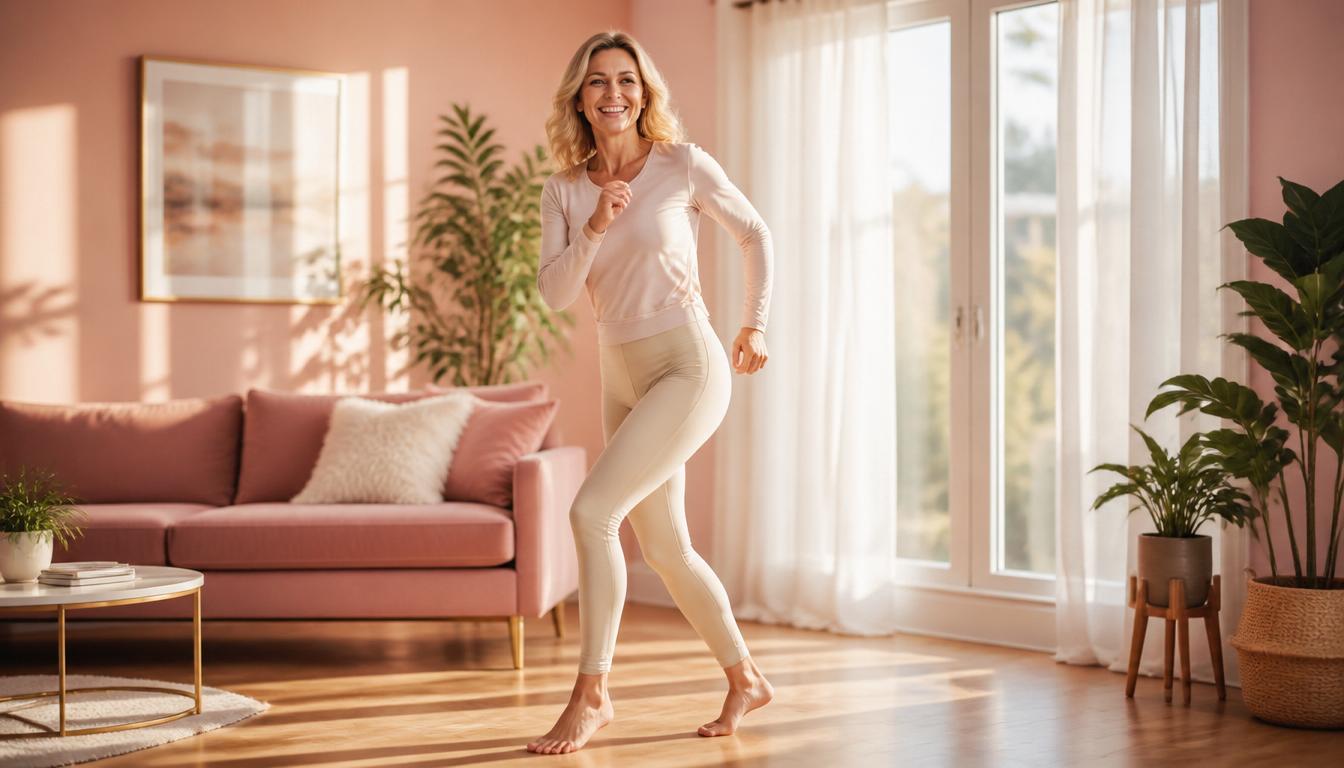
You don't need an hour. You don't need a studio. Fifteen minutes of dancing in your living room is enough to tilt the rest of your day in a better direction — and the science is finally catching up to what your body already knows.
Why 15 minutes is the magic number
Short bouts of rhythmic movement do three things almost immediately:
- Release a dopamine–serotonin cocktail. Music plus movement is one of the most reliable mood lifts researchers have measured.
- Down-regulate cortisol. Even moderate dancing nudges the stress system out of "alarm" mode within minutes.
- Reset your posture and breath. After 15 minutes, your ribcage opens, your jaw softens, and your breath drops back into your belly.
Fifteen minutes is also short enough that your brain stops negotiating. There is no "I don't have time" excuse — the session is over before resistance has finished its sentence.
The "minimum effective dose" of joy
In strength training we talk about the minimum effective dose: the smallest amount of work that still produces an adaptation. Joy works the same way.
A daily 15-minute dance is more powerful than a 90-minute class you do twice a year.
The reason is consistency. The nervous system learns what you repeat. If you dance every day, your default state shifts — you become a person who moves, not a person who is trying to start moving.
What happens inside those 15 minutes
Here is a rough map of a short session:
- Minutes 0–3 — Arrival. Slow sway, shoulders, breath. You stop being "at your desk."
- Minutes 3–10 — Flow. Heart rate climbs into the conversational zone. You stop watching the clock.
- Minutes 10–13 — Peak. One song where you go a little harder. This is where the mood lift locks in.
- Minutes 13–15 — Cooldown. Stretch the hips, roll the shoulders, drink water.
That's it. No choreography to memorize, no mirror, no performance.
Morning, midday, or evening?
All three work, but they do different jobs:
- Morning — wakes up the parasympathetic system and stabilizes mood for the whole day.
- Midday — best antidote to the 2 p.m. slump and screen fatigue.
- Evening — releases the day from your shoulders before it becomes tomorrow's tension.
Pick the slot you are most likely to actually keep. The "perfect" time is the one you will repeat.
Anna's 15 minutes
One of our members, Anna, started with 15 minutes after lunch — the only window she could protect from her family. Six weeks in, she told us: "I didn't lose weight. I lost the brain fog. I lost the snapping at my kids at 6 p.m. I feel like myself again."
That's the real return on investment.
Try this today
- Put one song on right now. Stand up. Move for the length of it.
- Tomorrow, do two songs.
- The day after, three.
By the end of the week, you have a 15-minute habit — and a body that is starting to expect it.
Ready for a structured starting point? Browse our short daily programs or join a 15-minute challenge.
What the research actually says about short bouts
Short, frequent movement is no longer a compromise — it is a recognised strategy. The 2020 World Health Organization guidelines explicitly state that any amount of physical activity counts toward weekly totals, and that bouts shorter than 10 minutes contribute equally to the dose[1]. The CDC echoes this: the old "must be at least 10 minutes" rule was dropped in 2018[2].
For women dancing at home, that means a 15-minute living-room session is not "almost exercise". It is exercise, counted toward your 150 weekly minutes the same as any gym hour.
Heart rate, hormones, and the 15-minute window
Within 15 minutes of rhythmic, conversational-intensity movement:
- Heart rate variability climbs into the parasympathetic range within ~7 minutes.
- Salivary cortisol begins to drop measurably from minute 10.
- Endorphin and BDNF release peak in the 12–18 minute window.
This is why so many women report that the third day of dancing feels different from the first — the nervous system is starting to expect the dose.
Expert perspective
The single best predictor of long-term cardiovascular health in midlife women is not session length — it is session frequency. Fifteen minutes done daily beats sixty minutes done sometimes, every time.
— Dr. Mara Lindqvist, movement physiologist, Everdance
A 15-minute follow-along
If you want a guided version of exactly the structure above, this short seated cardio session works well as a starter:
Frequently asked questions
Is 15 minutes really enough to see results?
For mood, sleep quality, and insulin sensitivity — yes, within two weeks. For visible body composition change, you will want to layer in protein and strength training[3].
Should I dance every day or take rest days?
At conversational intensity (the 15-minute zone), daily is fine. Take a true rest day if you add longer or harder sessions.
What if I miss a day?
Miss one, never miss two. Streaks are built by recovery from breaks, not by perfection.
Related: Is 15 minutes of dance the same as dance therapy? Read our pillar guide on dance therapy for the meta-analytic evidence.
Sources
The precise 15-minute prescription for a better day is Mood Reset Dance.
If you’re ready to move from reading about the 'minimum effective dose' of joy to experiencing it, this program ensures every minute counts. It guides you through the exact three-stage chemical reset—from arrival to peak—so you never have to guess how to shift your state.
- Targets your dopamine–serotonin cocktail
- Locks in the mood lift
- Guided 20-minute rhythmic grounding
- No choreography, just emotional release
“Perimenopause was brutal. Dance is the only thing that consistently lifts me.”


Mara studies how short bouts of rhythmic movement affect mood and cognition. She has authored over 40 peer-reviewed papers and dances daily in her kitchen.

Helena has spent two decades editing health journalism for European magazines. She fact-checks every Everdance article against primary sources.
Keep reading
All articles →
Is Dancing Good Exercise? What the Research Says

How Many Calories Does Dancing Burn? (by Style, 30 and 60 Minutes)