
A Kind Start: Exercises for Plus-Size Beginners
Movement is not a punishment for the body you have. A genuinely kind, evidence-backed guide to starting exercise as a plus-size beginner — with the chair as your best friend.
If most fitness content has made you feel bad about your body, this article is going to feel different on purpose. Movement is not a punishment for the body you have. It's a gift you give the body you have, in the size it is right now.
That's not a slogan. It's the only frame that actually produces consistent exercise behavior in larger-bodied adults [1]. Shame-based programs have a 90%+ dropout rate. Joy-based, body-positive programs hold people through the year.
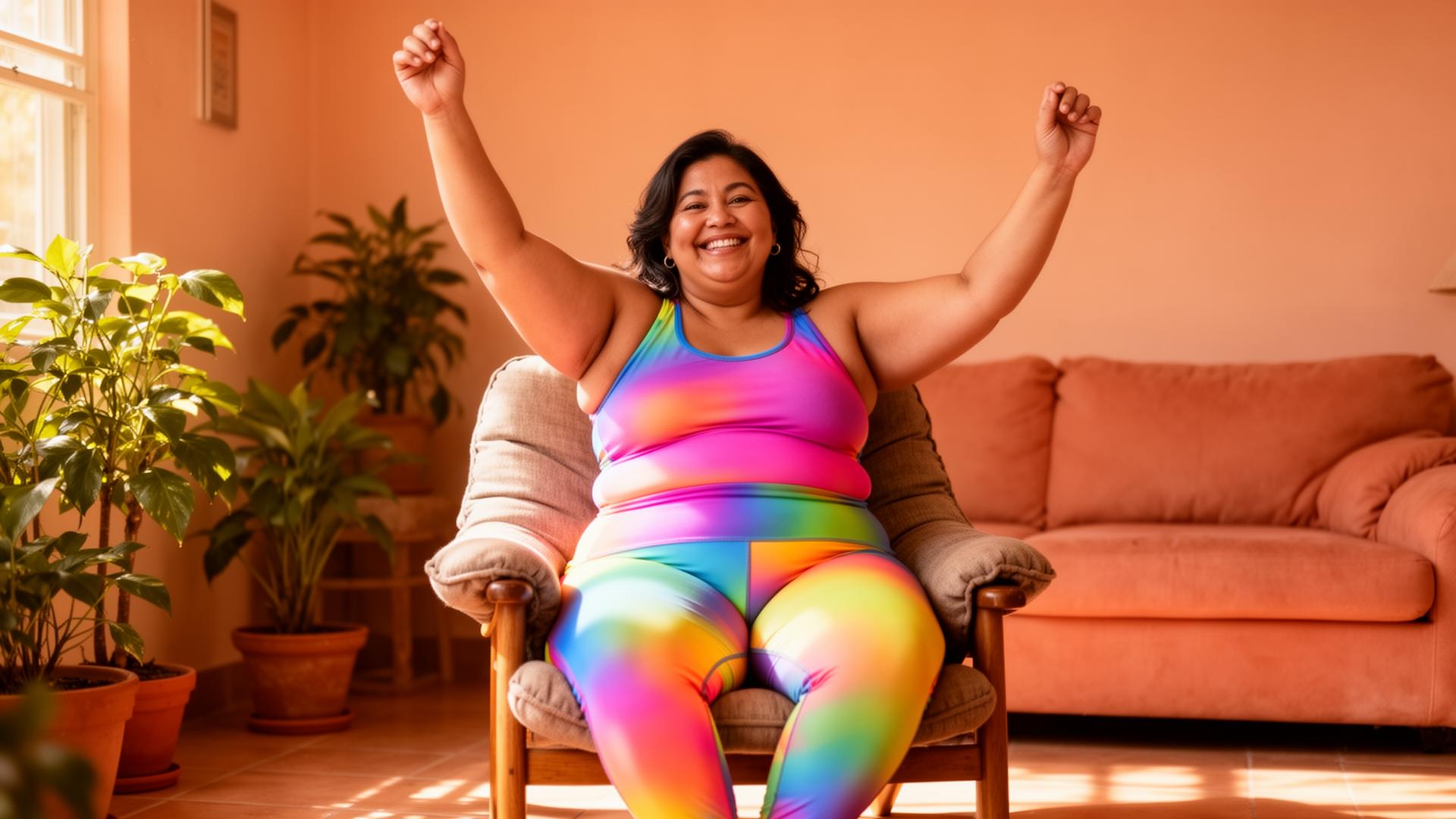
This is a guide to starting movement as a plus-size chair dance programs beginner — what works, what to avoid, and why a chair might be the most important piece of equipment in the room.
Why standard fitness advice fails larger bodies
Most exercise content assumes a body that's been moving regularly, has joints that can take impact, and doesn't fatigue quickly. It also assumes a body that can comfortably wear standard-cut workout clothes, can balance on one leg without thinking about it, and won't feel watched in a gym.
If any of those assumptions don't match your reality, "just start moving" is impractical advice. The barriers are real:
- Joints carry more load — high-impact options hurt fast
- Cardiovascular system is often deconditioned — long sessions feel impossible
- Self-consciousness in public settings is well-documented and exhausting [2]
- Standard fitness clothing rarely fits well
- Many home exercises (floor work, mat work) are genuinely difficult to get into/out of
None of those are your fault. They're design failures in mainstream fitness. They have workarounds.
What works: the principles
A 2018 systematic review of exercise interventions for adults with obesity identified the factors that predicted long-term adherence [3]:
- Seated or low-impact cardio for seniors options as the default
- Sessions under 30 minutes initially
- Music-led pacing (more reliable than counting reps)
- Body-neutral language (focus on what the body can do, not what it looks like)
- No weigh-ins, no before/after photos
- Privacy (home-based outperforms gym-based)
Chair-based dance fitness hits every one of these. That's not coincidence — it's why we built it.
Why the chair changes everything
A sturdy chair removes most of the barriers above:
- Joint load drops to near zero. No weight-bearing on knees or hips.
- You can rest mid-session. Your starting position IS the resting position.
- Coordination requirements stay manageable. No worrying about balance while you learn the movement.
- You can wear whatever's comfortable. No standing in front of a mirror in workout gear.
- Cardiovascular work happens in the arms and trunk. Doesn't require the legs to support your full weight.
For a beginner in a larger body, this combination is the difference between "this is awful" and "I could do this every day."
A first-week plan for a plus-size beginner
Goal: build the habit. Not weight loss, not strength, not anything else. Just the habit.
Day 1. Sit in your chair. Put on a song you love. Move whatever feels good for the length of that song. That's it. You're done.
Day 2. Two songs.
Day 3. Two songs, with a 5-minute warm-up (shoulder rolls, gentle stretches) first.
Day 4. Rest day. (Active rest counts — walking to the mailbox, doing dishes with music on.)
Day 5. Three songs. Try a follow-along plus-size chair dance video.
Day 6. Three songs.
Day 7. Rest day. Notice how you feel compared to a week ago.
That's week one. You've built the habit. Week two, you extend a little. Week eight, you're doing real workouts and they feel manageable.
What to wear
Anything that doesn't pinch when you breathe. A loose t-shirt, soft pants, bare feet or grippy socks. There is no required uniform.
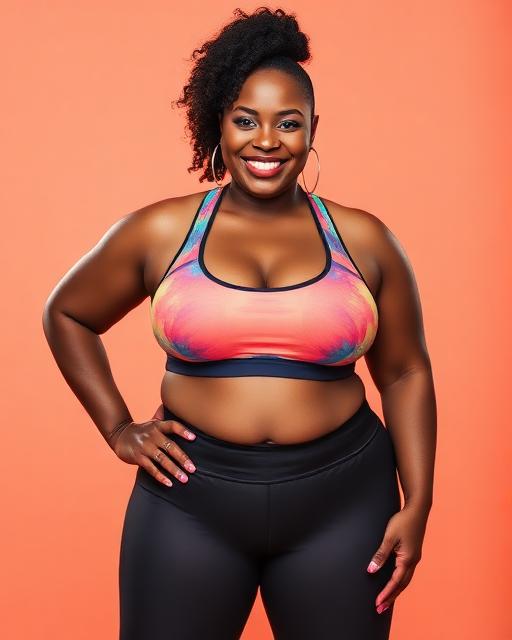
If you want to invest in one thing, make it a supportive sports bra (if applicable) in your actual size. Even seated dance involves arm movement and the support matters.
What about weight loss
Weight loss is a possible outcome of consistent movement plus reasonable eating, but it's not the primary outcome. The well-documented benefits of regular exercise — independent of weight change — include [4]:
- Reduced cardiovascular disease risk
- Better blood sugar regulation
- Lower blood pressure
- Better sleep
- Improved mood
- Reduced inflammation
- Increased muscle strength
- Better mobility
Many of these improve in weeks. Weight loss, if it happens, takes months and is largely unrelated to how hard you exercise. Eating, sleep, and stress drive that variable.
So: move because your body deserves to feel good. If the scale moves, fine. If it doesn't, the exercise was still worth doing. The "exercise didn't work because the scale didn't move" frame is the single biggest reason people quit fitness, and it's based on a misunderstanding of what exercise actually does [5].
A note on health-at-every-size
The Health at Every Size (HAES) framework is supported by considerable research showing that body-respecting, weight-neutral approaches to health behaviors produce better physical AND psychological outcomes than weight-focused approaches [6]. You don't have to subscribe to a philosophy — but you should know the evidence supports treating yourself with the same dignity you'd want for anyone else.
What to skip, at least at first
- High-impact aerobics (jumping jacks, burpees)
- Running or jogging
- Floor exercises that require getting up and down repeatedly
- Anything that requires you to ignore pain
- Anyone (in person or online) who shames your body
What to seek out:
- Seated dance fitness
- Pool walking (if you have access — the buoyancy is magical)
- Strength training with bands or light weights
- Outdoor walking at your own pace
- Movement teachers who specifically say their classes are body-positive
The smallest start that works
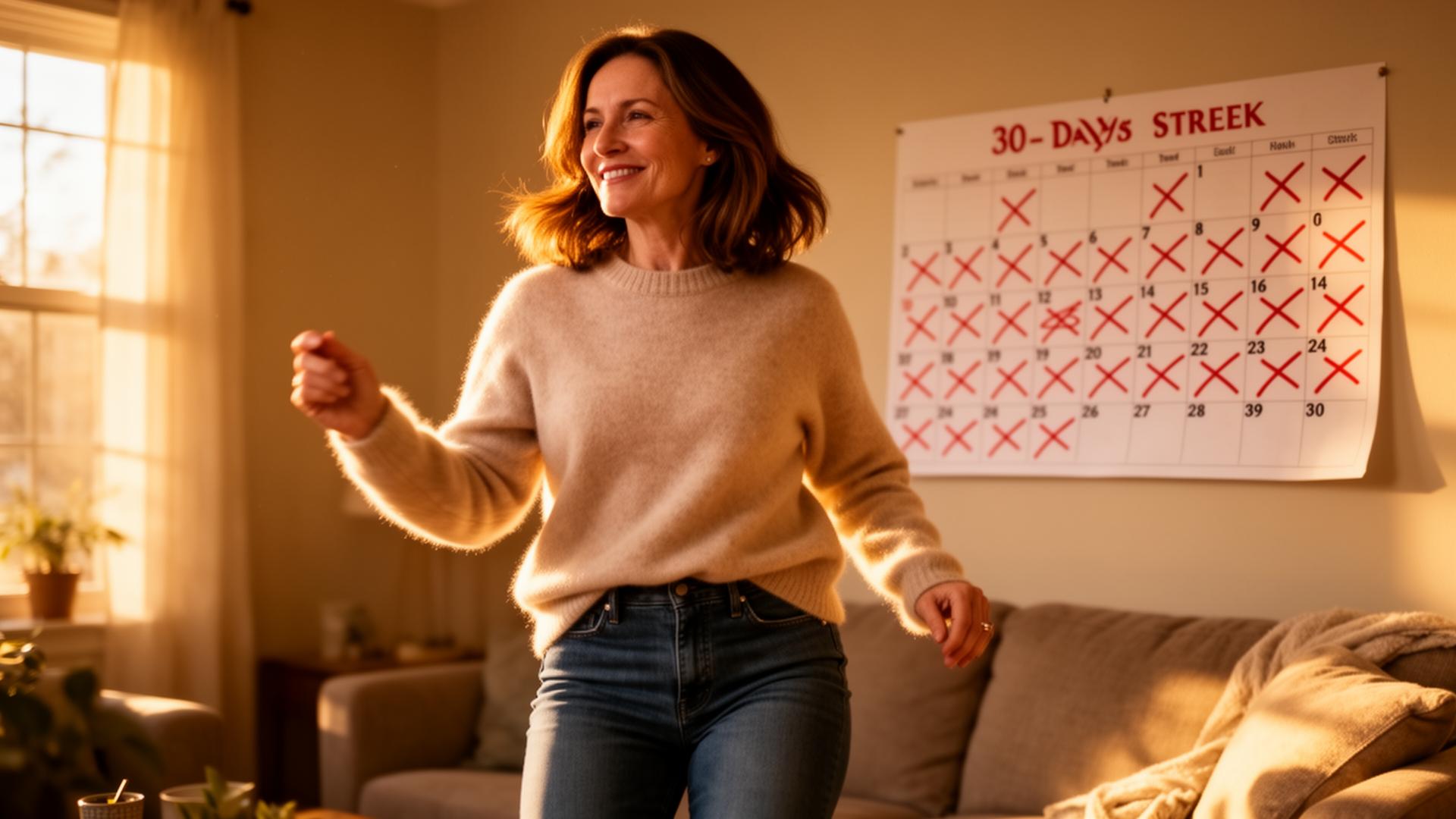
One song, in a sturdy chair, today. Tomorrow, the same. By the end of the month, you've done this 30 times. By the end of the year, 365 times.
That's how the people who succeed started. Not a 28-day program. Not a transformation challenge. One song, every day, building.
You are not behind. You are not too late. The body you have is the right body to start with.
Sources
- Calogero RM, Tylka TL, et al. "Recognizing the fundamental right to be fat." Women & Therapy, 2019.
- Vartanian LR, Shaprow JG. "Effects of weight stigma on exercise motivation and behavior." J Health Psychol, 2008.
- Burgess E, Hassmén P, Pumpa KL. "Determinants of adherence to lifestyle intervention in adults with obesity: a systematic review." Clin Obes, 2017.
- Gaesser GA, Angadi SS. "Obesity treatment: weight loss versus increasing fitness and physical activity for reducing health risks." iScience, 2021.
- Bacon L, Aphramor L. "Weight science: evaluating the evidence for a paradigm shift." Nutr J, 2011.
- Penney TL, Kirk SF. "The Health at Every Size paradigm and obesity: missing empirical evidence may help push the reframing obesity debate forward." Am J Public Health, 2015.
Expert perspective
A bigger body is not a broken body. The first six weeks of training should feel suspiciously easy — that is by design. We are not chasing sweat, we are teaching the joints, tendons and confidence to trust the next six weeks.
— Dr. Mara Lindqvist, movement physiologist, Everdance
A welcoming starter routine for anyone who has not exercised in years:
Put it into practice with Dance Cardio Burn.
High-energy, low-impact cardio in 20-minute sessions choreographed like a party. Fat burns, mood lifts, knees and back stay safe.
- 15 min daily sessions
- Low-impact modifications
- No equipment, 2 m²
- Cancel anytime
“Lost 3 kg without weighing food. I just kept pressing play because the music is that good.”
Lena is a doctor of physical therapy (DPT) who has spent 12 years working with adults 60+ on balance, arthritis recovery, and a confident return to movement after injury. She designs Everdance's chair and low-impact programs and writes everything we publish about ageing well.

Helena has spent two decades editing health journalism for European magazines. She fact-checks every Everdance article against primary sources.
Keep reading
All articles →
Resistance Band Chair Exercises for Seniors
Wheelchair Dance Fitness: A Joyful Workout Guide