
Gentle calorie burn explained
Forget brutal HIIT. Gentle, sustained dancing burns more than you think — and feels like play.

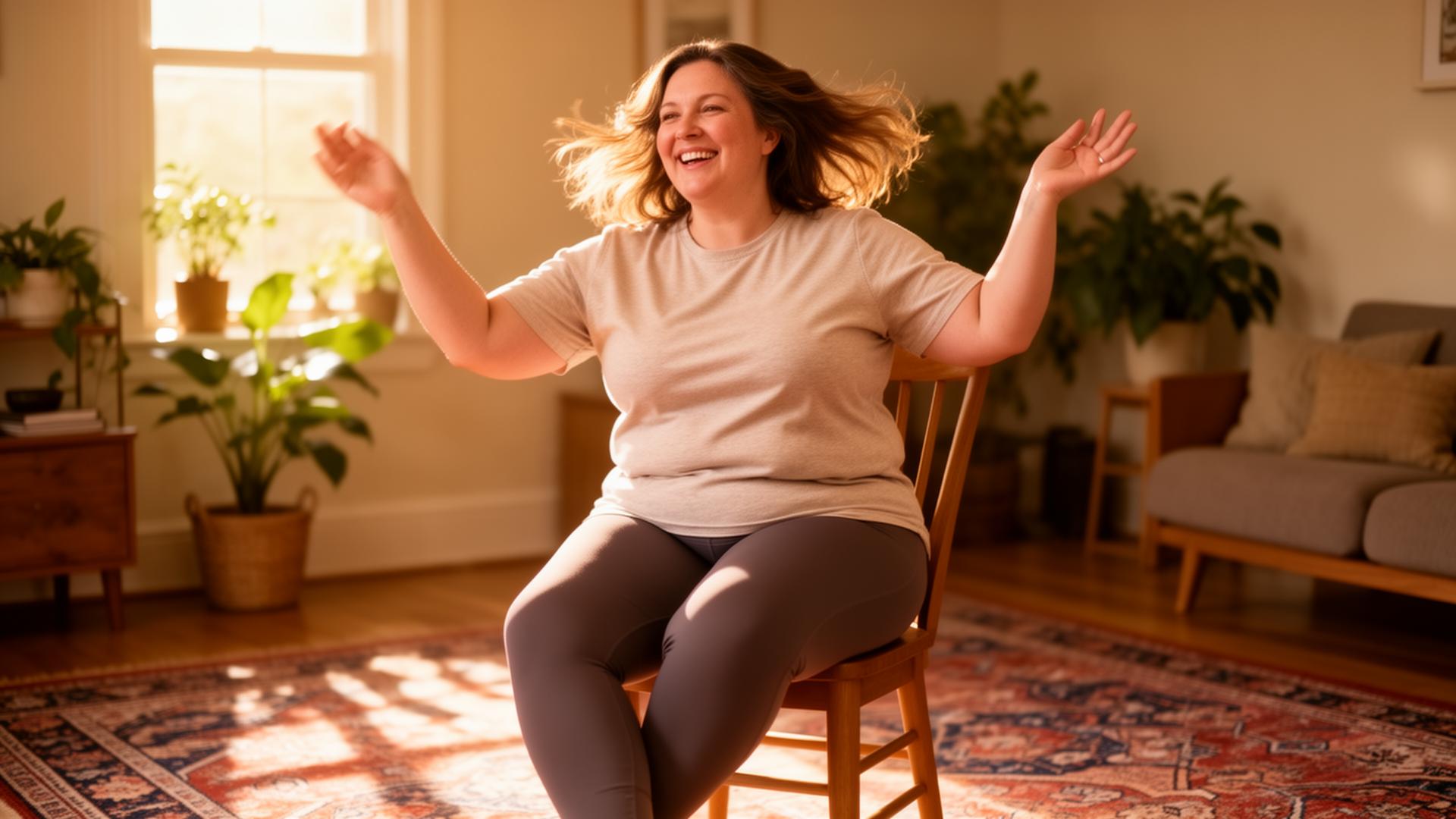
"Calorie burn" sounds like punishment. But for women dancing at home, gentle, frequent movement quietly outperforms occasional hard workouts — and feels nothing like a treadmill.
What "gentle" actually means
Exercise scientists use METs (metabolic equivalents) to compare how hard activities are. One MET is what your body burns sitting still. Here is roughly where home dancing lands:
| Activity | METs | Feel |
|---|---|---|
| Slow sway, hips, isolations | 2.5–3.5 | "I could sing along." |
| Steady Latin / pop choreography | 4.5–5.5 | "I can talk in short sentences." |
| High-energy cardio dance | 6.5–8 | "Talking is hard now." |
For a 65 kg woman, 30 minutes in the middle band burns roughly 180–230 kcal — without the joint load of running and without the dread of a gym.
Why "soft and often" beats "rare and brutal"
Three reasons:
- Recovery cost. Hard sessions need 24–48 hours of recovery. Gentle sessions need a glass of water.
- Adherence. You will do 6 gentle sessions this week. You will not do 6 brutal ones.
- Hormonal kindness. Lower-intensity rhythmic work supports cortisol regulation instead of spiking it — especially valuable in perimenopause.
Total weekly movement matters more than any single session.
The compounding effect
15 minutes a day, 6 days a week, at 4.5 METs ≈ ~5,400 kcal/month of extra movement — roughly the energy in 1.5 lb of body fat — without ever feeling like you "exercised."
But the bigger win is not on the scale. It is:
- better insulin sensitivity by afternoon,
- stronger postural muscles by month two,
- a resting heart rate that quietly drops by month three.
How to dose it across the week
A pattern that works for most women dancing at home:
- 4 short, gentle sessions (15–20 min, MET 3–5) — the backbone.
- 1 longer flow session (30–40 min, MET 4–6) — for cardiovascular fitness.
- 1 playful session (any length, any intensity) — for the soul.
- 1 full rest day — walking, stretching, nothing structured.
What to stop worrying about
- Tracking every calorie. Wearables overestimate dance by 15–30%. Use them for trends, not truth.
- "Fat-burning zones." They exist, but you are not living in a lab. Move at an intensity you can sustain.
- Sweat as proof. Sweat measures climate, not effort.
Try this today
- Pick three windows in your week where 20 minutes already exists (after lunch, before dinner, post-school-drop-off).
- Block them on your calendar like meetings.
- Use one of our Everdance programs so you don't have to decide what to dance to.
Gentle. Frequent. Consistent. That is the actual formula.
Where the MET values come from
The table above is not a guess. The figures are derived from the Compendium of Physical Activities, the international reference used in exercise-science research since 1993[1]. Light dance, like the gentle living-room movement most of our members do, is categorised between 2.5 and 3.5 METs — exactly the range associated with the strongest mortality-risk reduction per minute spent[2].
In other words: the easiest dance you will actually do every day buys you more health than the hardest workout you do once a fortnight.
Why gentle movement burns more total fat than HIIT (in real life)
HIIT studies look impressive in controlled trials, but in the real world they fail on adherence. A 2023 meta-analysis found that moderate-intensity continuous training produced equal-or-better 12-month body-composition outcomes than HIIT, almost entirely because participants kept doing it[3].
The math is simple: 25 % less burn per minute multiplied by 4× the sessions per month equals far more total burn — and far less injury risk.
Expert perspective
When a midlife woman asks me what intensity to dance at, I tell her: at the intensity she can still do tomorrow. The "tomorrow test" beats any heart-rate zone.
— Dr. Mara Lindqvist, movement physiologist, Everdance
What this looks like in practice
A 25-minute gentle dance follow-along you can do right now in the living room:
Frequently asked questions
How many calories does 30 minutes of home dance really burn?
For a 65 kg woman at 4.5 METs, the calculation is 4.5 × 65 × 0.5 = ~146 kcal[1]. For 75 kg, ~169 kcal. Wearables typically inflate this by 15–30 %.
Will gentle dance help me lose weight?
It helps create the calorie deficit. The deficit comes mostly from food choices, but gentle dance is the dose you can sustain long enough for the deficit to compound.
Is gentle dance enough on its own?
For cardiovascular and mood outcomes, often yes. For bone density and lean mass after 50, pair it with two short strength sessions per week.
Sources
Master the art of the compounding calorie burn with Low-Impact Gentle Dance.
Now that you know how METs and hormonal kindness outperform brutal workouts, this 30-day protocol gives you exactly what your body needs to stay in the 'tomorrow test' zone. It replaces the dread of the treadmill with soft, familiar movements that protect your joints while quietly lowering your resting heart rate through consistent daily flow.
- Zero jumps, zero joint load
- Evidence-based MET 3-5 intensity
- Cortisol-conscious rhythmic movement
- Short sessions for visual compounding
“I stopped jumping a year ago because my knees were done. Low-Impact Gentle Dance is the first cardio I've been able to do four days a week without ice packs after. My resting heart rate dropped 6 points in two months.”

Mara studies how short bouts of rhythmic movement affect mood and cognition. She has authored over 40 peer-reviewed papers and dances daily in her kitchen.

Helena has spent two decades editing health journalism for European magazines. She fact-checks every Everdance article against primary sources.
Keep reading
All articles →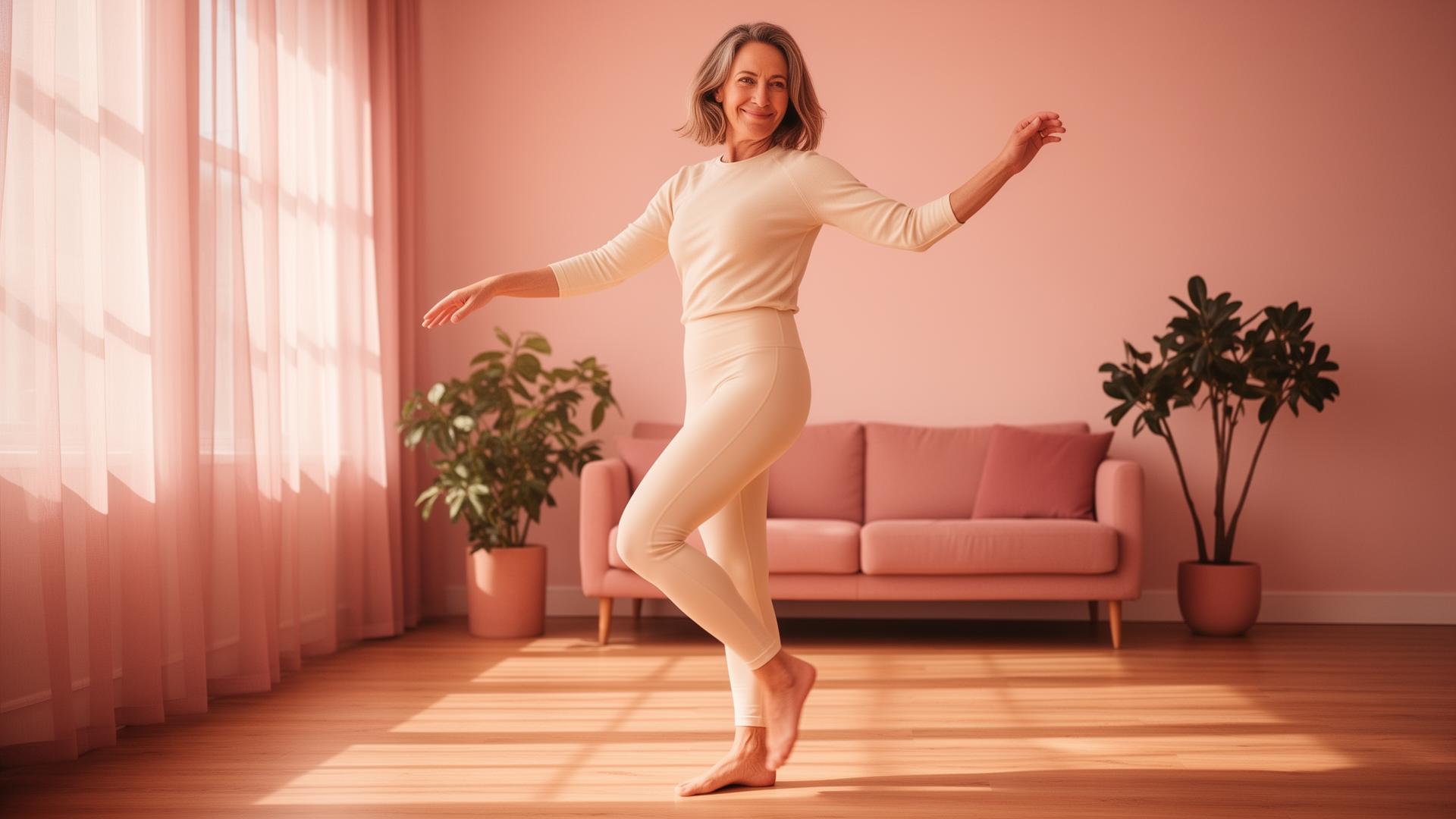
Low-Impact Cardio for Women Over 40: A Joint-Friendly Guide That Actually Raises Your Heart Rate
Dance for Weight Loss: A Realistic Results Timeline (Week 1 → Month 6)