
Dancing cockatoos: the science behind the viral birds (and the AI fakes)
From Snowball's 14 dance moves to Jackson the cockatoo and the new wave of AI-generated parrot videos — what science actually says about birds that move to the beat.
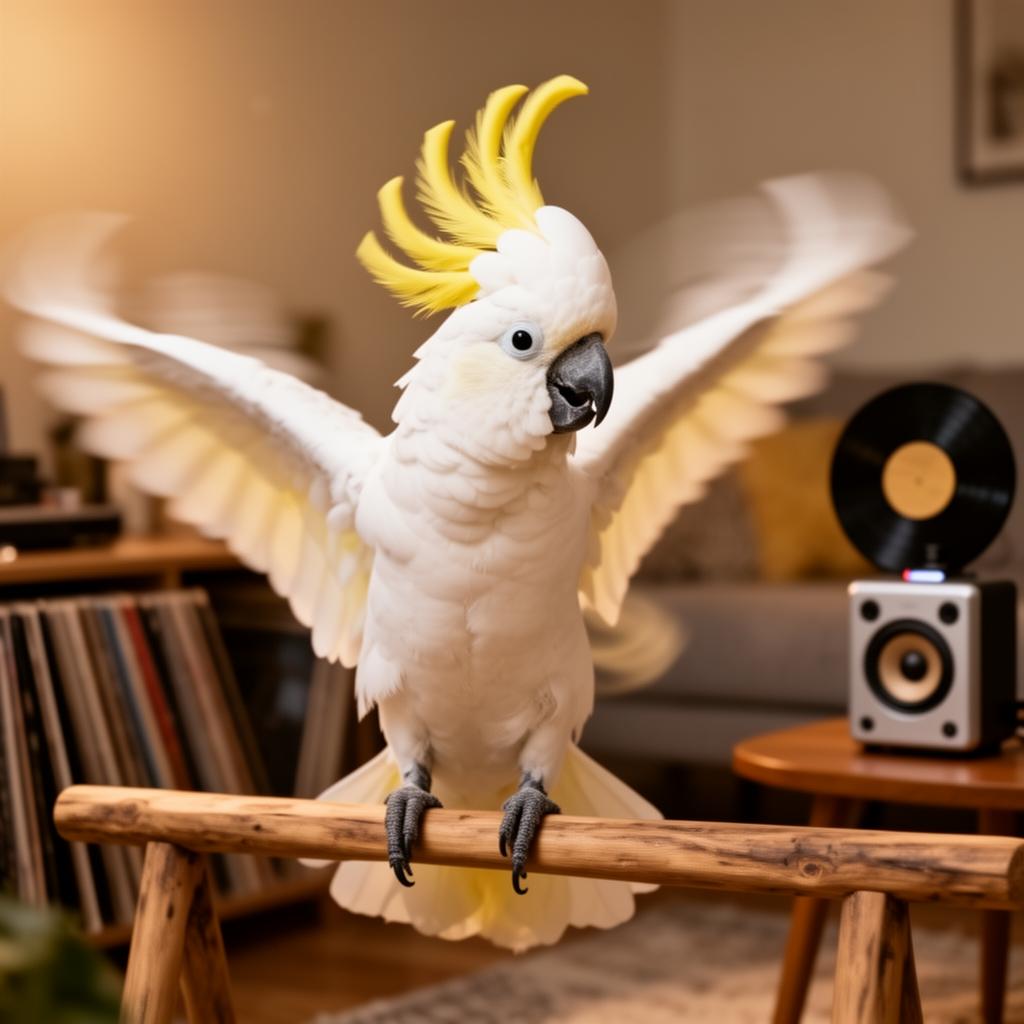
Snowball, Frostie, Jackson — search "dancing cockatoo" on YouTube and you'll fall down a rabbit hole of headbanging, foot-stomping, crest-flipping parrots that look like they're having more fun than most of us at a wedding. It's adorable. It's also, surprisingly, one of the most important findings in the science of music and the brain.
Here's what researchers have actually learned about why some birds can dance — and how to tell a real cockatoo from one a video model just invented.
The bird that rewrote the science
In 2007, a sulphur-crested cockatoo named Snowball went viral bobbing along to the Backstreet Boys' Everybody. The clip looked cute. To neuroscientist Aniruddh Patel (then at the Neurosciences Institute, now at Tufts), it looked impossible.
Until then, the prevailing belief was that beat induction — hearing a rhythm and spontaneously moving in time with it — was a uniquely human trick. Dogs don't do it. Chimpanzees, our closest relatives, don't do it. But here was a parrot, in a living room in Indiana, doing it on the first try.
Patel's team ran a controlled experiment: they played Snowball the same song at 11 different tempos. If he was just mimicking his owner, his timing wouldn't change with the music. It did. He adjusted his head bobs to match the new beats — sloppily, the way a toddler does, but on a beat.
The 2009 paper, published in Current Biology, was the first hard evidence that another species could genuinely dance.[1]
Snowball's original viral tribute to Michael Jackson (BirdLoversOnly, 4.8M views):
The Cell Press study clip showing the controlled tempo experiment:
14 moves, no lessons
Ten years later, Patel's team came back with a follow-up that turned Snowball from a curiosity into a record-holder. Researchers analysed hours of footage of him dancing to Another One Bites the Dust and Girls Just Want to Have Fun and counted at least 14 distinct, self-invented dance moves[2][4] — headbangs, body rolls, "vogue" poses, foot lifts, side-to-side sways, even a move where he lifts a foot and circles his head like a tiny pop star.
He had never been trained. His owner, Irena Schulz, simply danced near him sometimes. The moves were his.
A 2025 re-analysis expanded the catalogue to around 30 movements, and Snowball now holds the Guinness World Record for Most dance moves by a bird.[5][6]
The point isn't that Snowball is a genius. The point is what his moves reveal about brains:
- Vocal learning matters. Cockatoos, like humans, learn sounds by listening and imitating. The same brain circuits that let them copy a whistle seem to let them lock onto a beat. Most mammals — including dogs and chimps — don't have these circuits in the same form.[3]
- Dancing is exploratory. Snowball doesn't do one move on loop. He samples, combines, repeats favourites. That's closer to play than reflex.
- It's social. He dances more when a person is in the room. Music + connection = movement, even in a bird.
Other real dancing parrots worth watching
Snowball is the famous one, but he's not alone. A few others worth knowing:
- Frostie the cockatoo — viral umbrella cockatoo dancing to Shake Your Tail Feather. Watch on YouTube.
- Max the dancing parrot — a long-running channel of a cockatoo who reliably grooves to almost anything you put on.
- Jackson — the Jackson Huhniverses YouTube/TikTok channel features a real cockatoo named Jackson who "only comes when there's music." Shorts like the one below regularly cross half a million views. This is a real bird being filmed at home — not an AI model.
TOP 5 famous dancing cockatoos at a glance
| # | Cockatoo | Species | Signature move | Famous track | Claim to fame |
|---|---|---|---|---|---|
| 1 | Snowball | Eleonora cockatoo | Headbang + foot lift | Everybody — Backstreet Boys | First scientifically proven beat-keeping bird; Guinness record for most dance moves |
| 2 | Frostie | Umbrella cockatoo | Side-to-side groove | Shake Your Tail Feather — Ray Charles | 20M+ views; viral on every major platform |
| 3 | Jackson | Sulphur-crested cockatoo | Full-body bounce | Mixed pop & EDM | TikTok star — "only comes when there's music" |
| 4 | Max | Sulphur-crested cockatoo | Crest-flip headbang | Classic rock & metal | Long-running YouTube channel of reliable grooving |
| 5 | Cookie | Major Mitchell's cockatoo | Gentle sway | Slow jazz standards | Brookfield Zoo legend; lived 83 years, danced into old age |
If you're searching "Jackson cockatoo" and finding a mix of clips, that's where it gets complicated.
The AI cockatoo problem
Since OpenAI's Sora 2 launched in late 2025, social feeds have filled up with AI-generated animal videos — including suspiciously perfect dancing parrots.[7] Some get tens of millions of views before anyone notices. The watermark in the corner is the size of a fingernail and a five-second tutorial will scrub it off.
Real "Jackson the cockatoo" content is mostly authentic home footage. But search the same name on TikTok or Reels and you'll also find AI-generated cockatoos labelled "Jackson" doing things real birds simply can't: dancing on two legs while juggling, lip-syncing full songs in human English, performing choreographed group routines.
Spot the difference yourself:
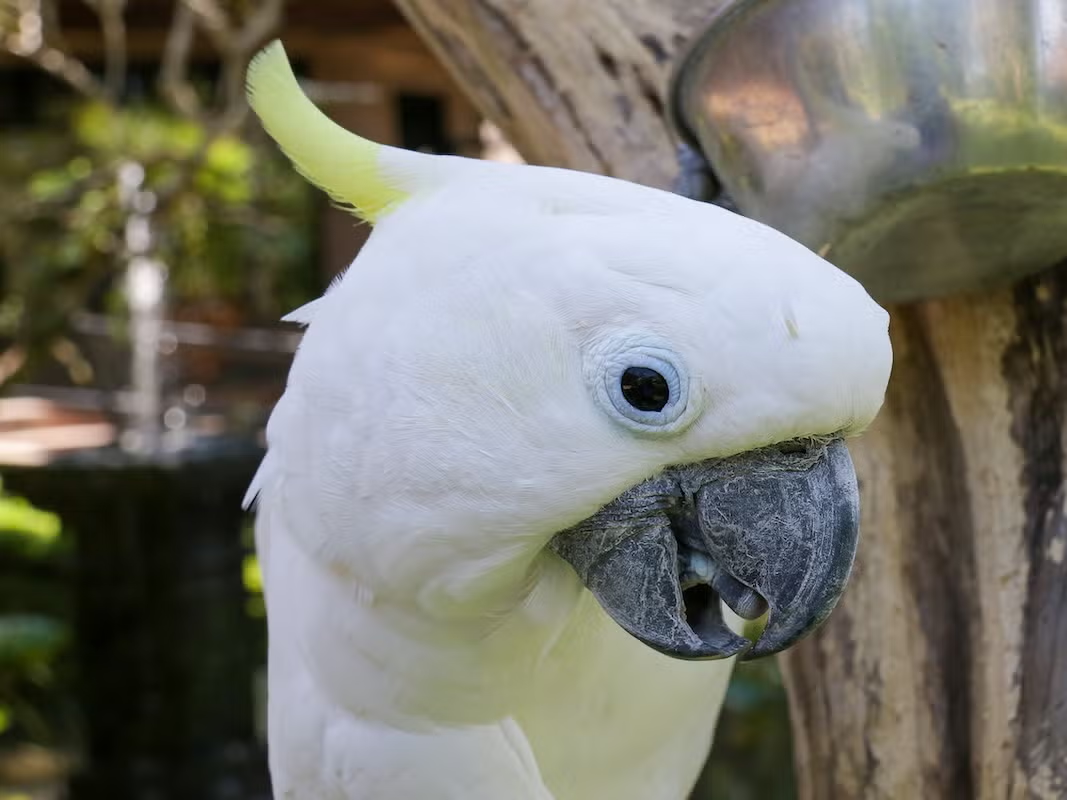
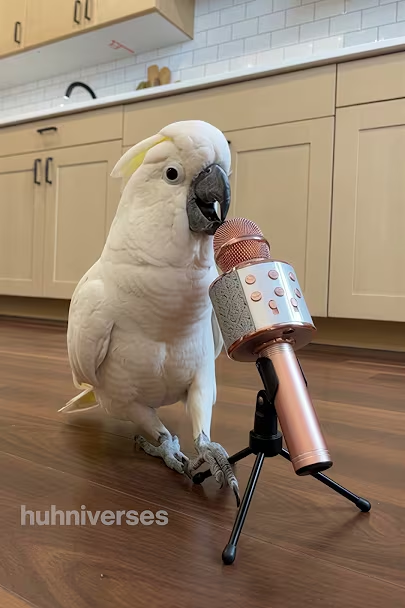
How to tell them apart — fast:
- Feet and claws. AI still struggles with the four-toed zygodactyl grip of a parrot. Look for fused, smooth, or weirdly-numbered toes.
- The crest. Real cockatoo crests fan up sharply when excited and lie flat when relaxed, controlled by individual feathers. AI crests often look like one rubbery shape that morphs.
- The beak. Cockatoo beaks have a distinctive cere (the soft skin above) and a slight asymmetry. AI versions tend to be perfectly symmetrical and oddly glossy.
- Eye blinks and nictitating membrane. Real parrots blink with a thin pale third eyelid that flicks sideways. AI rarely renders this correctly.
- Audio. Real cockatoos vocalise over music — squawks, clicks, little chirps. AI videos usually have a single clean music track and an unnaturally silent bird.
- Camera. Home cockatoo videos shake, refocus, and cut. AI videos float on smooth, slightly dreamlike camera moves.
When in doubt: check the channel's history. Real parrot owners have years of clips with the same bird, the same room, the same furniture. AI accounts pop up fully formed with a viral hit and no backstory.
What it means for the rest of us
You don't need a cockatoo to take something from this research. The fact that beat induction shows up in vocal-learning birds — and almost nowhere else — tells us something quietly profound about humans: the urge to move to music isn't cultural decoration. It's wired in.
That's the same wiring that lights up when you catch yourself bouncing in the kitchen while the kettle boils, or when a song from 2003 comes on and your shoulders move before you've decided anything. It's the same circuit Snowball is running on. Ours is just attached to a bigger cortex and slightly worse rhythm.
So the next time a "dancing cockatoo" clip slides into your feed:
- Watch the bird. Notice the timing, the variety, the little improvisations.
- Check whether it's real (the cues above).
- Then put a song on, in your own kitchen, and join in for one minute.
Snowball won't mind the company.
Sources
- [1]Patel, Iversen, Bregman & Schulz (2009). Experimental evidence for synchronization to a musical beat in a nonhuman animal. Current Biology.
- [2]Keehn, Iversen, Schulz & Patel (2019). Spontaneity and diversity of movement to music are not uniquely human. Current Biology.
- [3]Snowball the dancing cockatoo has many moves — ScienceDaily (2019).
- [4]Snowball the Dancing Cockatoo Vogues and Body Rolls on Beat — NPR (2019).
- [5]Cockatoos know 30 distinct dance moves — Ars Technica (2025).
- [6]Most dance moves by a bird — Guinness World Records.
- [7]How to spot a fake AI video — USA Today / AZ Central (2025).
Prove that humans still have the best moves on the block.
If birds like Snowball can invent 14 dance moves just from listening to pop hits, imagine what your brain can do when you reconnect with the music you actually love. Science says the beat is restorative—it's time to stop watching the screen and start feeling the rhythm yourself.
- Safe, low-impact choreography featuring Michael Jackson, Madonna, and more
- Zero joint strain—reclaim your fitness without the high-impact stress
- Boost mood and cognitive health through rhythm-based neuro-training
- No training required: just press play and follow the party vibes
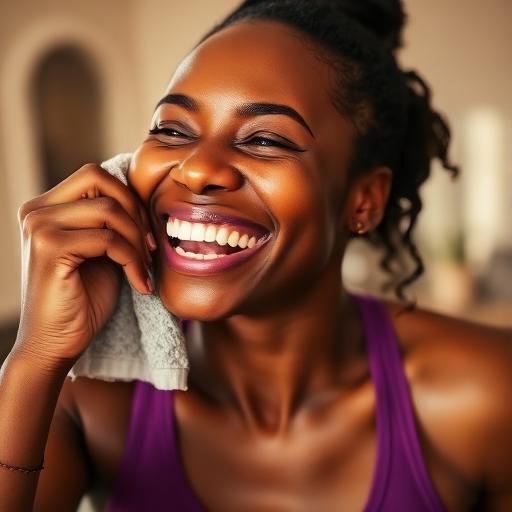
“I haven't sweated like this since college. And I'm laughing the whole time.”

Mara studies how short bouts of rhythmic movement affect mood and cognition. She has authored over 40 peer-reviewed papers and dances daily in her kitchen.

Helena has spent two decades editing health journalism for European magazines. She fact-checks every Everdance article against primary sources.
Keep reading
All articles →
Is Dancing Good Exercise? What the Research Says

How Many Calories Does Dancing Burn? (by Style, 30 and 60 Minutes)