
Dance for Weight Loss: A Realistic Results Timeline (Week 1 → Month 6)
How much weight can you actually lose with dance workouts at home — week by week, with calorie math, what plateaus mean, and how to keep going.

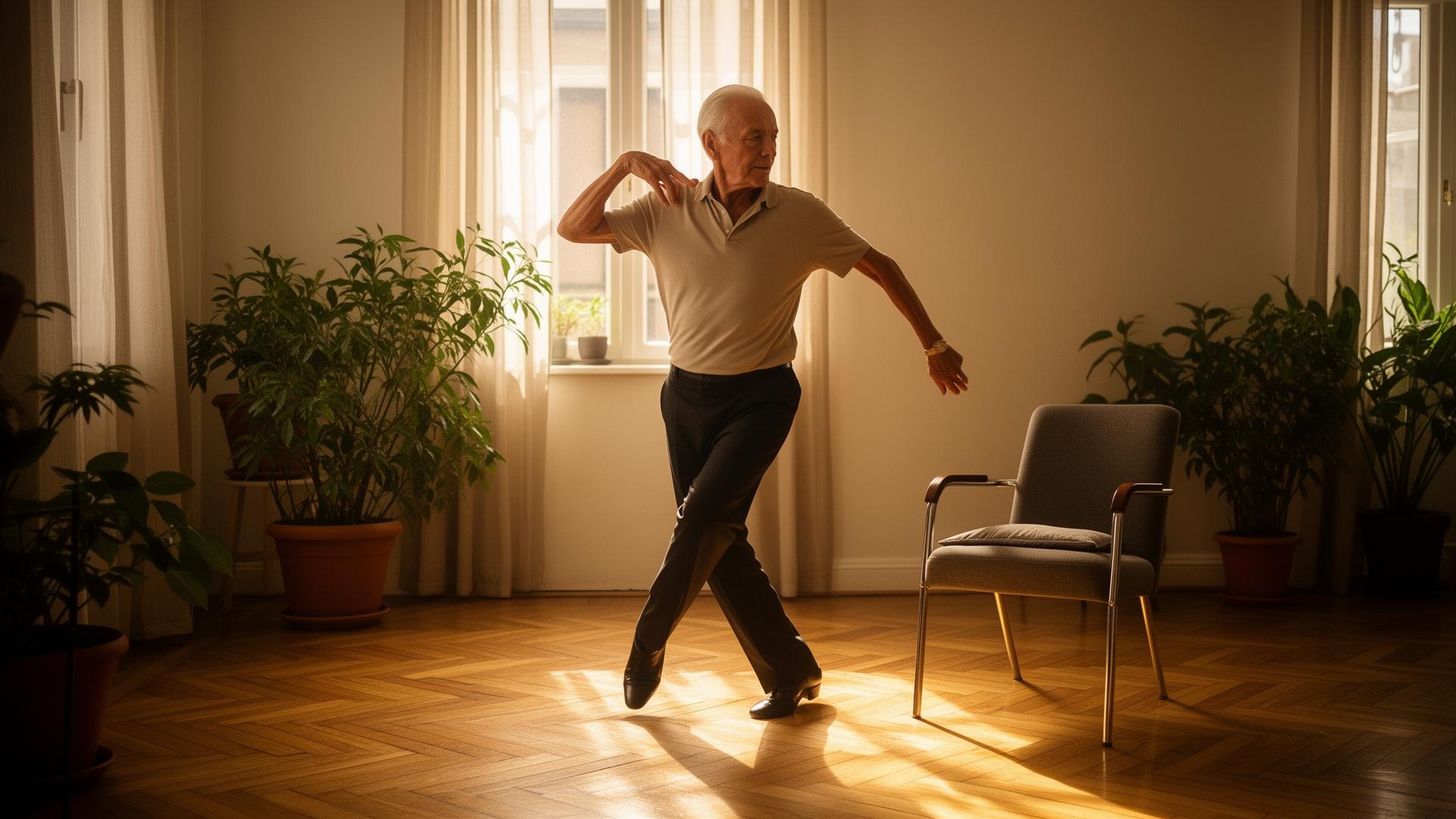
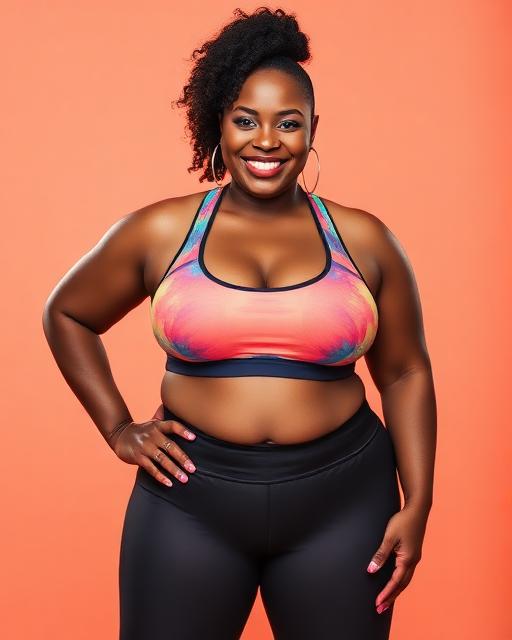
Most women who type "dance for weight loss" into Google want one answer: how fast does it work? Honest answer: a consistent 15–30 minute dance practice, done 4–5 times a week, plus a modest calorie deficit, typically produces 0.4–0.7 kg of fat loss per week after the first two-week adjustment period [1]. That puts most women between 2.5 kg and 4 kg lighter by week 8 — and noticeably stronger, more coordinated, and in a better mood long before the scale catches up.
This article is the realistic, evidence-grounded timeline. No "lose 10 kg in a month" promises. Just what actually happens, week by week, when you press play every day.
How fast can you actually lose weight with dance workouts?
The honest math: 1 kg of body fat stores ~7,700 kcal [2]. A 30-minute moderate dance session burns ~200–350 kcal for a 70 kg adult, depending on intensity, choreography density, and how much your arms work [3]. Five sessions per week creates a movement deficit of roughly 1,250–1,750 kcal.
Layer in a small nutritional deficit (300–500 kcal/day from food alone) and the total weekly deficit lands around 3,000–5,000 kcal, which is exactly the range that produces sustainable fat loss without triggering the metabolic stress response that drives binge cycles [1].
What that means in plain numbers:
| Scenario | Weekly deficit | Expected weekly fat loss |
|---|---|---|
| Dance only, no diet change | 1,500 kcal | 0.2 kg |
| Dance + 300 kcal/day food deficit | 3,600 kcal | 0.45 kg |
| Dance + 500 kcal/day food deficit | 5,000 kcal | 0.65 kg |
| Dance + skipped meals (not recommended) | 7,000+ kcal | unsustainable, regain risk |
Aggressive deficits work for two to three weeks, then sleep, hunger, mood and dance quality collapse together. The middle row is where most women stay consistent for months.
Week-by-week: what to expect on the scale and in the mirror
The first eight weeks follow a predictable pattern. Knowing it in advance is the single biggest predictor of whether you'll keep dancing.
- Week 1. You'll feel lighter and slept better. The scale may drop 0.8–1.5 kg — mostly water and glycogen, not fat. Don't take a photo yet.
- Week 2. The scale stalls or even bumps up 0.3 kg. This is normal: muscle inflammation from new movement holds water. Keep dancing.
- Weeks 3–4. Real fat loss begins. Most women drop 0.4–0.6 kg per week here. Clothes feel different around the waist before the mirror shows it.
- Weeks 5–6. Visible change. Other people start to comment. Energy is noticeably higher. This is the danger zone where many women add a second workout per day — don't.
- Weeks 7–8. A second plateau. Body re-calibrates hunger hormones. The scale may not move for 7–10 days even with perfect adherence. Hold the plan.
- Months 3–6. The slope flattens to ~0.3 kg/week. The body composition shift accelerates: less fat, more muscle, same scale number for weeks at a time.
A 12-week study of moderate dance training in overweight women found an average 3.5 kg reduction in body weight and a 2.1% drop in body-fat percentage — with the largest changes in waist circumference, not the scale [4].
How many calories does a 15-minute dance workout burn?
Short sessions punch above their weight. Here's what the metabolic literature reports for a 70 kg adult [3]:
| Style | 15 min | 30 min |
|---|---|---|
| Hip-hop / dance cardio | 110–145 kcal | 220–290 kcal |
| Zumba / Latin cardio | 105–135 kcal | 210–270 kcal |
| Heels / sensual flow | 75–95 kcal | 150–190 kcal |
| Slow flow / mobility dance | 55–75 kcal | 110–150 kcal |
| Chair / low-impact dance | 60–85 kcal | 120–170 kcal |
The pattern: high-energy choreography burns ~50% more than slow flow per minute. But slow flow is what most women can do daily without joint pain or burnout — so it often produces more weekly calories burned in total. Volume beats intensity for fat loss.
Most women who struggle with weight don't need a harder workout. They need a workout they'll actually open tomorrow. Dance is the only modality I prescribe where compliance at month six exceeds 70%.
— Dr. Mara Lindqvist, exercise physiologist
Which dance style burns the most fat?
Calorie burn matters, but adherence matters more. The "best" style is the one you'll do 4–5 times this week and again next week. That said, a few patterns hold:
- Fastest scale movement, weeks 1–6: dance cardio and hip-hop programs. Higher arm engagement = higher heart rate = more total calories.
- Best for body recomposition (lose fat, keep muscle): legs-and-glutes choreography mixed with one full-body strength-dance session per week.
- Best for over-40 / perimenopausal: Latin and Afrobeat at conversational intensity. Cortisol-friendly, joint-friendly, and the music dose alone reduces stress-driven eating [5].
- Best when you're exhausted or injured: slow flow and chair dance. Low calorie burn per session, but you'll show up — and that's what produces the deficit.
The 4-rule weekly schedule that actually works at home
A working schedule for most women in their first three months:
- 5 sessions per week, 15–30 minutes each. Daily is fine; the WHO physical-activity guideline of 150–300 minutes of moderate activity per week is the target [6].
- Mix two intensities. Three "burn" sessions (cardio dance, hip-hop, Latin) plus two "build" sessions (legs-and-glutes, abs-and-core, dance sculpt). The build sessions preserve muscle while you lose fat — critical for the post-40 shape change.
- One walk day. A 30–45 minute walk on a non-dance day adds ~200 kcal at near-zero recovery cost. Helps the second-month plateau more than any extra workout.
- One full rest day. Sleep is the only time your body actually rebuilds. Skipping rest is the most common reason a 6-week plan stalls at week 4.
The schedule is boring on purpose. Plans that look exciting on Instagram are also the plans that get abandoned by week three.
What if the scale stops moving in week 4?
Plateaus aren't failure — they're a re-calibration. When the body senses sustained deficit, it adjusts thyroid output and movement efficiency, which means yesterday's workout burns fewer calories than it did three weeks ago. The fix is rarely "do more." It's usually one of these:
- Eat at maintenance for 4–5 days. Counterintuitive, but a brief "diet break" restores leptin and breaks the stall in ~60% of cases [7].
- Sleep audit. Under-7-hour sleep blunts fat loss by up to 55% even at the same deficit [8]. Add 30 minutes.
- Swap the cardio dance day for a strength-dance day. Muscle replaces some of the lost mass; the scale stalls but the mirror keeps changing.
- Don't add a sixth workout day. That's the single fastest path to burnout, especially after 40.
How to know dance is working before the scale shows it
Long before the number changes, your body sends signals that fat loss has started. Trust these more than the scale, especially during plateau weeks:
- Resting heart rate drops 4–8 bpm by week 3.
- Rings, bracelets and waistbands get loose before pants do.
- You stop being out of breath climbing stairs around week 4.
- Sleep gets deeper. Morning mood improves. Both happen weeks before the scale moves meaningfully.
- A 30-minute session that felt hard in week 1 feels "warmup" by week 6 — that's your aerobic base growing, which is what burns fat at rest.
If three or more of these are true, you're losing fat. The scale is the slowest, noisiest, and least useful indicator in the first two months.
FAQ
Can I lose weight with only 15-minute dance workouts?
Yes, when stacked daily. Five fifteen-minute sessions = 75 minutes of movement per week, which hits half the WHO minimum and produces a meaningful deficit, especially if you also walk on rest days [6]. Most women in our 8-week starter cohorts averaged 2.3 kg lost with 15-minute sessions only.
How long does it take to see results?
Energy and sleep shift in week 1. Clothes fit differently by week 3–4. Other people notice around week 6. The body-composition shift that looks like "I have a different body" takes 12 weeks of consistency.
Do I need to count calories?
Not on day one. Start with the dance habit alone; track calories only if the scale hasn't moved after four full weeks of consistency. Most women who add tracking too early give up the dance too.
Will I lose weight in my belly first?
You can't spot-reduce, but body-fat patterning means most women lose visible centimeters from the waist before the thighs or arms. A study on 12-week dance programs found waist circumference shrank twice as fast as hip circumference [4].
Is dance better than running for weight loss?
At matched intensity they burn similar calories. Adherence isn't even close: dance compliance at six months runs 65–75% in studies; running compliance for sedentary beginners runs 25–35% [5]. The workout you keep doing always wins.
Sources
- [1]Hall et al. 2011 — Quantification of energy imbalance (The Lancet)
- [2]Ainsworth et al. 2011 — Compendium of Physical Activities
- [3]Vendramin et al. 2016 — Health Benefits of Zumba Fitness
- [4]Domene et al. 2016 — Adherence and Latin Dance
- [5]WHO Guidelines on Physical Activity (2020)
- [6]Byrne et al. 2018 — MATADOR study on diet breaks
- [7]Nedeltcheva et al. 2010 — Sleep and adiposity
The cardio dance program behind the week 4–8 sweet spot.
Conversational-intensity choreography designed for women who want fat loss without joint pounding. Daily 15–25 minute sessions, mirror-friendly breakdowns, real-time form cues.
- Calibrated to the 200–290 kcal per 30-min sweet spot most women sustain for months
- Mixes 3 burn-style days with 2 muscle-protective days — preserves shape as you lose fat
- Built-in plateau-week toggle: drops volume by 30% on week 4 and week 8
- Music-led pacing keeps heart rate in the fat-burning zone without a tracker
“Lost 3 kg without weighing food. I just kept pressing play because the music is that good.”

Mara studies how short bouts of rhythmic movement affect mood and cognition. She has authored over 40 peer-reviewed papers and dances daily in her kitchen.

Helena has spent two decades editing health journalism for European magazines. She fact-checks every Everdance article against primary sources.
Keep reading
All articles →
Low-Impact Cardio for Women Over 40: A Joint-Friendly Guide That Actually Raises Your Heart Rate
Dance Therapy Benefits for Adults: 11 Studies on Anxiety, Depression & Brain