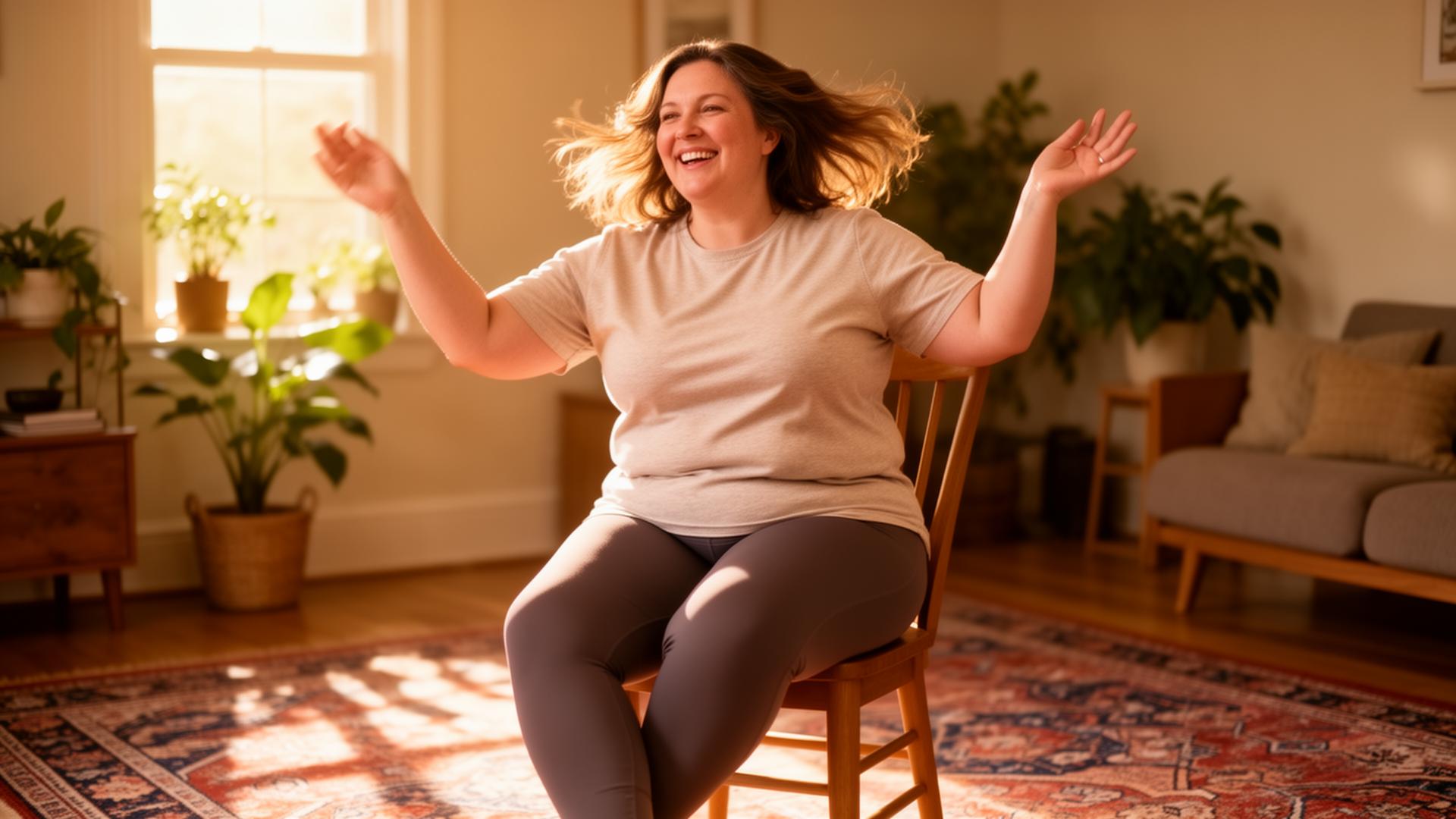

A Gentle 10-Minute Chair Workout for Seniors
Why a 10-minute chair workout is the sweet spot for seniors — what to do minute by minute, how often, and the research on short daily movement.
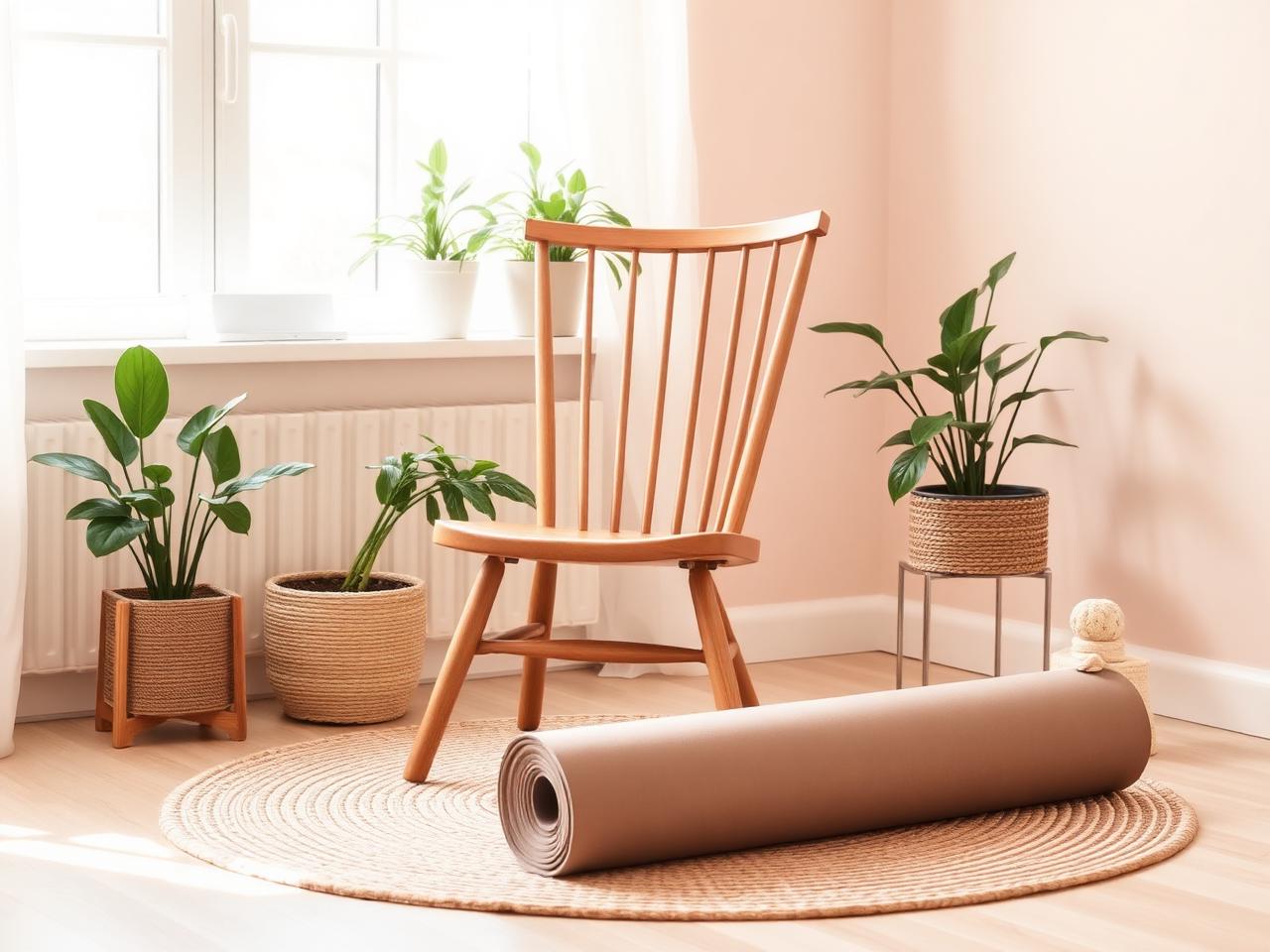
Ten minutes isn't a compromise. It's the sweet spot.
The research on short-duration exercise in older adults keeps landing on the same finding: a focused, ten-minute session — done daily — produces health gains comparable to longer, less-frequent workouts [1]. The trick isn't length. It's consistency.
This is the case for a [10-minute chair dance](/programs/10-minute-chair-dance) chair workout, and how to actually do one.
What ten minutes of chair movement does to your body
A single 10-minute session of moderate-intensity seated exercise reliably:
- Raises heart rate into the moderate zone (50–70% of max)
- Burns roughly 40–60 calories depending on body size and intensity
- Increases circulation to legs and feet (relevant for anyone who sits a lot)
- Releases endorphins that lift mood for 1–2 hours after [2]
- Loosens stiff hips, shoulders, and spine
None of that requires getting up, changing clothes, or driving anywhere. That's why it sticks.
Why daily beats occasional
A 30-minute workout twice a week and 10 minutes seven days a week add up to about the same volume. But the cardiovascular and metabolic effects of the daily version are larger, because the body responds to frequency of movement as much as total volume [3].
For seniors specifically, daily short sessions also reduce sedentary time, which is independently linked to mortality risk regardless of how much you exercise the rest of the week [4]. Translation: a 10-minute morning chair dance is doing two jobs at once — adding movement and breaking up sitting.
A 10-minute chair workout you can do right now
Set a timer. One song is usually two and a half minutes; queue four songs you love.
Minute 0–1: Warm-up. Slow shoulder rolls, neck side bends, ankle circles. Easy breathing.
Minute 1–3: Easy cardio. Seated marches, alternating knees. Add arm swings. Smile.
Minute 3–5: Upper-body groove. Shoulder presses, arm circles, rib slides side to side. Tempo up.
Minute 5–7: Lower-body taps. Heel-toe alternation, knee lifts, side leg taps. Cardio peak.
Minute 7–9: Strength accents. Seated rows (squeeze shoulder blades), seated tricep presses against chair seat, ab pulses.
Minute 9–10: Cool-down. Long stretches — arms overhead, gentle twists, slow breaths.
You've covered cardio, strength, mobility, and mood. In ten minutes.
When to do your daily ten
The most-studied "best time" question in exercise science usually concludes: the best time is whichever time you'll keep up. That said, some patterns:
- Morning, before coffee — best for energy and mood throughout the day
- Mid-afternoon, around 3 pm — counters the post-lunch slump
- Early evening, before dinner — improves sleep quality if done at least 2 hours before bed [5]
Avoid the 60-minute window right before bed for cardio specifically; mobility and stretching are fine.
The "is this enough?" question, honestly answered
For an older adult who currently does zero structured movement, 10 minutes daily is dramatically more than enough to produce measurable health gains. For a senior who's already active, 10 minutes is a great floor — pair it with two longer sessions per week (20–30 minutes) of resistance work to hit the full WHO recommendations [6].
For everyone in between: start with ten. Let the body ask for more.
Five chair workouts under ten minutes, ranked
If you want variety, rotate through these themes across the week:
- Mon — Cardio chair dance (shoulders, ribs, hips at tempo)
- Tue — Strength chair (resistance band exercises or body-weight pushes)
- Wed — Mobility chair (slow stretches, joint circles)
- Thu — Latin chair (hip-focused, core-light)
- Fri — Free dance (your favorite music, your moves)
Saturday and Sunday: longer sessions if you want, or rest. Both are valid.
What a 10-minute chair dance feels like in practice
The first time, it'll feel surprisingly hard. Your heart rate goes up faster than you expect because your arms are doing more work than they're used to. By week two, the same ten minutes feels easy and you'll naturally add bigger movements. By week four, you'll be looking forward to it.
That's the trajectory we see in our 10-Minute Chair Dance program data, and it matches the published literature on exercise adherence in older adults [7].
The smallest commitment that works
Ten minutes. Same time each day. Same chair. Music you love. That's it.
If you can't do ten, do five. If you can't do five, do two. The threshold for "this counts" is much lower than the fitness industry tells you.
Sources
- Murphy MH, Lahart I, et al. "The effects of continuous compared to accumulated exercise on health: a meta-analytic review." Sports Med, 2019.
- Basso JC, Suzuki WA. "The effects of acute exercise on mood, cognition, neurophysiology, and neurochemical pathways." Brain Plast, 2017.
- Wen CP, Wai JP, et al. "Minimum amount of physical activity for reduced mortality." Lancet, 2011.
- Diaz KM, Howard VJ, et al. "Patterns of sedentary behavior and mortality in U.S. middle-aged and older adults." Ann Intern Med, 2017.
- Stutz J, Eiholzer R, Spengler CM. "Effects of evening exercise on sleep in healthy participants." Sports Med, 2019.
- WHO. Guidelines on physical activity and sedentary behaviour. 2020.
- McAuley E, Blissmer B. "Self-efficacy determinants and consequences of physical activity." Exerc Sport Sci Rev, 2000.
Expert perspective
When clients ask me the single most important thing about a chair workout, I always say the same: do it often enough that it becomes boring. Ten quiet minutes a day beats one heroic hour on Sunday for cardiovascular adaptation in adults over 60.
— Dr. Mara Lindqvist, movement physiologist, Everdance
Watch a free 10-minute seated routine you can follow along with right now:
Put it into practice with Dance Cardio Burn.
High-energy, low-impact cardio in 20-minute sessions choreographed like a party. Fat burns, mood lifts, knees and back stay safe.
- 15 min daily sessions
- Low-impact modifications
- No equipment, 2 m²
- Cancel anytime
“Lost 3 kg without weighing food. I just kept pressing play because the music is that good.”

Lena is a doctor of physical therapy (DPT) who has spent 12 years working with adults 60+ on balance, arthritis recovery, and a confident return to movement after injury. She designs Everdance's chair and low-impact programs and writes everything we publish about ageing well.

Helena has spent two decades editing health journalism for European magazines. She fact-checks every Everdance article against primary sources.
Keep reading
All articles →
Low-Impact Cardio for Women Over 40: A Joint-Friendly Guide That Actually Raises Your Heart Rate
Dance for Weight Loss: A Realistic Results Timeline (Week 1 → Month 6)