
Dance Workout for Beginners — Start at Home Today
A real beginner dance plan you can do in your living room — no rhythm required, no choreography to memorise, no audience.
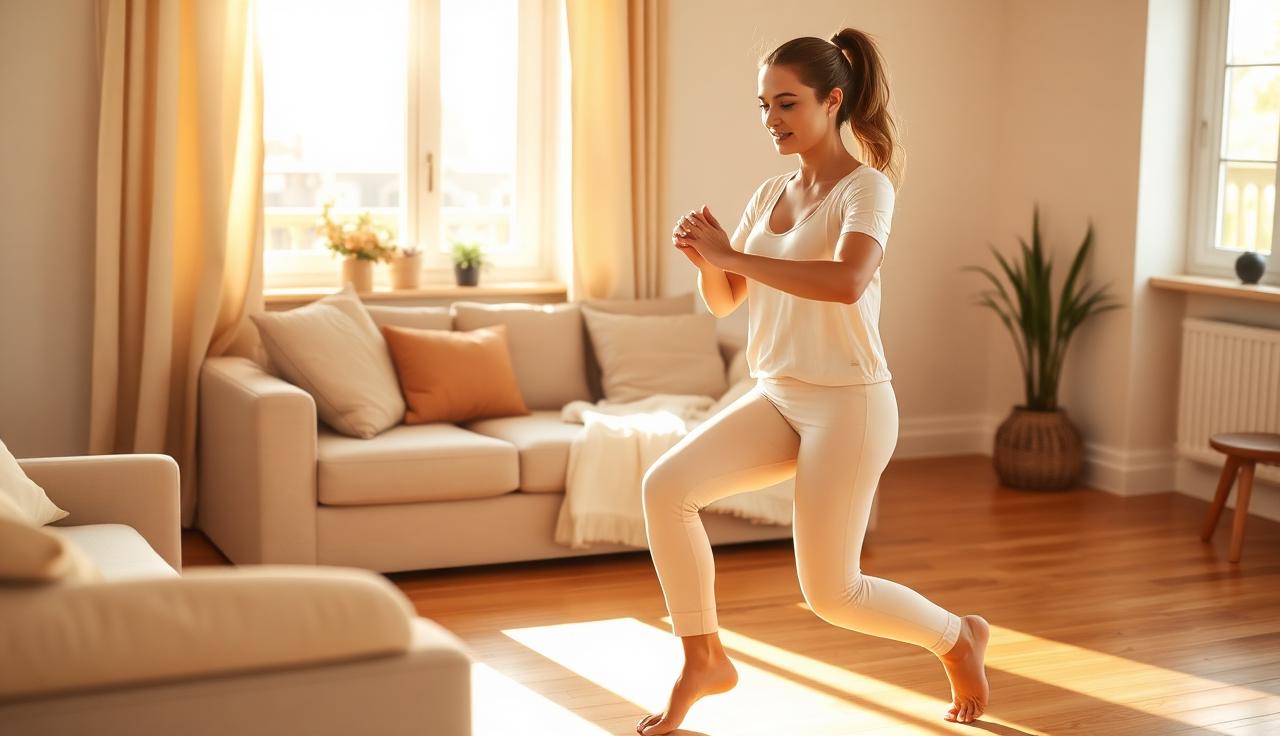
If you've never danced and the YouTube tutorials all assume you already know what a "grapevine" is, this is for you. A good beginner dance workout at home doesn't throw eight‑count combos at you in minute three. It builds one move at a time, repeats it until your body actually remembers it, and only then layers the next one on top.
That's how the 7‑day plan below is built. Day 1 is 10 minutes long, four moves, slow tempo. By day 7 you're doing 15–20 minutes of real dance cardio to actual songs you'll recognise — and you can follow along without rewinding every 30 seconds.
This is for women in their 30s, 40s, 50s and beyond who want a workout that doesn't feel like a workout, who hate gyms, who tried Zumba once and felt lost, or who just want something to do at home that's more fun than another 20 minutes on the treadmill. You don't need rhythm. You don't need flexibility. You don't need a partner, a mirror, or a single piece of equipment — just enough floor space to take two steps in each direction.
Beginner dance workout: simple movements suitable for beginners
Start with a comfortable march, a step-touch and a gentle side step. These simple movements let you practise shifting your weight without learning a long sequence. Keep your steps small, soften your knees and let your arms move naturally. If a combination feels confusing, return to marching while you watch the next demonstration. You are still moving, and you can join back in when the pattern becomes familiar. A session suitable for beginners gives you room to repeat, pause and simplify instead of treating every missed beat as a mistake.
Cardio dance fitness at home
Dance fitness uses music and repeated movement to make exercise feel more enjoyable. A cardio dance workout can be aerobic exercise when it raises your breathing and heart rate for a sustained period. For a moderate cardio workout, use the talk test: you should be able to talk, but not sing comfortably. You do not need jumps or fast turns to start. Marching and stepping can be enough at first, depending on your starting point. Slow down whenever you lose control of your footing or need more time to catch your breath.
The physical activity guidelines for adults recommend at least 150 minutes of moderate-intensity activity each week, plus muscle-strengthening activity on two days. That is a longer-term target, not a requirement for your first week. Short sessions count, and doing some activity is better than doing none. Beginners at home can build towards that target gradually, combining dance with walking or other movement they enjoy. A dance session does not automatically cover every strength-training need; its contribution depends on the movements and effort involved. See the CDC adult activity guidelines for the full recommendation.
Choose dance workouts for your fitness level
Choose the pace by your current fitness level, not by the instructor's energy or someone else's progress. Look for dance classes with clear demonstrations, repeated steps and options that keep one foot on the floor. A preview can help you decide whether the cues are easy to follow. If you have been inactive for a while, start below the maximum time you think you could manage. Finish with enough energy to feel comfortable trying again another day. Stop if you experience sharp pain, dizziness or unusual shortness of breath, and seek appropriate medical advice.
Build a routine for home workouts
Give your routine a simple beginning, middle and end. Spend the opening minutes marching gently, moving your shoulders and stepping from side to side. Then practise two or three familiar patterns before combining them with music. Finish by slowing your steps and letting your breathing settle. For home workouts, clear loose rugs and keep pets, furniture and cables out of your stepping area. Choose footwear and a surface that feel stable together. Keep water nearby, and leave yourself enough room to reach your arms out without hitting anything. A little preparation makes pressing play much easier.
On a day when you have less time, repeat a short familiar sequence instead of abandoning the session. You can also pause between songs or keep your arms lower to reduce effort. The aim is not to copy every detail perfectly; it is to move with control and find a pace you can repeat. Treat suggested durations as flexible starting points rather than a test you must pass. If yesterday's session left you unusually tired or sore, choose a gentler day and give yourself time to recover before increasing the challenge.
Beginner hip movements and dance styles
Try beginner hip movements with a small, comfortable range rather than forcing a deep sway or twist. Salsa-inspired steps can introduce weight shifts, while beginner hip-hop practice often focuses on a relaxed bounce and simple grooves. African dance includes many distinct traditions, so look for instruction that names the style and explains its basic steps rather than assuming one routine represents them all. Ballet-inspired movement and barre offer another approach to balance and control; Pilates is a separate exercise method, not a dance style. These are options to explore, not a promise that every format is included in your plan.
Make home workouts easier to repeat
You do not have to become a dancer to enjoy moving to music. Pick a familiar song, a time of day you can realistically keep and a session that leaves you feeling encouraged. High-energy routines may look exciting, but a slower class you finish comfortably is often a better starting point. If full body workout sequences feel overwhelming, learn the footwork first and add arm movements later. Keep a simple note of what felt manageable and what you want to repeat. That small habit helps you choose your next session without turning practice into a performance test.
Progress your workouts without rushing
Increase one thing at a time: a few extra minutes, a slightly quicker song or one new step. Keep the rest familiar so you can notice how your body responds. Building cardiovascular fitness takes regular practice, and progress will vary with your starting point, sleep, recovery and consistency. If you need individual support with an injury, balance difficulty or a health condition, a qualified personal trainer or healthcare professional can help you choose appropriate modifications. The free planner offers recommendations; it does not watch your technique or replace individual medical advice. Start small, repeat what feels comfortable and let confidence grow alongside stamina.
What's your #1 goal right now?
Programs we love for this
All programs
Frequently asked
Can I do a dance workout if I have no rhythm?
Yes. Rhythm is a learned skill, not a talent — and the only way to learn it is by moving to music regularly. Our beginner routines repeat each move 4–8 times in a row so your body has time to lock in the timing before the next move arrives.
How long should a beginner dance workout be?
10–15 minutes a day, 4–5 times a week, is the sweet spot. Long enough to feel real cardio, short enough that you don't talk yourself out of it. We add 5 minutes per week as your stamina builds.
What's the easiest dance style to start with?
Low‑impact dance cardio set to pop or Latin music. The moves are simple, the tempo is forgiving, and you don't need any prior technique. We start most beginners here before introducing hip‑hop, K‑pop or Afrobeat in later weeks.
Do I need any equipment or space?
None. A patch of floor about the size of a yoga mat is enough, and supportive sneakers help if your floor is hard. No weights, no mat, no special outfit.
How quickly will I see results?
Mood and energy shift in the first week. Stamina noticeably improves at 3–4 weeks. Visible body changes (looser clothes, more tone) take 6–12 weeks of consistent practice — which is exactly why we keep the daily sessions short.
Other cases we cover
See allWant a fully personal plan, not just a curated list?
Generate full 7-day plan