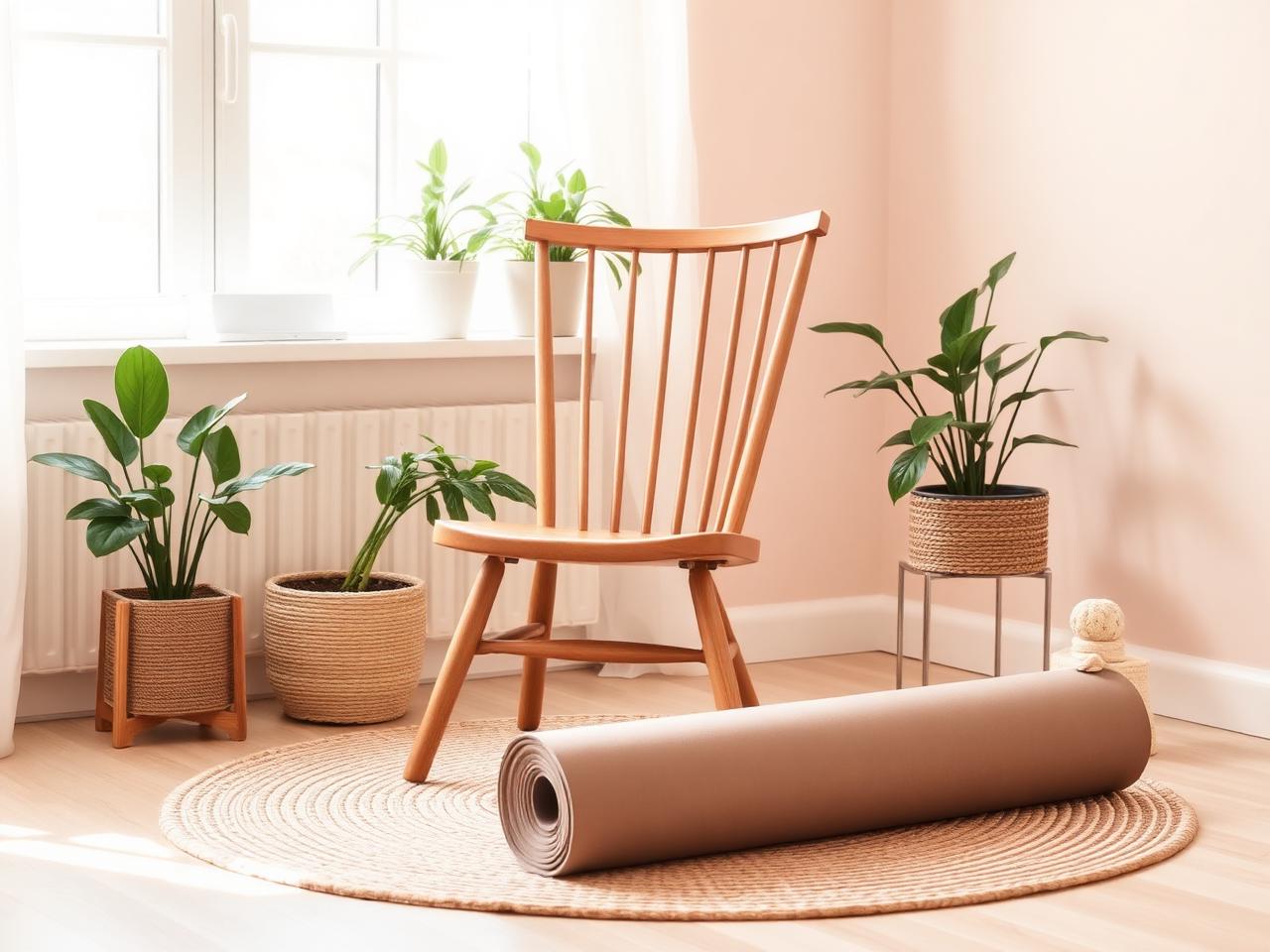
How to build a 2 m² home dance corner
You do not need a studio. A 2 m² corner, the right light and one mirror are enough to start a home practice.
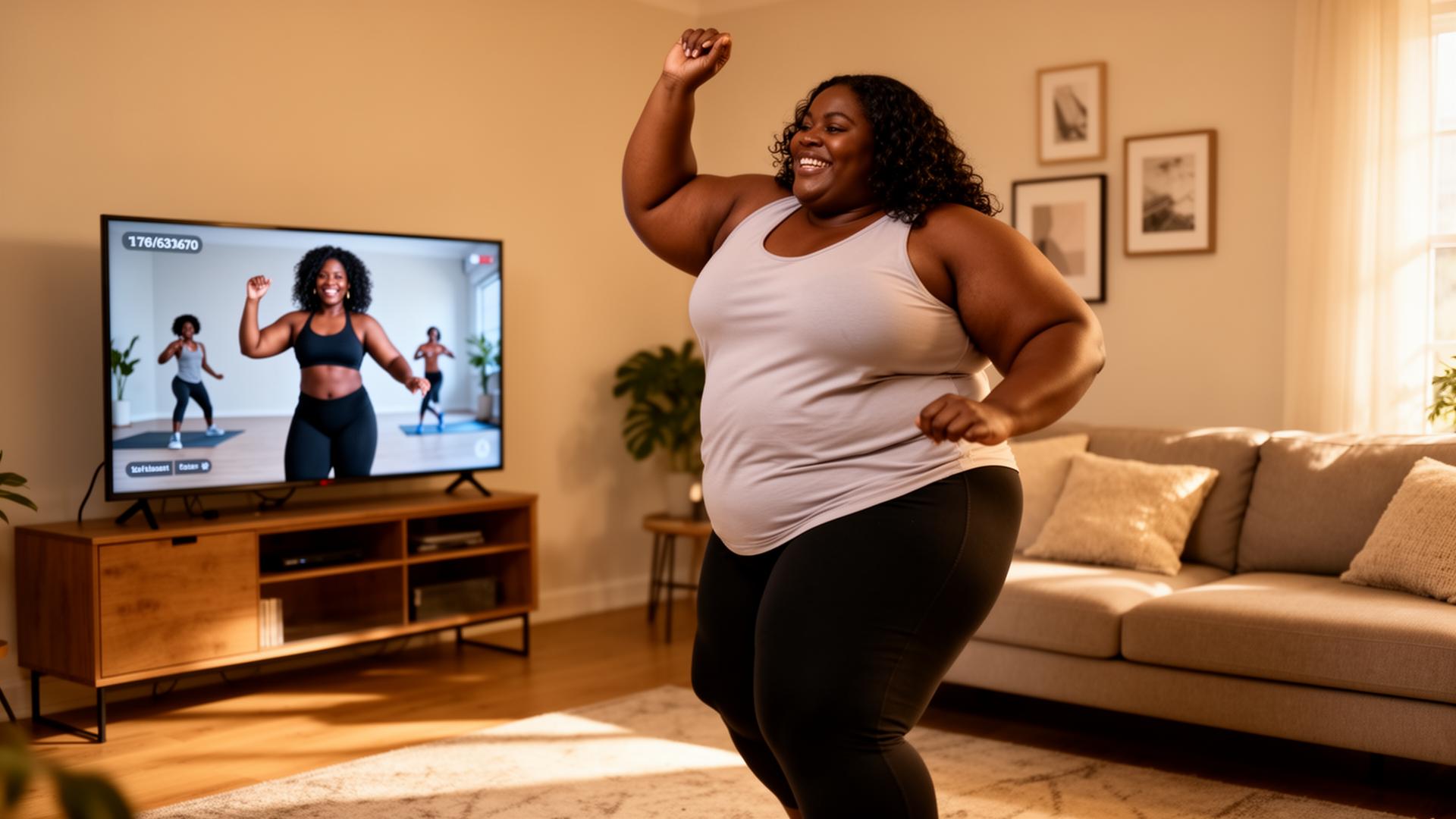
You don't need a studio. You need two square meters, the right floor under them, and a couple of small decisions you make once and never think about again.
Why 2 m² is enough
A typical step pattern in home dance choreography fits inside a 1.4 × 1.4 m square. Add room for arms and a turn, and you are at 2 m² total. If you can lie down on the floor and stretch your arms to the sides without hitting furniture — you have it.
The floor matters more than anything else
Rank order, from most to least important:
- Even, hard surface. Wood, laminate, cork, low-pile carpet. Avoid thick rugs (ankle risk) and tile (knee risk).
- Non-slip. Socks on laminate is the #1 home-dance injury cause. Either go barefoot, wear dance sneakers, or put down a thin yoga mat for grip work.
- Cushioning, if joints complain. A 4–6 mm puzzle-mat square under your feet is enough.
The screen
You need to see your instructor without craning your neck.
- Phone: prop it on a small stand at eye level when you're standing, ~1.2 m high. Don't dance looking down at the floor.
- Tablet: even better. Same height rule.
- TV: ideal. Cast from your phone or use the Everdance app.
If your only option is a low screen, do floor and stretching work facing it, and standing work with audio cues only.
Inspiration: real home dance corners
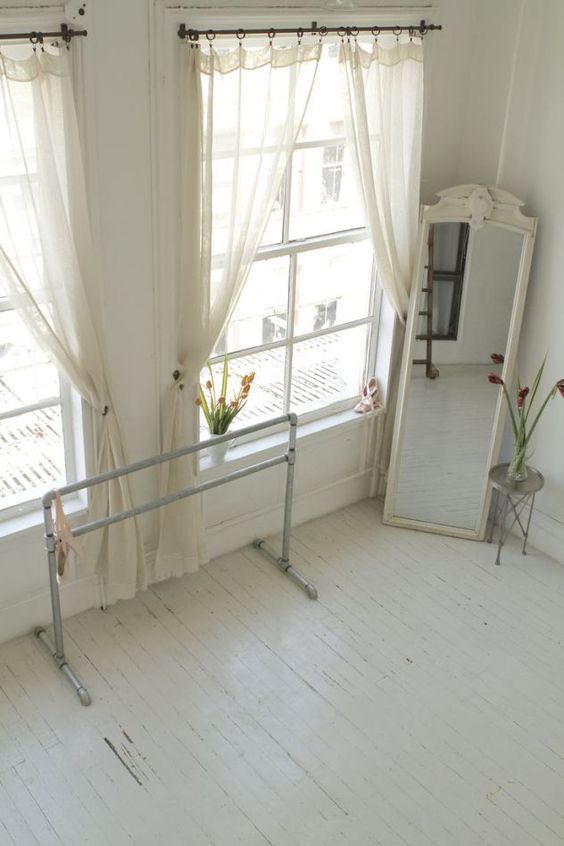
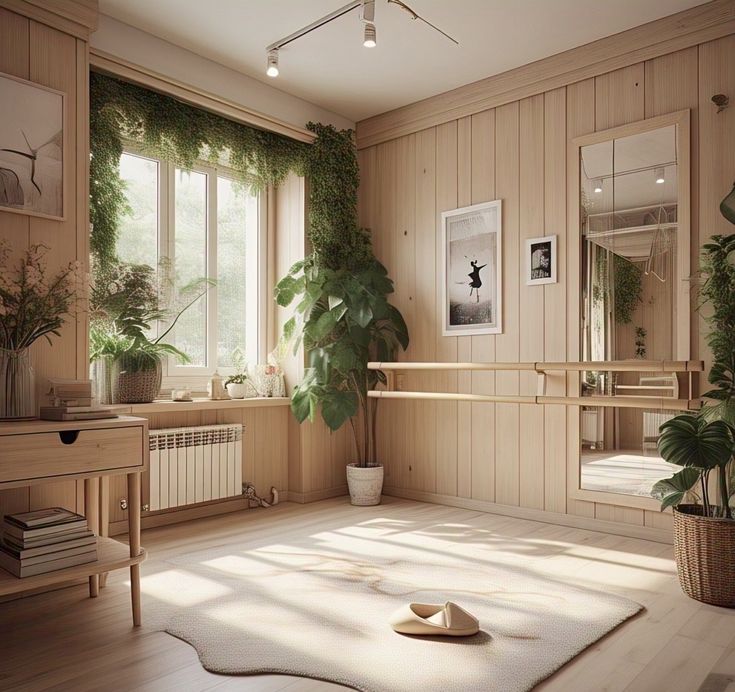
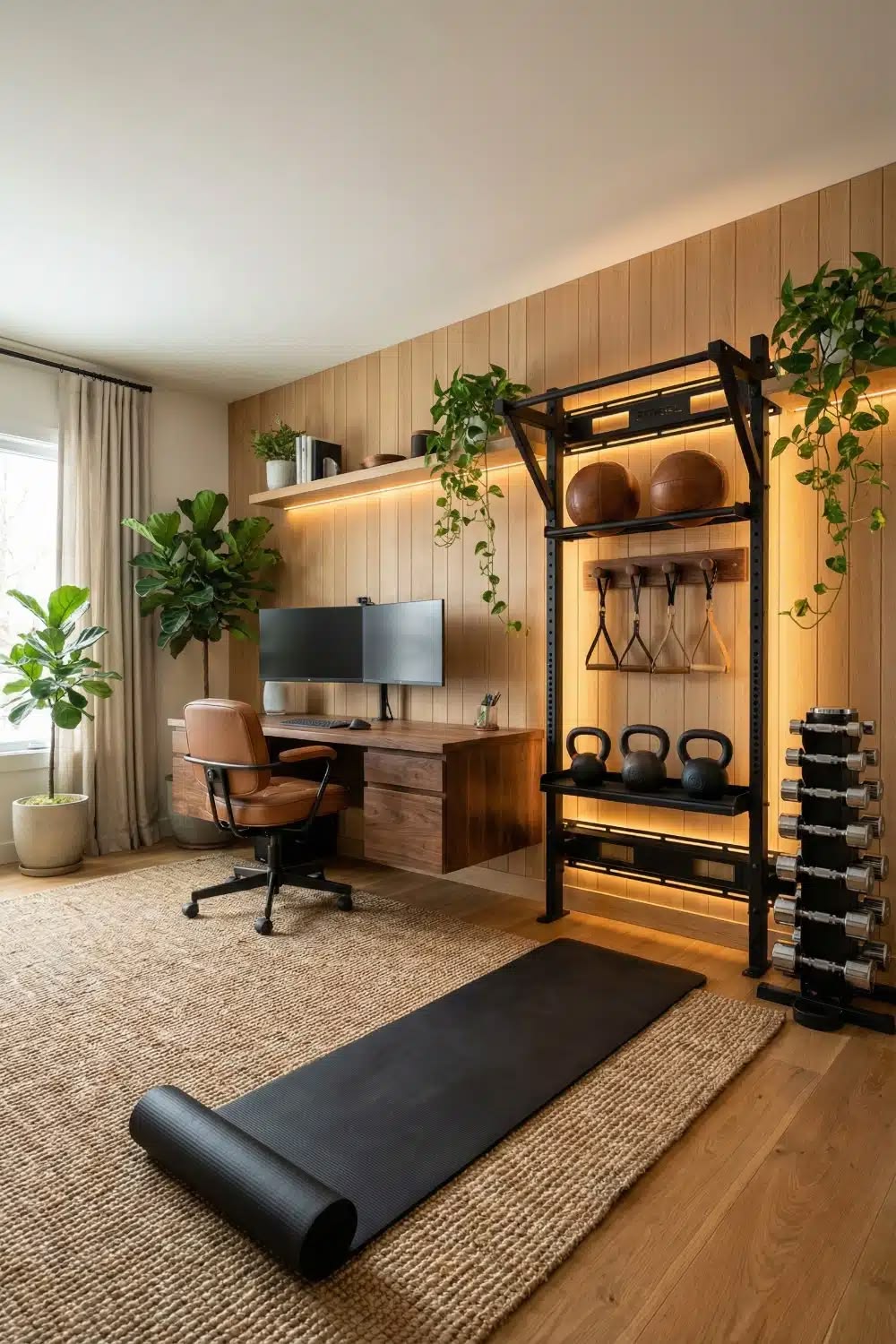
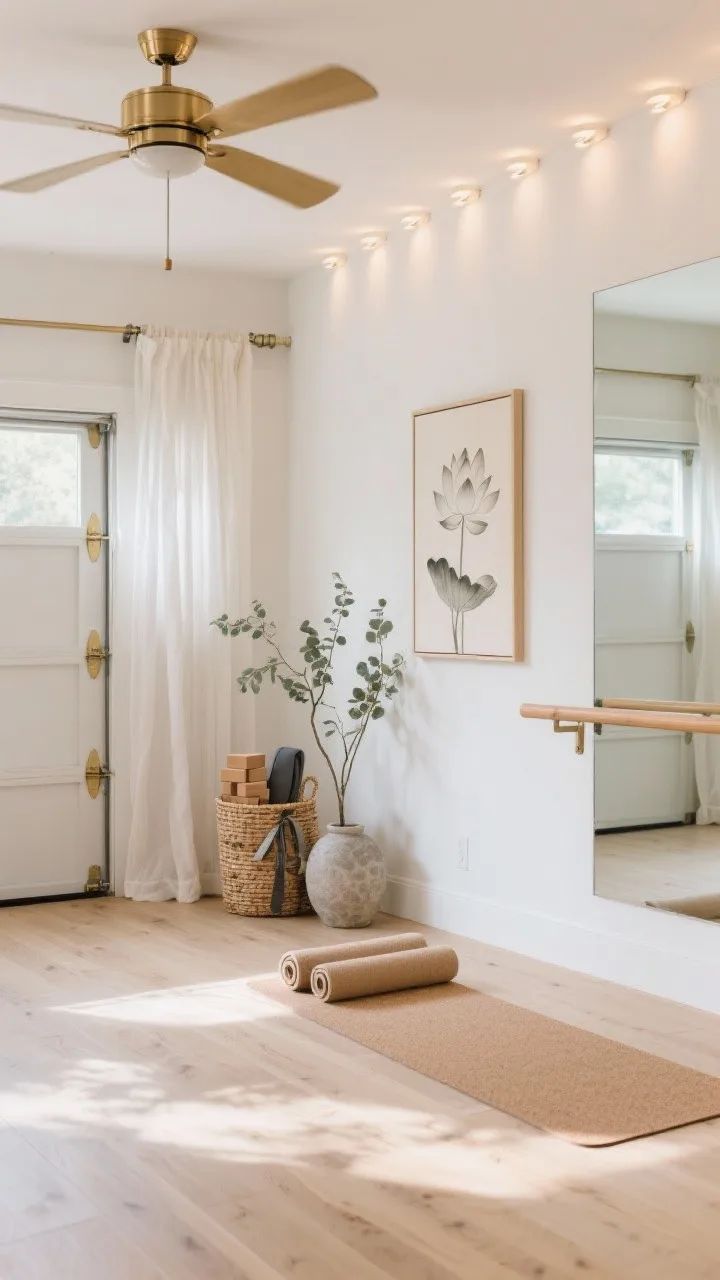
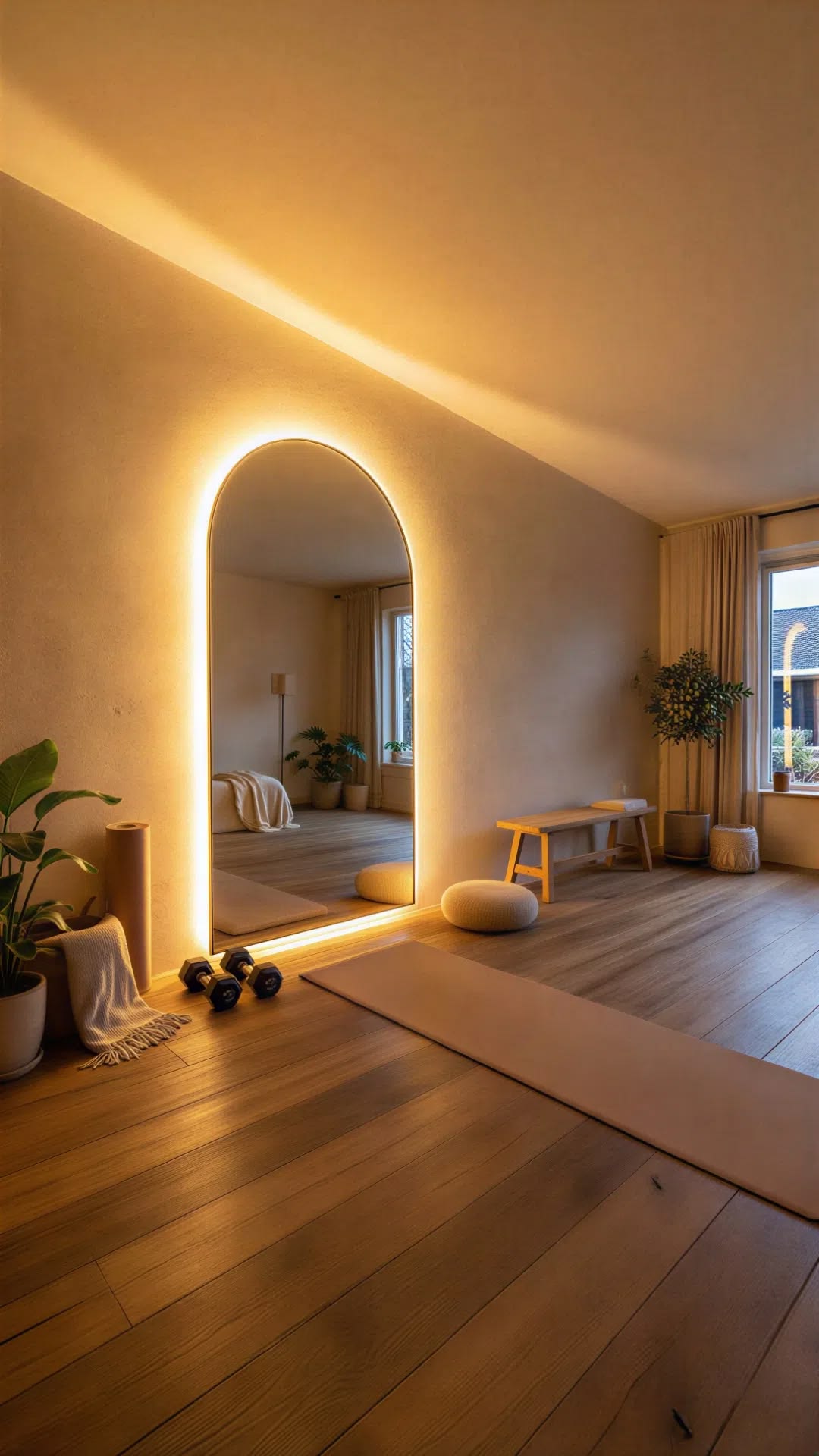
Five ways the same 2 m² can feel like yours — barre or no barre, daylight or warm lamp, mirror or no mirror.
Light, mirror, and the "I look weird" problem
- Light: soft, from the side, never directly overhead. Overhead light flattens your body and makes you self-critical.
- Mirror: optional. If you don't have a full-length one, don't buy one yet. Most women dance better without it for the first month — you feel instead of judge.
- Window: if it faces neighbors, close the curtain. Privacy is part of the room.
The 5-minute setup checklist
Run this once when you decide on your corner. Never again.
- 2 m² of clear floor, no cables, no toys, no chair legs
- Stable screen at eye level
- Bluetooth speaker or decent laptop sound (phone speakers kill the bass)
- Water bottle within reach
- A small towel
- One thing that makes the corner feel like yours — a plant, a candle, a print
Safety, the short version
- Move pets and small children out of the room (yours and theirs).
- Don't dance the first time in a new place when you're exhausted — learn the dimensions when you're fresh.
- If you have a downstairs neighbor, save jumps for daytime and stick to grounded choreography otherwise. Lots of low-impact programs are designed exactly for apartments.
The corner becomes a cue
After two weeks, something subtle happens: you walk past the corner and your body wants to move. That's not romantic — it's classical conditioning. The space itself becomes the trigger.
Try this today
- Pick the corner.
- Spend 5 minutes setting it up properly.
- Dance for one song in it before you leave the room.
You just built a habit anchor.
Why "the corner" matters more than the choreography
Research on habit formation is unambiguous: environmental cues are the single most reliable predictor of whether a new behaviour survives past week three[1]. A dedicated 2 m² corner is what behavioural scientists call an implementation intention anchor — a fixed cue that bypasses willpower.
Willpower is finite. Architecture is not. The women in our community who keep dancing past day 30 are almost always the ones who set up the corner once and stopped renegotiating the decision daily.
What the CDC says about home-based exercise spaces
The CDC explicitly endorses home-based, equipment-light routines as equivalent in health outcomes to gym attendance, provided they are sustained[2]. A safe, dedicated home corner is the single biggest variable in whether a routine is sustained.
Expert perspective
The most expensive piece of equipment in any home dance practice is the floor. Get that one decision right and you can keep the rest of the corner under twenty euros.
— Dr. Mara Lindqvist, movement physiologist, Everdance
A quick visual reference
If you want to see how a small, low-equipment home routine actually looks in someone’s living room, this short session is a useful template:
Frequently asked questions
What if my only space is a carpeted bedroom?
Low-pile carpet is fine; thick rugs are not. Lay a thin yoga mat or a 1 m² puzzle-mat square over thick rugs to flatten the ankle risk.
Do I need a mirror?
No — and most beginners do better without one for the first month. A mirror invites self-judgement before the body has had time to remember how to move[3].
What if I rent and cannot drill anything?
You do not need to drill anything. A stable phone stand, a yoga mat, and a Bluetooth speaker is the entire setup.
[1]: Wood W, Rünger D. Psychology of Habit. Annual Review of Psychology, 2016. https://www.annualreviews.org/doi/10.1146/annurev-psych-122414-033417 [2]: U.S. Centers for Disease Control and Prevention. Adult Physical Activity Basics. https://www.cdc.gov/physical-activity-basics/adults/index.html [3]: Mayo Clinic. Body image and physical activity. https://www.mayoclinic.org/healthy-lifestyle/adult-health/in-depth/body-image/art-20044668
Sources
Now that you've cleared your two square meters, fill them with Dance Cardio Burn.
The setup you just built is the perfect 'habit anchor' for this 21-day journey. By removing the friction of space, you've created a runway for these high-energy, low-impact sessions that transform your new corner into a daily high-vibe ritual.
- Fits any 2m² space
- Safe for apartment floors
- No-jump, joint-friendly cardio
- Simple 20-minute daily sessions

“Lost 3 kg without weighing food. I just kept pressing play because the music is that good.”

Mara studies how short bouts of rhythmic movement affect mood and cognition. She has authored over 40 peer-reviewed papers and dances daily in her kitchen.

Helena has spent two decades editing health journalism for European magazines. She fact-checks every Everdance article against primary sources.
Keep reading
All articles →
Chair Dance for Beginners: How to Start at Home
The Best Chair Exercises for Seniors at Home