The Latin playlist we love this season
Salsa, bachata, kizomba — the tracks we keep coming back to for slow warm-ups and full bursts.

Latin music does something to the body that pop music can't quite replicate — a syncopated pulse that asks your hips to answer. Here is the playlist we're dancing to this season, with notes on how to use each track in a home session.
How to read the list
- BPM — beats per minute. Higher = more intense.
- Use — where it fits in a 20–30 minute session: warm-up, main, or cooldown.
The playlist
1. Slow groove warm-up (BPM 88–96)
"Te Boté" — slow remix Use: warm-up. Sway, weight shifts, shoulder rolls. Don't dance "to" the song yet — let it move you.
"Despacito" (instrumental) Use: warm-up. Perfect for hip isolations and rib slides. Your spine wakes up.
2. Building momentum (BPM 96–108)
"Vivir Mi Vida" — Marc Anthony Use: early main. Salsa basic step, cross-body lead. Big, joyful, impossible to dance to with a frown.
"Dákiti" — Bad Bunny Use: early main. Reggaetón bounce. Soft knees, low effort, deceptive cardio.
"Bailando" — Enrique Iglesias Use: early main. Bachata-flavored, hip-led. Save the spins for week two.
3. Peak (BPM 108–120)
"La Bicicleta" — Shakira & Carlos Vives Use: peak. Cumbia step. This is the song you'll be sweating to by minute 14.
"Tusa" — Karol G & Nicki Minaj Use: peak. Reggaetón. Stay low, use your glutes, not your knees.
"Calma" — Pedro Capó remix Use: peak. Tropical pop, surprisingly aerobic. Add a turn every 8 counts if you're feeling it.
4. Cooldown (BPM 72–88)
"Burbujas de Amor" — Juan Luis Guerra Use: cooldown. Bachata. Slow, sensual, breath comes back.
"Contigo en la Distancia" — Christina Aguilera bolero Use: final stretch. Long lines, deep breath, gratitude.
How to build a session from this list
A simple 25-minute structure:
- 5 min warm-up — pick 2 tracks from group 1.
- 15 min main — alternate groups 2 and 3.
- 5 min cooldown — both tracks from group 4.
That is a complete cardio + mobility + mood session, hidden inside a playlist.
Why Latin specifically
Three reasons it works so well for women dancing at home:
- Built-in tempo variety. A genre that already gives you warm-up, peak, and cooldown speeds.
- Hip-led movement. Activates muscles most desk workers forget they own.
- Joy without irony. It is sincere music. Hard to dance to it cynically.
Try this today
- Save the playlist on your music app.
- Set a 25-minute timer.
- Don't choreograph — let the songs choose your body.
If you'd like a guided version of this exact structure, our Latin-flavored programs walk you through every count.
Why Latin music changes how your body moves
Latin music is built on a clave — a syncopated 3:2 (or 2:3) pulse that the brain hears as an invitation rather than a metronome. Neuroscience studies of music-induced movement have shown that syncopated rhythms reliably trigger spontaneous body movement in adults far more than straight 4/4 pop[1].
In practical terms: you do not need to "make yourself" dance to a salsa track. The track does the work. That is why a Latin playlist is one of the most reliable habit anchors we know for women starting out at home.
Hip-led movement and the modern desk body
Most women over 35 sit between 6 and 11 hours a day, and the hip flexors quietly shorten[2]. Latin choreography — bachata, salsa, cumbia, reggaetón — is overwhelmingly hip-led. Every hour of Latin dance is a structured undo of every hour at a desk.
This is why hips, lower back, and glute soreness often appear in week one: muscles waking up, not muscles in trouble.
Expert perspective
Latin rhythms are uniquely effective because they bypass the part of the brain that talks you out of dancing. Your body answers the clave before your inner critic has formed a sentence.
— Dr. Mara Lindqvist, movement physiologist, Everdance
A guided session to dance to right now
If you want a low-impact, chair-friendly Latin follow-along to try the structure above:
Frequently asked questions
I have two left feet — is Latin music too hard?
The playlist above is intentionally not choreographed. Sway, weight-shift, breathe. You are not learning salsa class steps — you are letting Latin music move you.
Will I disturb my neighbours?
Keep your steps low and grounded. Most Latin home choreography is footfall-soft. For apartments, browse our low-impact programs.
How often should I do a 25-minute Latin session?
Four to six times a week is the sweet spot. The genre is varied enough that boredom is rarely the limiting factor.
[1]: Witek MAG et al. Syncopation, body-movement and pleasure in groove music. PLOS ONE, 2014. https://journals.plos.org/plosone/article?id=10.1371/journal.pone.0094446 [2]: World Health Organization. Physical activity fact sheet (2024). https://www.who.int/news-room/fact-sheets/detail/physical-activity
Sources
Harness the power of that playlist with Latin Glow.
Since the clave rhythm naturally triggers your body to move, we've removed the technical stress of dance class so you can focus on the feeling. This program uses the exact tempo-building structure you just read about to unlock your hip mobility and melt away desk-day tension without complex choreography.
- Salsa and bachata made simple
- Hip-led moves for core strength
- No-impact cardio for healthy joints
- Slow-paced cues for easy learning
“I dance for 15 minutes in my kitchen and my whole day shifts. I haven't missed a week in three months.”


Mara studies how short bouts of rhythmic movement affect mood and cognition. She has authored over 40 peer-reviewed papers and dances daily in her kitchen.

Helena has spent two decades editing health journalism for European magazines. She fact-checks every Everdance article against primary sources.
Keep reading
All articles →
Chair Dance for Beginners: How to Start at Home
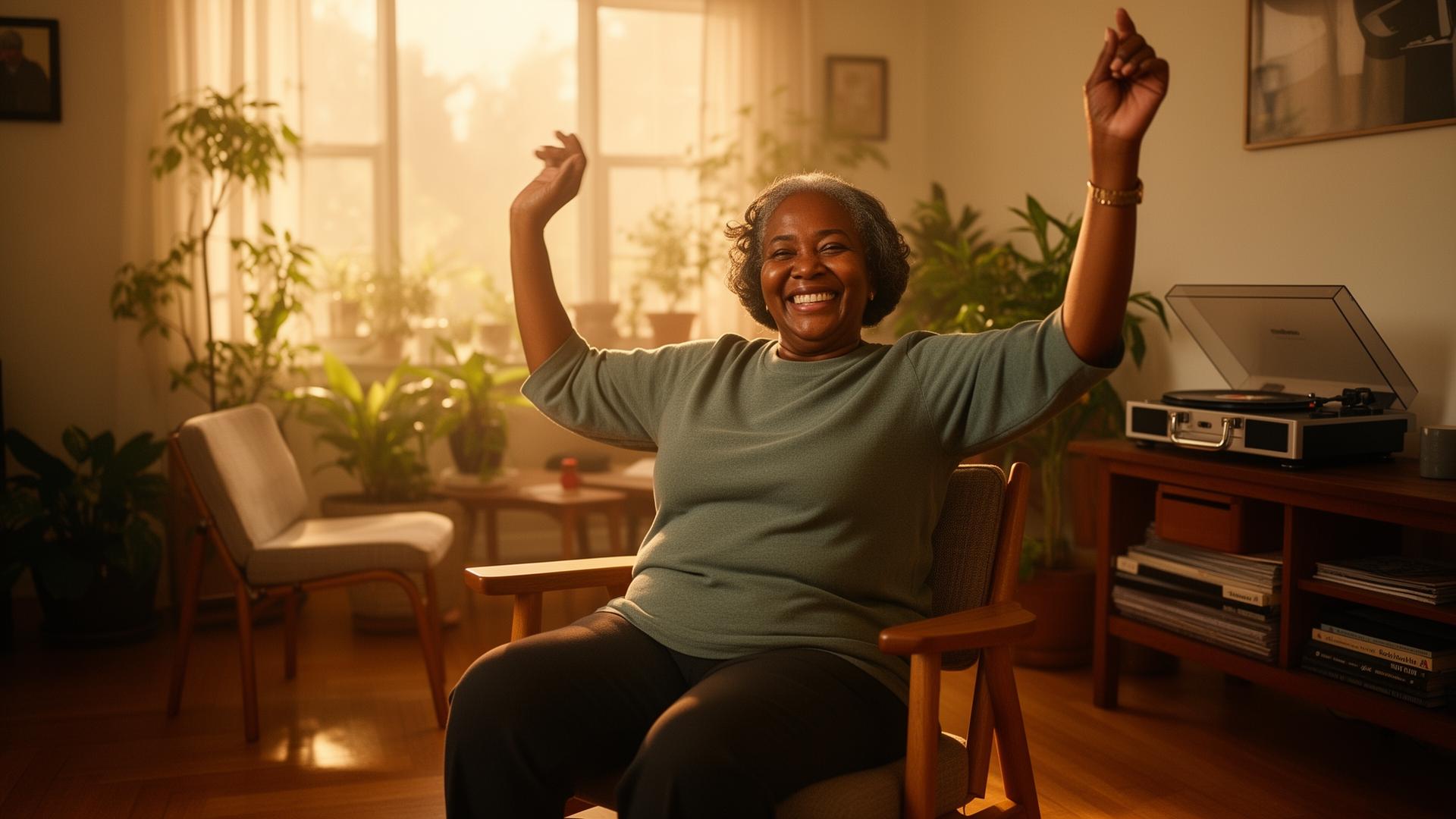
The Best Chair Exercises for Seniors at Home